Owning a rental property means thinking beyond the next rent payment or lease renewal. The long-term condition of the building matters just as much as keeping units occupied, and few parts of a property are as important to its stability as the foundation.
Unfortunately, foundation maintenance is also easy to overlook. A dripping faucet, broken appliance, or damaged door gets attention because the problem is visible. Foundation issues often develop quietly. A small crack may remain unnoticed behind storage. Poor drainage may slowly saturate the soil beside the building. A basement may become slightly damp long before obvious water damage appears.
By the time these problems become difficult to ignore, the repair may already be more complicated.
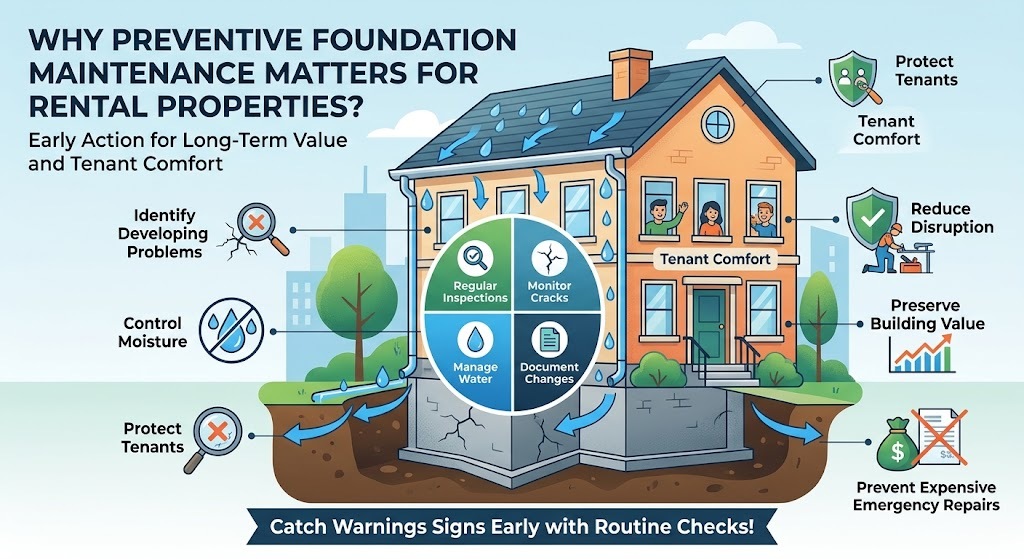
That is why preventive foundation maintenance matters for rental properties. Regular inspections and early action can help property owners identify developing problems, control moisture, protect tenants, reduce disruption, and preserve the value of the building.
What Is Preventive Foundation Maintenance?
Preventive foundation maintenance is the routine process of checking the property for conditions that could damage the foundation and correcting them before serious deterioration occurs.
It does not mean constantly carrying out expensive structural work. In many cases, prevention begins with fairly simple tasks such as:
- Checking foundation walls for new cracks
- Monitoring existing cracks for changes
- Inspecting basements and crawl spaces for moisture
- Keeping gutters and downspouts clear
- Making sure water drains away from the building
- Checking window wells and exterior drains
- Watching for soil settlement around the foundation
- Maintaining sump pumps and drainage systems
- Investigating unusual movement in floors, walls, doors, or windows
The goal is simple: catch warning signs when they are still manageable rather than waiting for a visible failure.
For a rental property, that approach can make an especially important difference because maintenance problems affect not only the building but also the people living in it.
Foundation Problems Rarely Improve on Their Own
One reason preventive maintenance is so valuable is that foundation problems tend to progress rather than disappear.
A narrow crack, for example, may initially appear cosmetic. But if water repeatedly enters the crack or the surrounding soil continues placing pressure on the wall, the condition can change.
Likewise, a damp basement may seem like a minor inconvenience during one wet season. Repeated moisture exposure, however, can affect finishes, stored belongings, insulation, flooring, and other building materials.
Foundation cracks can develop for several reasons, including settlement, soil movement, hydrostatic pressure, freeze-thaw conditions, and moisture around the structure. The appearance and direction of a crack can also provide clues about what may be happening.
Property owners do not need to diagnose every crack themselves. What matters is recognizing when a change deserves further investigation.
When cracks begin widening, leaking, appearing repeatedly, or developing alongside bowing walls or uneven floors, obtaining an assessment from a contractor experienced in foundation crack repair can help determine what is happening beneath the surface.
Early investigation creates more options. Ignoring the same warning signs can allow water or structural pressure to continue affecting the building.
Water Management Is a Major Part of Foundation Maintenance
Many foundation problems are closely connected to water.
Rainfall, melting snow, groundwater, poor grading, clogged drainage systems, and downspouts that release water directly beside the building can all increase moisture around a foundation.
When the soil surrounding a property becomes heavily saturated, water pressure against below-grade walls can increase. Moisture may then find its way through cracks, joints, openings, or vulnerable areas of the foundation.
For rental property owners, this makes exterior drainage one of the most important areas to monitor.
Start by checking where roof water goes. Downspouts should direct water away from the foundation rather than releasing it beside the wall. Gutters should remain clear enough to carry rainwater properly.
The ground around the property also deserves attention. Areas where water repeatedly pools next to the building may indicate grading or drainage problems.
Window wells should be inspected too. Leaves, soil, and debris can interfere with drainage and allow water to accumulate around basement windows.
Inside the property, watch for moisture stains, damp concrete, efflorescence, peeling finishes, musty smells, or unexplained water after heavy rainfall.
None of these signs automatically means major structural damage. They do mean the source of the moisture should be identified instead of repeatedly covering up the visible symptom.
Prevention Can Reduce Expensive Emergency Repairs
Rental properties operate on budgets. Unexpected repairs can quickly disrupt them.
Emergency foundation work is particularly inconvenient because the problem may require excavation, waterproofing, structural reinforcement, drainage repairs, or work inside an occupied basement.
Preventive maintenance helps shift property care from reactive spending toward planned maintenance.
Consider two scenarios.
In the first, a landlord notices a developing crack and occasional dampness after heavy rain. The drainage is inspected, the cause is identified, and the necessary work is scheduled before the problem spreads.
In the second, the same signs are ignored for several seasons. Eventually, a major storm causes significant water entry into a finished basement occupied by a tenant.
The second situation may involve more than foundation work. Damaged flooring, drywall, furniture, tenant complaints, cleanup, mould investigation, and temporary loss of usable space may all become part of the problem.
Preventive maintenance cannot eliminate every unexpected repair, but it can reduce the likelihood of small issues turning into larger emergencies.
It Helps Protect Tenant Living Conditions
The foundation may be part of the building that tenants rarely think about, but foundation-related problems can quickly affect their daily lives.
Water entering a basement can damage personal belongings. Persistent dampness can create unpleasant odours. Cracks and movement may affect interior finishes. Severe structural problems may interfere with the normal use of part of the property.
Responding early is therefore not only about protecting an investment. It is also part of keeping the rental property functional and well maintained.
Tenants can actually become useful partners in preventive maintenance if communication is handled correctly.
Encourage residents to report:
- New water stains
- Basement leaks
- Damp or musty areas
- New wall or floor cracks
- Doors or windows suddenly sticking
- Noticeable floor movement
- Changes around basement windows
A tenant may notice a developing issue weeks or months before a property owner sees it during a scheduled visit.
Making it easy to report maintenance concerns can provide an early warning system for the property.
Preventive Maintenance Protects Finished Basements
A finished basement adds useful living space and can contribute significantly to a rental property’s appeal.
It can also hide foundation problems.
Once concrete walls are covered by insulation, framing, drywall, flooring, cabinetry, or storage, moisture entry may become harder to spot. A leak can develop behind a finished surface before obvious signs appear inside the room.
This makes prevention particularly important before finishing or renovating below-grade spaces.
Any known cracks, drainage concerns, recurring dampness, or previous leaks should be investigated before cosmetic improvements are completed.
Otherwise, an owner may invest in a new basement only to remove part of it later to access an unresolved water problem.
Property owners dealing with persistent moisture or drainage concerns can review professional foundation repair and basement waterproofing services to better understand the types of solutions commonly used for below-grade problems.
The important principle is to address the source first and the appearance second.
Foundation Maintenance Helps Preserve Property Value
Rental real estate is a long-term asset, and the condition of the foundation can influence both its usability and marketability.
Prospective buyers and inspectors tend to pay attention to signs such as significant cracks, previous water penetration, bowing walls, uneven floors, or evidence of repeated basement repairs.
Visible foundation problems can create uncertainty, even when the rest of the property looks well maintained.
A history of responsible maintenance can have the opposite effect.
Keeping records of inspections, drainage improvements, waterproofing work, foundation repairs, and other maintenance provides a clearer picture of how the building has been cared for over time.
Those records can also help future contractors understand previous work if another issue develops.
For landlords planning to hold a property for many years, foundation maintenance should therefore be viewed as part of asset preservation rather than simply another repair expense.
Seasonal Changes Make Routine Checks Important
Foundations are exposed to changing conditions throughout the year.
Heavy spring rain can reveal drainage weaknesses. Hot and dry periods can affect soil conditions. Autumn leaves can block gutters and drains. Winter freezing and thawing can place additional stress on concrete and masonry.
That makes seasonal inspections useful.
A simple check twice a year, along with another inspection after unusually severe weather, can identify many developing problems.
Walk around the exterior and look closely at visible foundation areas. Check whether the soil has settled or pulled away from the structure. Look for standing water after rainfall.
Inside, inspect unfinished basement walls and floors where possible. Compare known cracks with previous photographs. Test sump equipment according to the manufacturer’s recommendations and keep access to drainage components clear.
These checks do not take much time, but consistency matters.
Create a Foundation Maintenance Record
Owners with multiple rental units or properties can benefit from turning foundation maintenance into a documented routine.
Create a simple record for each property containing:
- Photographs of visible foundation walls
- Locations and dates of known cracks
- Notes about previous water entry
- Drainage and grading observations
- Sump pump maintenance records
- Waterproofing or repair invoices
- Dates of professional inspections
- Tenant-reported moisture issues
Photographs are particularly useful.
If a crack looks slightly different six months later, relying on memory can be difficult. Comparing dated photographs makes changes easier to identify.
Documentation also prevents information from disappearing when property managers, maintenance staff, or tenants change.
Warning Signs That Deserve Attention
Not every foundation imperfection is an emergency, but certain signs should not be ignored.
Arrange for further evaluation if you notice significant or growing cracks, horizontal cracking, bowing foundation walls, recurring basement leaks, persistent dampness, unexplained floor movement, gaps around windows or doors, or substantial settlement around the building.
Repeatedly repairing interior finishes without investigating the underlying cause can also become expensive.
If the same patch of drywall stains after every major storm, the real maintenance question is not how to repaint it again. It is where the water is coming from and why.
That shift in thinking is the heart of preventive maintenance.
Make the Foundation Part of Your Regular Property Routine
Rental property maintenance often focuses on the areas people interact with every day: heating systems, plumbing, appliances, roofing, paint, flooring, and landscaping.
The foundation deserves a place on that same maintenance schedule.
You do not need to wait until a basement floods or a wall develops an alarming crack. Monitor drainage. Inspect vulnerable areas. Keep records. Listen to tenant reports. Investigate changes early.
A few preventive checks will not make a property immune to foundation problems, but they can help owners discover issues before the consequences become significantly more disruptive.
For rental property owners, that means greater control over maintenance costs, fewer surprises, better protection for tenants, and stronger preservation of the property itself.
When the building begins with a stable, dry, well-maintained foundation, everything above it is easier to protect.