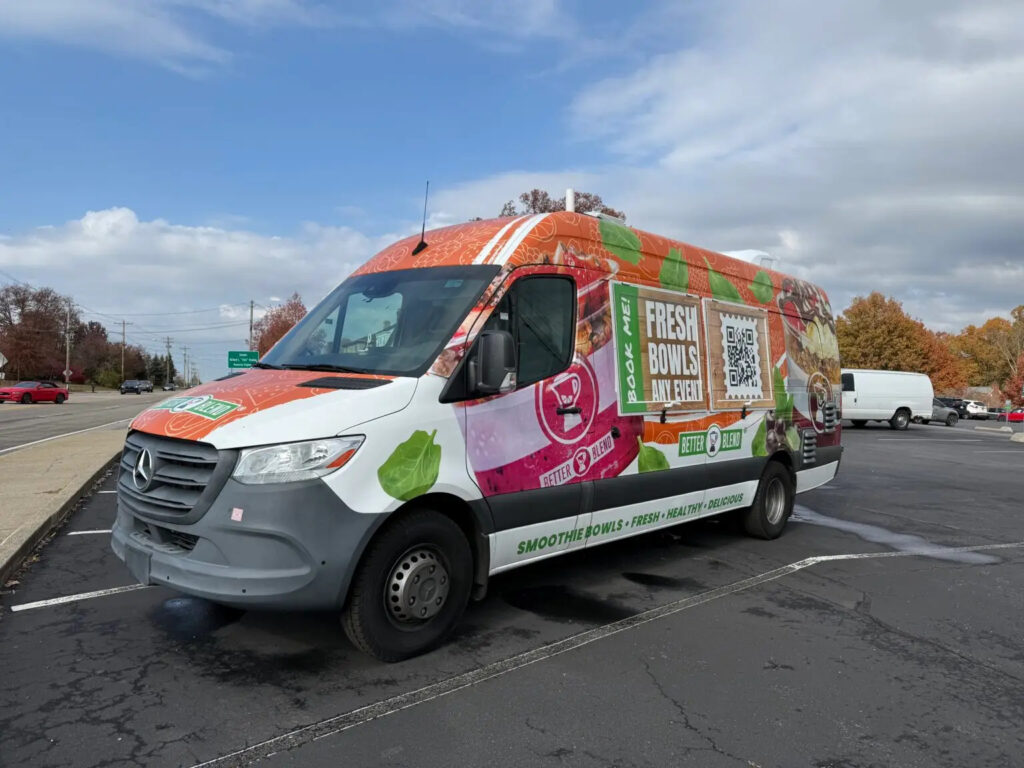
Fleet vehicles already travel through the markets a business wants to reach. For fleet managers, FMCs, and marketing teams evaluating where advertising spend goes the furthest, that existing route coverage raises a practical question: what happens when you put graphics on vehicles that are already making those trips every day?
Fleet vehicle wraps turn routine fleet activity into repeated brand exposure across every route, every market, and every stop, without a separate media placement to buy. The exposure runs for as long as the graphics last, on vehicles the organization is already operating. But the actual return depends on a few specific factors: how much the vehicles travel, how long the graphics hold up, how consistently the program is managed across the fleet, and whether the brand stays uniform from one vehicle to the next.
What Determines the Return on Fleet Vehicle Wraps
Exposure Starts With Vehicle Utilization
The value of any fleet graphics program ties directly to how much the vehicles move through populated areas. A delivery fleet running daily routes through metro corridors generates far more visibility than a fleet parked at a distribution center overnight. Route density, daily mileage, and the mix of highway versus local driving all shape how many people see the graphics on any given day.
The broader market validates the channel. Out-of-home advertising revenue reached a record $9.46 billion in 2025, with transit formats growing 9.2% year over year for the second consecutive year, according to the OAAA (March 2026). Fleet graphics sit within that growth because they offer something static placements cannot: the exposure moves with the vehicle, reaching different audiences across different areas without additional media spend.
For organizations managing truck fleet advertising programs across multiple states, that geographic flexibility is built in. There is no need to renegotiate billboard locations or adjust targeting when territories shift. The branding simply travels with the fleet. A service fleet covering three states this quarter and five states next quarter reaches those new markets automatically, without a separate media buy for each one.
Cost Structure Over the Graphic Lifespan
What separates fleet graphics from most other advertising formats is the absence of a recurring media fee. Once the vinyl is produced and installed, the vehicle generates exposure for as long as the graphics remain in good condition, without a monthly line item attached.
That does not mean the program has no ongoing costs. Fleet turnover, damage repairs, rebranding, and new vehicle additions all create recurring needs over time. But the per-vehicle investment delivers exposure across multiple years of service rather than a single campaign window, which is fundamentally different from channels that stop performing the moment the budget is paused.
The per-vehicle cost also varies by graphic type. Cut vinyl decals, partial wraps, and full wraps each carry different price points and visual impact. Business vehicle advertising at scale requires matching the right specification to the vehicle type, the brand’s objectives, and how the fleet is used, rather than defaulting to one option across the board.
Durability and Downtime in Practice
How Long Graphics Hold Up
Graphic lifespan depends on the vinyl product, installation quality, and conditions the vehicle operates in. 3M materials carry different durability ratings and application specifications depending on the film series and intended use, so there is no single lifespan that applies across every fleet. In practice, graphics can crack, peel at the edges, or bubble at corners over time, particularly when vehicles face demanding operating conditions or sustained temperature extremes.
Regular inspection helps catch wear before it spreads and requires a full panel replacement. Catching a peeling edge early is a minor repair. Ignoring it for six months can mean replacing an entire panel. A graphics partner with experience across different climates and vehicle types can recommend products that hold up under the conditions your fleet actually faces, which is more valuable than a blanket lifespan estimate that may not reflect your operating environment.
Managing Installation Without Pulling Vehicles for Days
Fleet managers evaluating fleet vehicle wraps often raise the same concern: how long will vehicles be off the road? For revenue-producing assets, every day out of service is a day without earnings.
The answer depends on planning. For new vehicles entering a fleet, graphics can be applied during the upfitting process at the dealer or upfitter, before the vehicle ever joins active service. For existing vehicles, installations can be scheduled during planned off-hours, weekends, or maintenance windows. The real issue most fleet managers face is not the installation itself. It is material lead times. Vinyl not arriving on schedule, or vehicles sitting idle while waiting for production to catch up, creates far more downtime than the application process.
That is a project management problem, not a graphics problem. And it is one of the clearest differences between providers who can handle scale and those who cannot. A provider with strong logistics and scheduling infrastructure can sequence installations across a fleet so that only a few vehicles are out of rotation at any given time. A provider without that infrastructure leaves fleet managers chasing timelines and absorbing unnecessary downtime.
How Program Management Affects the Return
The Real Challenges at Scale
Not every fleet graphics provider can handle multi-state, multi-vehicle-type rollouts. The complexity grows quickly when you are coordinating across dozens of locations, managing different vehicle makes and models, and holding color accuracy across every unit. Real fleet manager concerns go beyond design: vinyl arriving late, vehicles pulled from routes longer than expected while waiting on materials, and poor measurement leading to graphics cut off at door frames or laid over tail lights. These are operational failures that directly reduce the return on fleet vehicle wraps by extending vehicle downtime, requiring rework, and undermining brand consistency across the fleet.
For FMCs managing truck fleet advertising programs on behalf of end clients, the stakes are even higher. The FMC’s own reputation depends on the graphics partner delivering on time and on spec across every location, not just on the quality of the design file. A missed deadline or inconsistent output reflects on the FMC, regardless of which vendor caused the problem.
How Advertising Vehicles Manages the Process
Advertising Vehicles operates as a single point of contact for the entire fleet graphics process: creative adaptation across vehicle types, print production, logistics, scheduling, and installation oversight. For fleet managers and FMCs, that means one team accountable for the outcome rather than a chain of disconnected vendors. When a design needs to be adapted across box trucks, cargo vans, and passenger vehicles within the same fleet, that coordination happens internally rather than across three separate conversations with three separate providers.
Whether the program involves advertising vehicle wraps for a regional operation or a national rollout spanning multiple vehicle configurations and locations, the process stays centralized. For organizations investing in business vehicle advertising across a large fleet, that centralized coordination is what keeps advertising vehicle wraps delivering consistent exposure across every market the fleet serves, rather than becoming a logistics burden that fragments the brand and erodes the return on the original investment.
The Bottom Line
The marketing return on fleet vehicle wraps comes down to a few straightforward factors: how much the vehicles travel, how long the graphics last, how well the program is managed across locations and vehicle types, and whether the brand stays consistent across the fleet. When those factors are handled well, the investment delivers repeated exposure across every market the fleet serves, without a recurring media cost attached.
Advertising Vehicles helps organizations manage that process from design through installation, across fleets of every size. Learn more at advertisingvehicles.com.