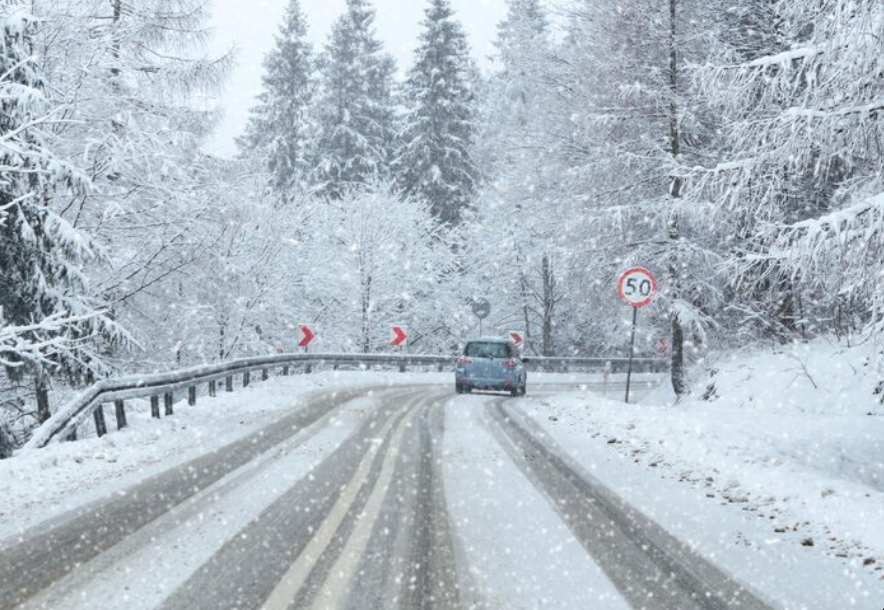
Mountain roads in winter ask more of a driver than almost anything else. The grade is steep, the surface changes by the minute, and a turn that felt fine on the way up can ice over by the time you head down. If you live near the mountains or visit them in the cold months, winter mountain driving is a skill worth taking seriously. Here is how to give yourself the best odds of getting where you are going and back.
Before You Leave
Most of the trouble people hit on a mountain road starts before they ever turn the key. Prep does the heavy lifting.
Tires Do the Real Work
No driving skill beats the wrong tires. Snow tires grip in cold and snow that all-season tires cannot match, and chains carry you through conditions that stop most cars. Many canyon roads run traction laws in winter, meaning you legally need snow tires, chains, or all-wheel drive with good tread to pass. Check your tires before the season, not at the bottom of the canyon with police turning cars around.
Clear the Whole Car
Before you pull out, clear snow and ice off every window, the mirrors, the lights, and the roof. A patch of clear windshield the size of a steering wheel is not enough, and snow left on the roof slides onto your glass the first time you brake hard, or onto the car behind you. Give the defroster a few minutes to do its job while you scrape. It costs five minutes and buys you the ability to actually see.
Pack for the Worst Case
Throw a kit in the trunk and forget about it until you need it. A blanket, water, snacks, a flashlight, gloves, a small shovel, and a phone charger cover most bad nights. If you slide off or get stuck behind a closure, that small box turns a scary wait into an annoying one. Top off the gas tank too, since idling for heat eats fuel fast.
On the Road
Once you are climbing, the rules are simple, and almost all of them come down to slowing down.
Slow Is the Whole Strategy
Speed is the thing that turns a small mistake into a big one on snow. Leave early so you are not rushing, drop well below the dry-road speed, and add a lot of room between you and the car ahead. Stopping distance on snow runs far longer than people guess. Smooth inputs win. Brake gently, steer gently, and feed the gas slowly so the tires keep their grip. Turn your headlights on even in daylight during snow, so other drivers can pick you out of the white.
Going Up & Coming Down
Climbing, your goal is steady momentum without spinning the tires, so pick a low gear and keep an even pace. Coming down is where more crashes happen, because gravity does the work and brakes overheat. Use a low gear to let the engine slow you instead of riding the brakes the whole way. Tap the brakes rather than holding them, and take the turns slower than feels needed.
When the Car Starts to Slide
If the back end steps out, ease off the gas and steer gently where you want the front to go. Do not stab the brakes, since that often makes it worse. If the front pushes wide, ease off and let the tires bite again before you steer more. Panic moves cause most of the damage. Calm, small corrections get you back in line.
Reading the Mountain
A big part of winter mountain driving happens before and around the drive, in the choices about if and when to go at all.
Weather & Road Closures
Mountain weather turns fast. Check the forecast for the pass, not the town, and watch for closure alerts, since crews shut roads for avalanche control and heavy snow. If the report looks bad, moving your plan by a few hours often beats pushing into a storm. There is no prize for being on the road during the worst of it.
Knowing When to Let Someone Else Drive
Some days the smart call is to not drive yourself. If the storm is heavy, the road is busy, or you simply do not have winter tires and experience, handing the drive to someone who runs these roads daily is the safer move. A chauffeur service like Altitude Transportation keeps vehicles set up for winter and drivers who read canyon conditions for a living. For a trip up to a resort in a storm, that can mean the difference between a tense morning and a calm one, and you arrive ready to enjoy the day instead of shaken from the drive.
The Calm Driver Gets Home
Winter mountain driving is not about bravery. It is about prep, patience, and knowing your limits. Good tires, a slow pace, an emergency kit, and an honest read of the weather will carry you through almost anything the mountains throw out. And on the days the conditions tip past your comfort, there is no shame in letting a pro take the wheel. The driver who gets home safe is the one who respected the road, not the one who rushed it.