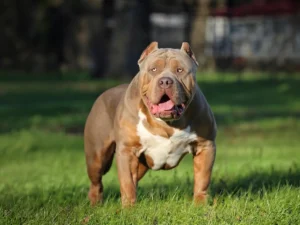
A puppy’s cuteness tells you nothing about its hips, heart, or genes. That is why smart buyers ask hard questions before sending a deposit, especially when searching for an American Bully Breeder in Kitsap County who claims to breed healthy dogs. This guide explains which screenings matter, what the results mean, and how to check that the paperwork is real, so you can choose a breeder with confidence and avoid avoidable heartbreak.
Why Health Testing Matters Before You Pick a Puppy
The American Bully is a companion breed built on a muscular, compact frame. That build is part of its charm, but heavy bone and a broad chest also put steady stress on joints, hearts, and airways. Many of the conditions that affect these dogs are inherited, so careful parent selection can lower the odds of passing them on.
Testing does not guarantee a flawless dog. It does show whether a breeder makes decisions from evidence instead of looks alone. A good American Bully breeder treats screening as a normal cost of breeding, not a bonus feature.
Screening falls into three groups: X-rays and physical exams, specialist checks of the heart and eyes, and DNA tests. A responsible program uses all three.
Orthopedic Screening: Hips, Elbows, and Knees
Joint problems are among the most common reasons bully-type dogs end up lame or in pain. They are also the area where testing is most established, mainly through the Orthopedic Foundation for Animals (OFA).
Hip Evaluation
Hip dysplasia is a polygenic condition, meaning many genes contribute to it. According to the OFA, environmental factors such as a high-calorie diet during rapid growth may worsen dysplastic hips but will not create hip dysplasia. Genetics come first, which is why parent screening matters.
For an official OFA certification, the dog must be at least 24 months old. Three independent, board-certified radiologists read the X-ray, and the result falls into one of seven categories: excellent, good, and fair count as normal, then borderline, then mild, moderate, and severe dysplasia.
Younger dogs can receive a preliminary evaluation from four months of age. These are useful for early planning, but they are not final. In an OFA-related study of four large breeds, a preliminary grade of good predicted a normal result at age two about 98% of the time, while a grade of fair predicted it about 77% of the time. Those dogs were not bullies, so treat the figures as a general guide only.
PennHIP is a second radiographic method. It measures how loose the hip joint is rather than assigning a grade. Either system is acceptable if the breeder can show the report.
Elbow Evaluation
Elbow dysplasia affects the front legs and often shows up as subtle, on-and-off lameness. OFA elbow certification also starts at 24 months, and breeders commonly submit hip and elbow X-rays during the same appointment. Look for “normal” results on both parents. If a breeder mentions a mild grade, ask why they chose that pairing and how they plan to offset it.
Patella and Other Joints
A kneecap that slips out of place (patellar luxation) is checked through a hands-on veterinary exam, not an X-ray. Some bully breeders also evaluate shoulders. These extra checks are a good sign, but hips and elbows remain the core pair.
Heart Evaluations
Congenital heart defects can stay hidden for years. A basic stethoscope exam by a general veterinarian can catch obvious murmurs, but it can miss structural problems.
A stronger option is an exam by a board-certified veterinary cardiologist, usually with an echocardiogram (a heart ultrasound). Breed clubs for other breeds, such as the American Rottweiler Club, recommend a cardiac evaluation at 24 months or older, ideally by a cardiologist, with the result recorded in the OFA database. Many American Bully programs list cardiac clearance among their minimum tests for the same reason.
When you ask a breeder about it, find out who performed the exam and how old the dog was. A heart check on an eight-week-old puppy tells you far less than one on a mature adult.
Eye and Breathing Checks
Eye Examinations
A veterinary ophthalmologist can spot inherited eye disease before it affects vision. The OFA eye certification is performed by a board-certified specialist, and the American College of Veterinary Ophthalmologists offers a search tool for locating one. Because eye certifications are normally renewed yearly, check the date on the paperwork.
Respiratory Function
Shorter-muzzled bully types can struggle with narrow nostrils, long soft palates, and noisy breathing. The OFA offers a respiratory function evaluation based on a physical exam. A breeder who tests this, or at least can describe how their dogs breathe during exercise and in warm weather, is thinking about quality of life and not only appearance.
DNA Panels: What They Screen For
DNA tests use a cheek swab and look for known gene variants. They are done once in a dog’s life, since DNA does not change, and they are usually inexpensive compared with X-rays.
Panels designed for the breed differ by lab. One American Bully panel from Paw Print Genetics includes degenerative myelopathy, hyperuricosuria (a condition linked to bladder and kidney stones), a type of ichthyosis (scaly skin), multifocal retinopathy, and a progressive retinal atrophy variant seen in American Staffordshire Terriers. A European lab’s combination adds cystinuria and neuronal ceroid lipofuscinosis.
Reading Clear, Carrier, and At-Risk Results
Most of these conditions are recessive. A “clear” dog has no copy of the variant. A “carrier” has one copy and is usually healthy. An “at-risk” dog has two copies and may develop the disease.
A carrier bred to a clear dog will not produce affected puppies, though some pups will be carriers. Two carriers bred together can produce affected puppies. That is why testing both parents and planning pairings matters more than chasing a perfect panel.
Why Interpretation Matters
Not every flagged variant has proven to cause disease in this breed. Some breeders and breed publications note that certain retinal variants have not been confirmed to cause blindness in American Bullies. A thoughtful breeder will explain what each result means for their dogs rather than hiding behind a certificate.
Health Tests at a Glance
The table below summarizes the screenings covered in this article, what each one looks for, and the proof you should request.
| Test | What It Screens For | Typical Timing | Proof to Ask For |
|---|---|---|---|
| OFA or PennHIP hips | Hip dysplasia and joint looseness | Final OFA result at 24+ months | OFA record or PennHIP report |
| OFA elbows | Elbow dysplasia | 24+ months | OFA record |
| Patella exam | Slipping kneecaps | Adult dog, physical exam | Veterinary or OFA report |
| Cardiac exam | Congenital heart disease | Adult dog, ideally by a cardiologist | Cardiologist report or OFA record |
| Eye exam | Inherited eye disease | Adult dog, repeated yearly | Ophthalmologist report |
| Respiratory evaluation | Airway obstruction | Adult dog, physical exam | OFA or veterinary report |
| DNA panel | Recessive genetic conditions | Once, any age | Lab certificate with registered name |
Use the table as a conversation guide. A breeder does not need every row to be perfect, but they should be able to explain each result and why they bred that pair.
How to Verify a Breeder’s Results
Trust is good, but documents are better. A few simple steps will tell you whether the testing is real.
- Ask for the registered names or microchip numbers of both the sire and the dam, not just one parent.
- Search the OFA public database yourself to confirm the result, date, and dog’s identity.
- Confirm the test date and the dog’s age at the time of testing.
- Request copies of cardiac and eye reports, which often do not appear in public databases.
Keep in mind that the OFA does not publish dysplastic results unless the owner agrees, so an empty search is not proof of a failure. It does mean you should ask for the paperwork directly. A statement such as “vet checked” or “healthy parents” is not a health test.
Local Considerations for Kitsap County Buyers
You do not have to travel far to find a breeder who tests. According to the OFA, any licensed veterinarian can take the X-rays for OFA hip and elbow evaluations, so a breeder in Bremerton, Port Orchard, Poulsbo, or Silverdale can complete the process through a regular local clinic.
Visit in person if possible. Meet the parents, see where the puppies are raised, and ask how the adults move and breathe. Then book a veterinary exam for your puppy within the first few days and read the health guarantee carefully. A fair guarantee describes what is covered, for how long, and what the breeder will do if a genetic issue appears.
Red Flags That Should Slow You Down
Some warning signs appear before you ever see a puppy. Be cautious if a breeder:
- Cannot name the tests completed on the parents or refuses to share copies
- Uses only a puppy’s general vet visit as proof of health
- Dismisses hip, elbow, or heart screening as unnecessary
- Sells puppies without any written guarantee or contract
- Breeds dogs with known problems and will not discuss the reasoning
A transparent breeder welcomes questions. One who gets defensive about basic testing is telling you something important.
Conclusion
Choosing a puppy is a long-term commitment, and health testing is the most practical way to protect it. Hips, elbows, heart, eyes, airways, and a breed-appropriate DNA panel together give a fuller picture than any single certificate. Ask for proof, verify it, and look for a breeder who can explain results honestly, including imperfect ones. No screening removes every risk, but a careful breeder narrows it. Take your time, visit in person, and choose the program that answers your questions with documents rather than promises.
Frequently Asked Questions
At what age can a bully be OFA certified for hips and elbows?
OFA certification requires the dog to be at least 24 months old. Preliminary evaluations are available from four months, but they are advisory rather than final.
Is a DNA test enough on its own?
No. DNA tests cover specific inherited variants, but they cannot detect hip dysplasia, elbow dysplasia, or heart defects. Those need X-rays and exams.
What does it mean if a parent is a carrier?
A carrier has one copy of a recessive variant and is typically healthy. It becomes a concern only when two carriers are bred together, so a responsible breeder pairs carriers with clear dogs.
Can a puppy be health tested instead of the parents?
Puppies can have a general exam, DNA tests, and preliminary X-rays, but parent testing is what guides breeding decisions. Always ask about the sire and dam first.
Do health tests make a puppy more expensive?
Often yes, because screening costs time and money. That cost usually reflects a breeder’s investment in the dogs, and it can save you far more in veterinary bills later.