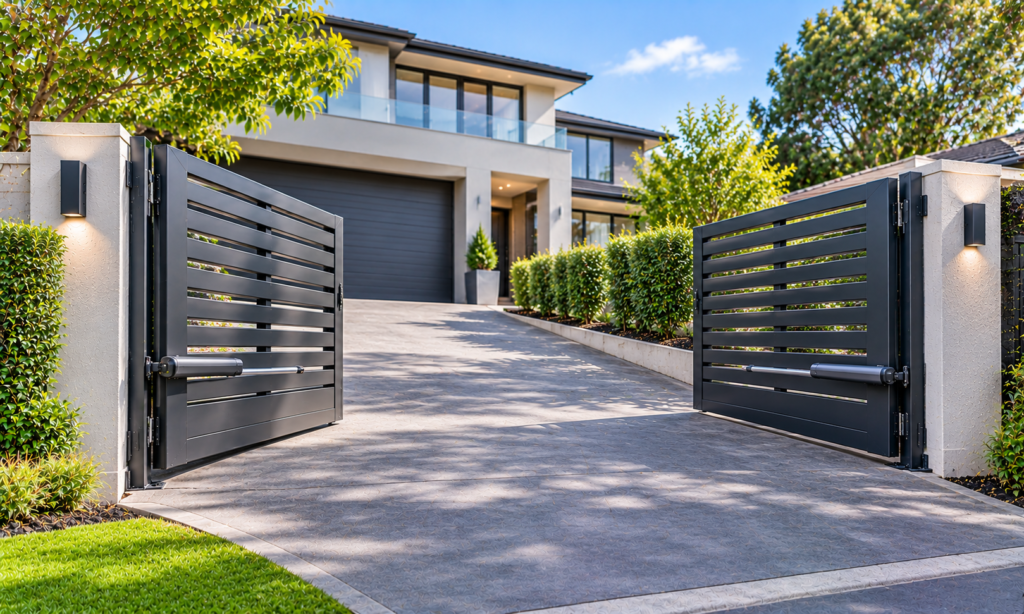
Installing a swing gate is a good way to improve the security, privacy, and appearance of your property. Swing gates come in many styles, sizes, and materials, making them a suitable choice for different types of homes and commercial properties. However, installing one on a sloped driveway requires extra planning. Unlike a flat driveway, an uneven or sloping surface can affect how the gate opens, closes, and moves.
A poorly planned installation can cause the bottom of the gate to scrape against the ground or prevent it from opening fully. It can also put extra pressure on the hinges, support posts, and automatic motor. These problems may lead to frequent repairs and affect the gate’s daily use. Before choosing a swing gate, it is important to understand your driveway’s slope, available space, ground clearance, and installation needs.
If you are planning to install Swing Gates Melbourne, understanding these factors will help you select a design that works well with your driveway. Here are some important things to consider before starting the installation.
1. Understand the Driveway Slope
The first thing to check is the angle and direction of your driveway. Some driveways have a slight slope, while others have a steep rise or fall near the entrance. This difference can affect the type of swing gate you can install and how it will operate.
For example, if your driveway rises towards the property, the bottom of an inward-opening gate may hit the ground. If the driveway slopes downwards, the gate may need a different design to maintain enough clearance while opening and closing.
Before choosing a gate, make sure you:
-
Measure the slope near the entrance.
-
Check whether the driveway rises or falls towards the property.
-
Look for uneven areas that could affect gate movement.
-
Identify drains, kerbs, and other objects near the entrance.
A proper site inspection will help determine how the gate should be designed and positioned.
2. Select the Right Opening Direction
The opening direction is another important factor when installing a swing gate on a sloped driveway. Most swing gates open either inward or outward. The right choice depends on the driveway layout, available space, and direction of the slope.
If the gate opens inward on an upward-sloping driveway, it may not have enough room to move without touching the ground. An outward-opening gate may solve this issue in some cases, but it must not block a footpath, road, or public area.
Consider these points before deciding:
-
Inward opening: Check that the gate has enough clearance from the rising driveway.
-
Outward opening: Make sure it does not create problems for passing vehicles or pedestrians.
-
Side clearance: Check for walls, fences, trees, and other nearby obstacles.
Choosing the correct opening direction will help the gate move smoothly and make daily access easier.
3. Choose a Suitable Gate Design
Not every swing gate is suitable for a sloped driveway. A standard rectangular gate may work on a gentle slope, but a steeper driveway may require a specially designed gate.
The shape of the gate and the gap between its bottom edge and the ground should be considered before installation. The goal is to prevent the gate from scraping while keeping the entrance looking neat.
Some common options include:
Standard Swing Gates
These gates have a simple design and may work well on driveways with a slight slope. They need enough ground clearance to open without touching the surface.
Raked Swing Gates
Raked gates have an angled bottom edge that follows the slope of the driveway. This design can help maintain a more even gap between the gate and the ground.
Stepped Swing Gates
These gates have a stepped bottom design that can suit driveways with noticeable changes in ground level.
Custom Swing Gates
Custom designs are useful when the driveway has an unusual shape or a steep slope. They can be made to match the property’s layout and access needs.
Selecting the right design will help prevent movement problems and improve the overall appearance of the entrance.
4. Check the Available Space
Swing gates need enough room to open and close without hitting anything nearby. On a sloped driveway, this becomes even more important because the ground level can affect the gate’s movement.
Before installation, measure the entrance and check the space on both sides of the gate. Make sure the gate can open fully without touching the driveway, walls, fences, or garden areas.
You should also consider the space needed for vehicles to enter and leave comfortably. A gate that opens only halfway may make it difficult for larger vehicles to pass through.
Some important measurements include:
-
The width between the two gate posts.
-
The space needed for each gate panel to swing.
-
The height difference between the driveway and surrounding ground.
-
The distance from nearby walls and other structures.
Taking accurate measurements before installation can help avoid design changes and extra costs later.
5. Pick the Right Gate Material
The material you choose affects the gate’s weight, strength, appearance, and maintenance needs. This is especially important for sloped driveways because heavy gates can put more pressure on hinges, posts, and motors.
Aluminium and steel are popular choices for swing gates. Each material has its own benefits, so your decision should depend on your property and how you plan to use the gate.
Aluminium Gates
Aluminium gates are lightweight and resistant to rust and corrosion. Their lower weight can make them a suitable option for automatic swing gate systems. They are also available in different colours and styles.
Steel Gates
Steel gates are known for their strength and durability. They are a good choice when security is a major concern. However, their weight means they need strong support posts, suitable hinges, and a properly sized motor.
Timber-Look Gates
Timber-look gates offer a natural appearance and can suit many modern and traditional properties. They provide the look of timber while using materials that may require less maintenance.
Before making a decision, consider the local weather, gate size, weight, and the amount of maintenance you are comfortable with.
6. Pay Attention to Hinges and Support Posts
Hinges and support posts are important parts of any swing gate system. They carry the gate’s weight and allow it to move properly. If these parts are not strong enough or installed in the correct position, the gate may become uneven or difficult to operate.
A sloped driveway can make proper alignment more challenging. The hinges must be positioned carefully to provide enough ground clearance throughout the opening movement.
Before installation, make sure:
-
The posts can support the full weight of the gate.
-
The hinges are suitable for the gate’s size and design.
-
The foundations are strong and properly installed.
-
The gate stays level and aligned during movement.
Using suitable hardware can help prevent sagging, reduce wear, and support smooth operation over time.
7. Consider an Automatic Swing Gate System
Automatic swing gates make entering and leaving your property more convenient. You can operate them using a remote control, keypad, or other access system without having to open the gate manually.
However, automation needs careful planning when the driveway is sloped. The motor must be suitable for the gate’s weight, size, and opening direction. If the motor is too weak, it may struggle to move the gate properly.
Here are some things to check before choosing an automatic system:
-
Motor capacity: Choose a motor that can handle the gate’s weight.
-
Opening range: Make sure the motor supports the required movement.
-
Safety sensors: Install sensors to detect vehicles and other obstacles.
-
Manual release: Make sure the gate can be operated during a power failure.
-
Weather protection: Choose outdoor-rated electrical equipment.
A suitable automation system can make daily use easier while supporting safe and reliable operation.
8. Make Sure Water Can Drain Properly
Water drainage is another factor to consider before installing a swing gate. Rainwater naturally flows down a sloped driveway and may collect near the entrance if there is no proper drainage system.
Standing water can affect the gate foundations, hinges, and electrical components. Over time, it may also cause soil movement around the support posts.
To prevent these problems, check the drainage around the entrance before installation. Drainage channels may be needed to direct water away from the gate area.
Make sure that water does not collect around the gate posts and that drainage channels do not interfere with the gate’s movement. Proper drainage planning can help protect the gate and reduce future maintenance problems.
9. Check Safety and Installation Requirements
Safety should always be considered when installing swing gates. A gate that opens onto a busy road or footpath can create problems for pedestrians and passing vehicles. Automatic gates also need suitable safety features to reduce the risk of accidents.
Before installation, check the local rules and requirements that apply to your property. Make sure the gate does not block public access or create an unsafe entrance.
Some useful safety features include:
-
Obstruction sensors to detect objects in the gate’s path.
-
Warning lights for automatic gate operation.
-
Secure locking systems.
-
Manual release options during power failures.
-
Safe gaps around moving gate sections.
Proper installation and regular safety checks will help keep the gate suitable for everyday use.
10. Plan for Regular Maintenance
Once your swing gate is installed, regular maintenance will help keep it working properly. Dust, dirt, moisture, and regular movement can affect the hinges, motor, and other parts over time.
Sloped driveways may also need extra attention because changes in ground levels can affect the gate’s clearance and alignment.
A simple maintenance routine should include:
-
Checking hinges and tightening loose fittings.
-
Removing dirt and leaves from the gate’s movement area.
-
Inspecting posts and foundations for movement.
-
Testing the motor and safety sensors.
-
Checking for rust, scratches, and damaged finishes.
If the gate starts making unusual noises, moves unevenly, or becomes difficult to open, arrange an inspection to find the problem early.
Final Thoughts
Installing a swing gate on a sloped driveway requires careful planning and the right design. The driveway angle, opening direction, gate material, ground clearance, available space, and automation system all play an important role in the final result.
A well-designed gate can improve property security, make vehicle access more convenient, and add to the appearance of your entrance. Before starting your project, take time to understand your driveway’s layout and choose a gate that suits its ground level and available space.
For property owners considering a suitable gate solution, iGate Automation offers gate and automation options to match different property needs. You can explore the available designs and services at iGate Automation to learn more about choosing the right gate for your entrance.
With the right design, proper installation, and regular maintenance, a swing gate can provide smooth operation, reliable access, and lasting value for your property.