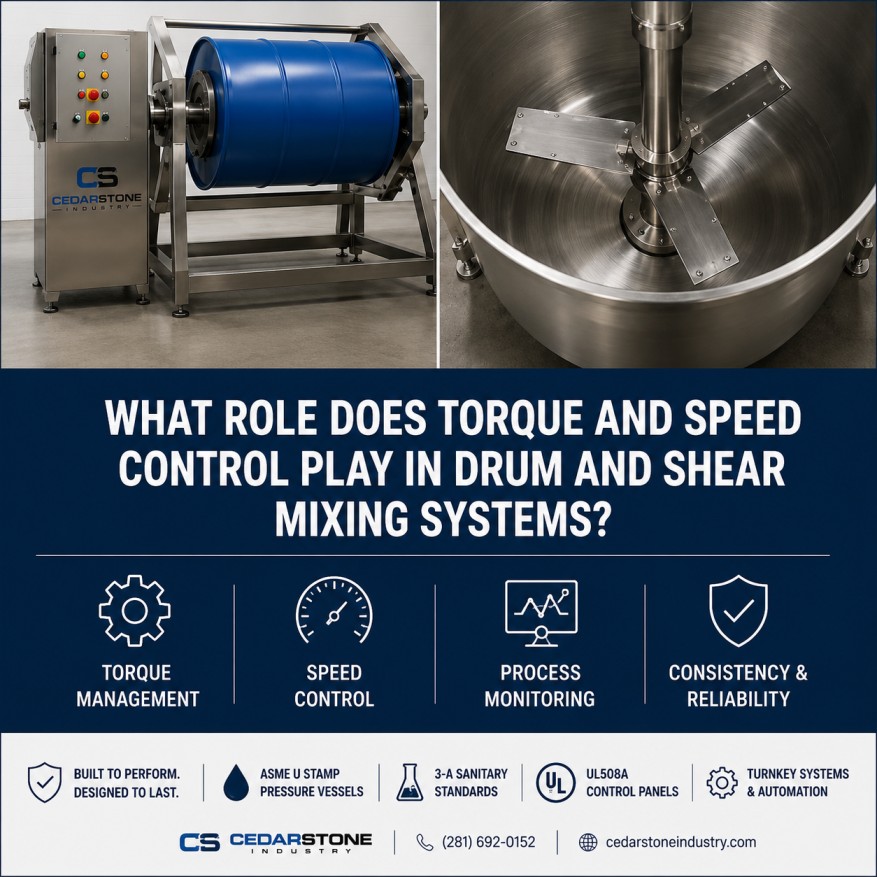
Mixing systems are not just about spinning blades or rotating containers. The real magic lies in how torque and speed are controlled. These two parameters directly influence flow patterns, energy input, and ultimately, mixing uniformity. Whether you are working with a Drum mixer or a high-intensity shear system, getting these controls right is critical for consistent performance.
Understanding Torque in Mixing Systems
Torque refers to the rotational force applied to move materials inside a mixer. In simple terms, it is what keeps the system turning under load. The thicker or heavier the material, the more torque is required.
In industrial mixing, torque is not just about power. It also provides insight into material behavior. For example, a sudden increase in torque may indicate higher viscosity or poor flow. Operators often use this data to adjust processing conditions on the fly.
For drum-based systems, torque must be sufficient to rotate the entire load without stalling. That becomes even more important in a 55-gallon drum mixer, where batch sizes are larger and materials can be unevenly distributed.
The Importance of Speed Control
Speed determines how fast the mixing action occurs. It affects shear rate, flow circulation, and blending efficiency. Too slow, and materials may not mix properly. Too fast, and you risk splashing, air entrainment, or even product degradation.
In shear mixing systems, speed is the main driver of intensity. High speeds generate strong shear forces that break down particles and disperse them evenly. However, excessive speed can lead to overheating or structural damage to sensitive ingredients.
In contrast, a Drum mixer relies more on controlled rotation. The goal is to create a steady tumbling motion. This ensures materials fold over each other and blend gradually.
How Torque and Speed Work Together
Torque and speed are closely linked. Increasing speed often requires more torque, especially when dealing with dense or viscous materials. That is why modern mixing systems use variable frequency drives or similar controls to balance both parameters.
For example, starting a batch at low speed with high torque helps initiate movement. Once the material begins to flow, speed can be increased while maintaining stable torque. This approach prevents mechanical stress and ensures smooth operation.
In shear systems, this balance is even more critical. High-speed rotation demands precise torque control to avoid overloading the motor. Meanwhile, in drum systems, consistent torque ensures the load keeps moving without interruptions.
Application in Drum Mixing Systems
A Drum mixer is widely used for blending powders, granules, and even some liquids. Its design focuses on bulk movement rather than intense shear.
Torque Considerations in Drum Mixers
Must handle full load weight during rotation
Needs to overcome initial resistance when starting
Should remain stable to avoid jerky motion
In a 55-gallon drum mixer, torque requirements increase due to larger volume and weight. Uneven loading can also create imbalances, so the system must compensate effectively.
Speed Considerations in Drum Mixers
Moderate speeds promote proper tumbling
Excessive speed may cause centrifugal effects
Controlled rotation ensures even distribution
Operators often fine-tune speed based on material type. For instance, free-flowing powders require less aggressive rotation compared to sticky or cohesive blends.
Application in Shear Mixing Systems
Shear mixers operate on a completely different principle. They rely on high-speed rotors to generate intense mixing forces.
Torque in Shear Systems
Torque must remain stable even at high speeds. Any fluctuation can disrupt the mixing process. Additionally, torque monitoring helps detect changes in viscosity or phase transitions during mixing.
Speed in Shear Systems
Speed is the primary factor controlling shear intensity. Higher speeds increase energy input, leading to faster dispersion. However, there is a limit. Beyond a certain point, additional speed does not improve mixing and may even harm the product.
Impact on Mixing Uniformity
Proper control of torque and speed directly improves mixing uniformity. When both parameters are optimized, materials move efficiently and interact consistently.
In drum systems, uniform tumbling ensures that all particles experience similar movement. This reduces segregation and improves blend quality.
In shear systems, controlled speed and torque ensure even distribution of energy. This leads to consistent particle size and homogeneity.
On the flip side, poor control can create dead zones or uneven mixing. That often results in rework or batch rejection, which no one wants.
Energy Efficiency and Equipment Longevity
Another important aspect is energy consumption. Running a mixer at higher speed than necessary wastes energy. Similarly, excessive torque can strain mechanical components.
By optimizing both parameters, facilities can reduce operating costs and extend equipment life. It is a practical benefit that adds up over time.
Final Thoughts
Torque and speed control are not just technical settings. They are fundamental to how mixing systems perform. A Drum mixer depends on steady torque and controlled rotation to achieve uniform blending, especially in large setups like a 55-gallon drum mixer. Meanwhile, shear systems rely on precise speed and torque balance to deliver high-intensity mixing.
When these factors are aligned with material properties and process goals, the results speak for themselves. Better uniformity, improved efficiency, and reliable performance become the norm. And that is exactly what industrial operations aim for every day.
Suggested Cedarstone Call to Action
Looking for a custom stainless steel mixing solution? Cedarstone Industry designs and manufactures stainless steel mixing tanks, drum mixers, high shear mixers, sanitary process equipment, CIP systems, and complete automated processing skids. Contact our engineering team to discuss your application.