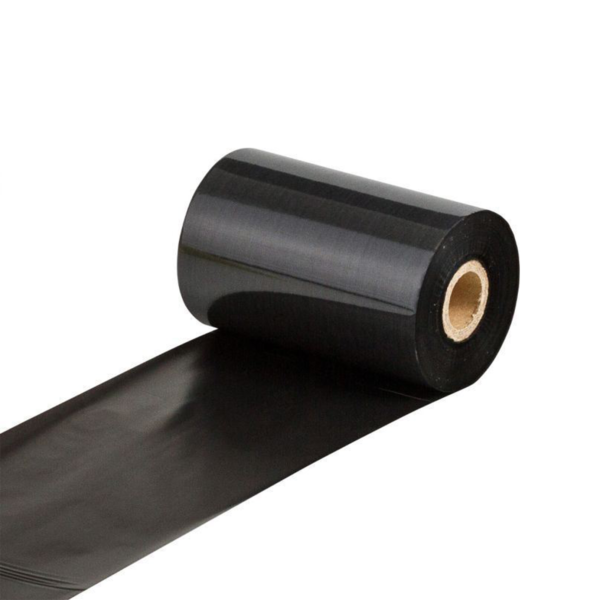
High-quality barcode printing is essential for businesses that depend on accurate product identification, inventory tracking, shipping labels, and clear product information. From warehouses and manufacturing facilities to retail stores, logistics companies, and healthcare organisations, reliable labels help maintain efficient operations. Choosing the right wax resin thermal transfer ribbon can improve print quality, support barcode readability, and provide better resistance to smudging, abrasion, and certain environmental conditions.
Thermal transfer printing uses a heated printhead to transfer ink from a ribbon onto a label or other compatible printing material. Different ribbon formulations are designed for different applications. Wax ribbons are generally suited to economical, everyday label printing, while resin ribbons are often selected for demanding applications that require greater durability. Wax resin ribbons combine characteristics of both formulations, making them a versatile option for businesses that need a balance between print quality, durability, and cost.
However, the performance of a ribbon depends on more than its formulation. Label material, printer compatibility, print speed, temperature settings, and environmental conditions can all influence the final result.
This guide explains what wax resin thermal transfer ribbons are, how they work, their main benefits, common applications, and how to select the right ribbon for your business. It also covers printer compatibility, storage, troubleshooting, and frequently asked questions.
What Is a Wax Resin Thermal Transfer Ribbon?
A wax resin thermal transfer ribbon is a consumable used in thermal transfer printers to produce text, barcodes, graphics, and other information on compatible labels.
The ribbon contains an ink coating formulated with a combination of wax and resin components. During printing, the printer’s heated printhead transfers selected areas of this coating onto the label surface.
The wax component supports efficient ink transfer and can help produce clear prints under suitable conditions. The resin component contributes to the durability and resistance of the printed image, depending on the formulation and label material.
A wax resin thermal transfer ribbon is often chosen when a standard wax ribbon does not provide enough durability, but a full resin ribbon may be unnecessary or too expensive for the application.
These ribbons can be used with compatible paper and certain synthetic label materials. However, not every wax resin ribbon works equally well with every label surface.
Before purchasing, businesses should check the ribbon manufacturer’s specifications, the label material, and the printer’s requirements.
How Does a Wax Resin Thermal Transfer Ribbon Work?
Thermal transfer printing relies on controlled heat and pressure to transfer ink from a ribbon onto a label.
Ribbon and Label Movement
The printer feeds the label and ribbon through the print mechanism. The ribbon passes between the heated printhead and the label surface.
As the label moves through the printer, the printhead activates selected heating elements according to the information being printed.
Heat-Based Ink Transfer
The heated elements cause the appropriate areas of the ribbon’s ink coating to transfer onto the label.
The resulting image forms text, barcodes, product information, serial numbers, or other printed content.
The precise transfer process depends on the ribbon formulation, printhead settings, and label surface.
Formation of a Durable Printed Image
Once the ink transfers to the label, the printed image should remain clear under the conditions for which the ribbon and label combination was designed.
Wax resin formulations can provide improved resistance to smudging and abrasion compared with some standard wax ribbons. However, actual performance varies by product and application.
For demanding conditions involving chemicals, prolonged outdoor exposure, or extreme temperatures, businesses should test the complete label system before choosing a ribbon.
Key Features of Wax Resin Thermal Transfer Ribbons
Understanding the main features of these ribbons helps businesses choose the right printing consumable.
Balanced Wax and Resin Formulation
The combination of wax and resin is the defining characteristic of this ribbon type.
Wax supports ink transfer and can help produce good print quality on compatible materials. Resin contributes to resistance against rubbing, smudging, and certain environmental influences.
The balance between these components varies by manufacturer and product series, so performance should be evaluated using the manufacturer’s specifications.
Clear Text and Barcode Printing
Wax resin ribbons can produce sharp text, graphics, and barcodes when matched with a suitable label and printer.
Clear printing is important for inventory systems, shipping operations, retail identification, and product tracking.
Businesses should test barcode readability using the scanning equipment and conditions encountered in their actual operations.
Improved Abrasion Resistance
Printed labels may experience friction during handling, packaging, transportation, and storage.
Compared with some standard wax ribbons, wax resin formulations can provide better resistance to abrasion on suitable label materials.
The amount of resistance depends on the formulation, label surface, print settings, and environmental conditions.
Compatibility With Selected Label Materials
Wax resin ribbons can work with certain coated paper labels and compatible synthetic materials.
The correct combination depends on the specific ribbon and label surface. Some applications may require a specialised resin ribbon rather than a wax resin formulation.
Checking compatibility before purchasing in bulk can help reduce print defects, waste, and unnecessary costs.
Options for Different Printer Configurations
Thermal transfer ribbons are available in different widths, lengths, core sizes, and winding configurations.
These specifications must match the printer’s ribbon mechanism and the label width.
Businesses should check whether their printer requires an ink-side-in or ink-side-out ribbon and confirm the supported roll dimensions before ordering.
Benefits of Using Wax Resin Thermal Transfer Ribbons
Wax resin ribbons offer several advantages for applications that require more durability than basic paper label printing.
Better Durability Than Many Standard Wax Ribbons
In suitable printing conditions, wax resin ribbons can produce images that resist rubbing and smudging better than some standard wax ribbons.
This can be useful for labels that undergo frequent handling or movement through a distribution network.
However, the degree of improvement varies, and the ribbon should be tested with the actual label material.
Versatile Printing Applications
Wax resin ribbons can be suitable for businesses that print different types of labels across their operations.
Depending on the product, they may be used for inventory labels, logistics identification, product information, warehouse tracking, and selected synthetic label applications.
This versatility can help businesses standardise certain printing consumables, provided the ribbon meets the requirements of each application.
Reliable Barcode Readability
Accurate barcode printing supports efficient scanning and data capture.
A compatible wax resin ribbon can produce clear bars, spaces, and text when printer settings and label materials are appropriate.
Businesses should verify barcode quality under real operating conditions, particularly when labels are used in automated warehouses or high-volume shipping systems.
Potential Cost Efficiency
Wax resin ribbons can provide a middle-ground option between economical wax ribbons and more specialised resin ribbons.
For applications that need moderate durability, this balance may help businesses avoid paying for performance they do not require.
The most economical choice depends on the full cost of printing, including ribbon consumption, label materials, printhead wear, rejected labels, and replacement requirements.
Suitable for Selected Synthetic Labels
Some wax resin ribbons are designed to work with specific synthetic label materials.
These combinations may be useful where paper labels lack the required durability.
However, compatibility varies. Businesses should not assume that a wax resin ribbon will perform well on every plastic label.
Common Applications of Wax Resin Thermal Transfer Ribbons
Wax resin ribbons are used in different industries where printed labels must remain legible during handling and distribution.
Warehousing and Inventory Management
Warehouses rely on labels to identify stock, storage locations, cartons, and inventory items.
Printed information may include product codes, barcodes, batch numbers, and location identifiers.
Wax resin ribbons can be suitable for selected warehouse labels that require clear printing and additional resistance to handling compared with basic wax-ribbon applications.
Shipping and Logistics
Shipping labels help identify parcels, cartons, and freight throughout transportation.
Labels may experience friction as packages move through sorting systems, vehicles, distribution centres, and delivery operations.
A suitable wax resin ribbon can help maintain readable information when paired with compatible labels. Businesses should test performance for the expected shipping conditions.
Manufacturing and Product Identification
Manufacturers often use labels to identify components, finished goods, production batches, and equipment.
Depending on the production environment, labels may need to withstand frequent handling or exposure to selected environmental conditions.
Wax resin ribbons can be appropriate for some product identification tasks, but labels exposed to aggressive chemicals, high temperatures, or demanding industrial conditions may require a specialised resin ribbon.
Retail and Distribution
Retailers and distributors use labels for stock identification, shelf management, carton tracking, and internal inventory systems.
Wax resin ribbons can provide clear printing for compatible label materials where improved abrasion resistance is useful.
The exact ribbon should be selected according to the label type, printer, and expected handling conditions.
Healthcare and Laboratory Labelling
Healthcare facilities and laboratories may use thermal transfer printing for selected inventory, specimen, equipment, and tracking labels.
Label performance is particularly important when information must remain readable throughout handling and storage.
However, the appropriate ribbon depends on the label material, exposure conditions, and applicable requirements. Labels intended for cryogenic storage, chemical exposure, or specialised laboratory applications may need a dedicated ribbon and label combination.
Asset Tracking
Businesses use asset labels to identify equipment, tools, devices, and other items.
These labels may be handled frequently and need to remain legible over time.
Wax resin ribbons can be useful for certain asset labels, but applications requiring prolonged outdoor exposure, strong chemical resistance, or very high durability may require a full resin formulation.
Wax Resin vs Wax vs Resin Thermal Transfer Ribbons
Choosing between ribbon types depends on the application, label material, and required durability.
Wax Ribbons
Wax ribbons are generally an economical choice for printing on compatible paper labels.
They are commonly used for shipping labels, retail labels, and general inventory identification where extreme resistance is not required.
However, printed images may be more vulnerable to abrasion or smudging than images produced by certain wax resin or resin ribbons.
Wax Resin Ribbons
Wax resin ribbons combine wax and resin components to balance print quality, durability, and cost.
They can be useful for applications that require better resistance to handling than many standard wax ribbons provide.
Their suitability depends on the exact formulation and the label material.
Resin Ribbons
Resin ribbons are generally designed for demanding applications requiring greater resistance to abrasion, chemicals, heat, or environmental exposure, depending on the product.
They are often used with compatible synthetic labels.
Resin ribbons may require specific printer settings and compatible label materials, and they can have a higher purchase cost than wax-based alternatives.
Businesses should select the formulation based on actual performance requirements rather than assuming that the most expensive ribbon is always the best option.
How to Choose the Right Wax Resin Thermal Transfer Ribbon
Selecting a suitable ribbon requires checking several technical factors.
Confirm Printer Compatibility
Check the printer model and its supported ribbon dimensions.
Important details include ribbon width, roll length, core size, maximum roll diameter, and winding direction.
The ribbon must also be compatible with the printer’s thermal transfer mechanism.
Using the wrong dimensions or winding configuration can cause installation problems, poor printing, or wasted consumables.
Match the Ribbon to the Label Material
The label surface plays a major role in print quality and durability.
Some wax resin ribbons perform well on coated paper, while others are designed for particular synthetic materials.
Ask the ribbon supplier for compatibility guidance and test the combination before placing a large order.
Consider Required Durability
Determine how the label will be handled after printing.
If it will remain in a warehouse under normal conditions, a standard wax ribbon may be sufficient. If it will experience repeated friction or more demanding handling, a wax resin ribbon may be a better option.
For labels exposed to harsh chemicals, extreme temperatures, or prolonged outdoor conditions, evaluate whether a full resin ribbon is necessary.
Check Print Speed and Temperature Settings
Different ribbons may perform best at different printhead temperatures and speeds.
Incorrect settings can cause faint printing, smudging, poor transfer, or excessive ribbon consumption.
Follow the manufacturer’s recommendations and adjust settings gradually when testing a new ribbon.
Evaluate Barcode Quality
If labels contain barcodes, confirm that the printed codes can be scanned reliably.
Print quality depends on the ribbon, label material, printer resolution, speed, and settings.
Testing should include the scanning devices and operating conditions used by the business.
Compare Total Printing Costs
Do not compare ribbon prices alone.
Consider ribbon length, label waste, print quality, maintenance requirements, printhead wear, and the frequency of reprinting.
A slightly more expensive ribbon may offer better overall value if it reduces rejected labels or improves performance for the intended application.
Common Printing Problems and How to Solve Them
Thermal transfer printing issues can often be addressed by checking the ribbon, label, and printer settings.
Faint or Incomplete Printing
Faint printing may result from insufficient printhead energy, incorrect ribbon selection, poor compatibility, or an unsuitable print speed.
Check the manufacturer’s recommended settings and confirm that the ribbon is appropriate for the label material.
Smudged or Easily Scratched Labels
Smudging may indicate that the ribbon and label combination is unsuitable or that printing settings need adjustment.
Check ribbon compatibility, printhead temperature, and handling conditions.
If the label requires greater durability, consider a more suitable wax resin or resin formulation.
Wrinkled Ribbon
Ribbon wrinkles can create uneven printing and wasted material.
Check whether the ribbon is installed correctly, the tension is suitable, and the printhead mechanism is clean.
Follow the printer manufacturer’s maintenance instructions.
Poor Barcode Scanning
Poor barcode readability may result from low print contrast, incorrect settings, damaged labels, or unsuitable ribbon and label combinations.
Review printer resolution, speed, temperature, and barcode dimensions. Test the printed codes with the actual scanning equipment.
Frequent Ribbon Breakage
Ribbon breakage may result from incorrect installation, excessive heat, damaged ribbon material, or unsuitable printer settings.
Check the installation process and use the manufacturer’s recommended settings. If the issue continues, consult the printer or ribbon supplier.
Storage and Maintenance Tips
Proper storage helps maintain ribbon quality and reduce printing problems.
Store ribbons according to the manufacturer’s recommended temperature and humidity conditions. Keep them in their original packaging until needed and protect them from dust, moisture, direct sunlight, and other conditions that may affect performance.
Avoid touching the ink coating unnecessarily, as contamination can affect print quality.
Keep the printer’s printhead and rollers clean according to the manufacturer’s maintenance instructions. Remove accumulated residue using approved cleaning materials and procedures.
Inspect ribbons before installation and avoid using products that are damaged or stored outside the recommended conditions.
Businesses that purchase ribbons in bulk should rotate stock appropriately and maintain records of product specifications, supplier details, and usage.
Frequently Asked Questions
What Is a Wax Resin Thermal Transfer Ribbon Used For?
It is used to print text, barcodes, graphics, and identification information on compatible labels. Common applications include warehousing, shipping, inventory management, manufacturing, and selected asset tracking tasks.
What Is the Difference Between Wax and Wax Resin Ribbons?
Wax ribbons are generally designed for economical printing on compatible paper labels. Wax resin ribbons combine wax and resin components to provide a balance of print quality and durability, often offering better abrasion resistance than some standard wax ribbons.
Is a Wax Resin Ribbon Suitable for Synthetic Labels?
Some wax resin ribbons are compatible with selected synthetic label materials. Compatibility depends on the ribbon formulation and label surface, so buyers should check manufacturer specifications before purchasing.
Are Wax Resin Ribbons More Durable Than Wax Ribbons?
They can provide improved resistance to abrasion and smudging in suitable applications. Actual performance depends on the product formulation, label material, printer settings, and environmental conditions.
Can Wax Resin Ribbons Be Used for Shipping Labels?
Yes, they can be suitable for shipping labels when the ribbon and label materials are compatible and the required durability is appropriate. Many standard shipping applications may also work well with wax ribbons.
How Do I Choose the Correct Ribbon Size?
Check your printer’s specifications for ribbon width, length, core size, maximum roll diameter, and winding direction. The ribbon must fit the printer and be compatible with the label material.
Why Is My Thermal Transfer Printing Faint?
Faint printing may be caused by insufficient printhead temperature, excessive print speed, incorrect ribbon selection, poor compatibility, or a dirty printhead. Review the manufacturer’s instructions and test suitable settings.
Can Wax Resin Ribbons Resist Chemicals?
Resistance varies by ribbon formulation and label material. Some combinations may tolerate selected substances, but demanding chemical applications often require specialised resin ribbons and compatible synthetic labels. Always test the complete system.
How Should Thermal Transfer Ribbons Be Stored?
Store ribbons according to the manufacturer’s instructions, generally in their original packaging and away from excessive heat, moisture, dust, and direct sunlight.
Are Wax Resin Thermal Transfer Ribbons Cost-Effective?
They can be cost-effective when their durability matches the application’s requirements. Compare total printing costs, including ribbon consumption, label waste, maintenance, and reprinting, rather than evaluating purchase price alone.
Conclusion
A wax resin thermal transfer ribbon is a versatile printing consumable for businesses that need clear labels and a balance between print quality, durability, and cost. Its combination of wax and resin components can provide improved resistance to handling compared with some standard wax ribbons when paired with compatible label materials.
Choosing the right ribbon requires attention to printer compatibility, label material, print settings, barcode quality, and the conditions the label will encounter after printing.
Businesses should compare product specifications, test ribbon and label combinations, and evaluate total printing costs before purchasing in bulk. Proper storage and printer maintenance can also help improve consistency and reduce waste.
With the right ribbon for the application, businesses can produce readable labels, support reliable tracking processes, and maintain more efficient printing operations.