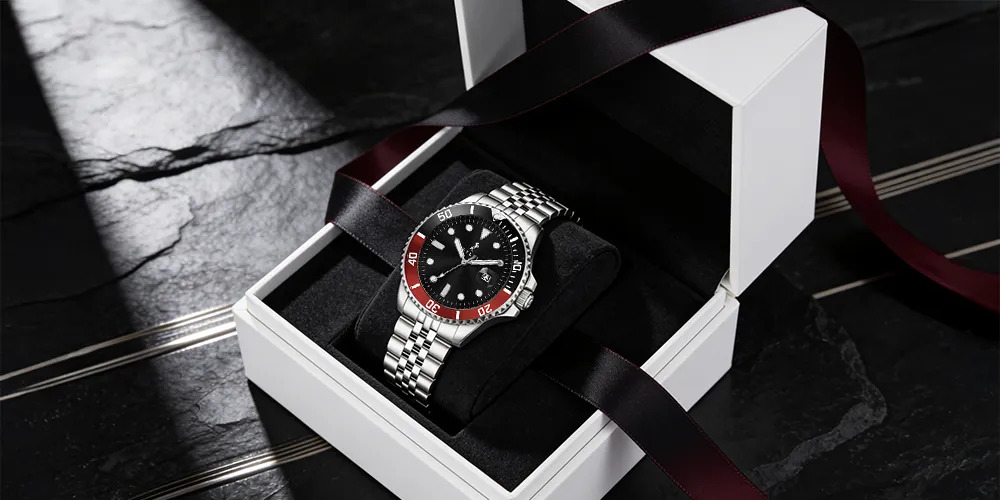
Buying a watch for men usually starts with a simple question: analog or automatic, steel or leather, and how much should you actually spend? This guide answers that in plain terms, then walks through the categories that matter most — so you can pick a wrist watch for men that fits your life instead of your Instagram feed.
What kind of watch for men should you actually buy?
It depends on how you’ll wear it, but here’s the short version: if you want something you never think about, get a quartz analog watch. If you like the idea of a watch that “breathes” with you, an automatic wrist watch for men is worth the extra care it demands. If you’re active, a sport watch for men with real water resistance beats anything delicate. There’s no single right answer — just the wrong one for your routine.
Analog wrist watch for men: the default for a reason
An analog wrist watch for men is still the most practical option for most people. No charging, no syncing, no app. You glance at your wrist, you know the time.
What to look for in an analogue wrist watch for men:
- Legible dial — hour, minute, and second hands you can read in half a second, not a design flex.
- Water resistance of 3 ATM or higher — enough for rain, sweat, and hand-washing without babying it.
- Scratch-resistant glass — mineral or sapphire, not bare acrylic that clouds up in a year.
- A crown that turns without a fight — cheap crowns are the first thing to fail.
Sylvi’s analog collection runs from Rs. 1,249 to Rs. 4,499, and every model in it carries 3 ATM water resistance as standard. That’s not a luxury feature at this price — it’s just what a watch should do.
Automatic watch brands for men: what “automatic” actually buys you
Automatic watch brands for men lean on one pitch: no battery, ever. The watch winds itself from the motion of your wrist. It’s a mechanical trick that’s over a century old, and it still works.
The honest trade-offs:
- It needs regular wear (or a watch winder) to stay accurate. Leave it in a drawer for a week and it stops.
- Accuracy runs a few seconds off per day — normal for the mechanism, not a defect.
- The visible movement, especially on skeleton dials, is the whole appeal for a lot of buyers. If you don’t care about that, you’re paying for something you won’t notice.
If that trade-off sounds right for you, look for a self-winding movement with a manual winding option as a backup — that combination means you’re never stuck if you haven’t worn it in a while.
Sport watch for men: built for actual use, not just the gym selfie
A sport watch for men needs to survive things a dress watch doesn’t: sweat, impact, and getting forgotten on your wrist through a shower. The features that matter here are boring but essential — silicone straps that don’t rot, chronograph functions if you actually track splits, and water resistance rated for more than a light drizzle.
If you play a sport where seconds matter — running, cricket, gym intervals — a chronograph with sub-dials and a tachymeter is worth the extra button on the case. If you just want something rugged for daily wear, skip the complications and get solid water resistance instead.
Watch for men luxury: what you’re actually paying for
“Luxury” in a watch for men isn’t one thing — it’s a stack of smaller decisions: better finishing on the case, a movement that’s been regulated more carefully, real leather instead of coated fabric, and a brand that stands behind the watch with a real warranty. You don’t need a five-figure price tag to get most of that. You need to know what to check.
Before paying a premium, verify:
- The exact movement (a named Japanese quartz movement or an automatic caliber, not just “quartz movement”).
- Case and strap material, spelled out — not “premium alloy.”
- Warranty length and how claims are actually handled in your country.
- Water resistance rating, tested — not implied by how it looks.
A quick comparison
| Style | Best for | Maintenance | Typical price range (India) |
|---|---|---|---|
| Analog quartz | Daily wear, office | Battery swap every 1–2 years | Rs. 1,200 – 3,000 |
| Automatic | Watch enthusiasts, gifting | Regular wear or winder | Rs. 2,500 – 8,000+ |
| Sport/chronograph | Gym, outdoor activity | Rinse straps, avoid magnets | Rs. 1,800 – 4,500 |
| Luxury-tier | Formal wear, statement pieces | Depends on movement | Rs. 4,000+ |
Why Sylvi comes up in this search
Sylvi has been building watches in India since 2015, and every watch for men in the current lineup — from Rs. 1,249 analog everyday pieces to the automatic and chronograph ranges — ships with a one-year warranty and clearly listed specs on the product page. No guessing at what “premium” means. You can compare a leather strap watch against a stainless steel one, check the exact water resistance, and see the movement type before you buy, not after.
FAQs
What’s the difference between an analog and an automatic wrist watch for men?
An analog watch just refers to the dial style — hands instead of digits. It can run on a battery (quartz) or a mechanical movement. Automatic is a specific type of mechanical movement that winds itself from wrist motion instead of needing a battery or manual winding.
Which watch for men is best for daily office wear?
A quartz analog watch with a round dial, 3 ATM water resistance, and a leather or steel strap covers most office dress codes without needing any special care.
Do automatic watches stop if I don’t wear them?
Yes. Without wrist motion or a watch winder, an automatic watch will run down and stop, usually within 24 to 48 hours depending on the power reserve.
Is a sport watch for men only useful at the gym?
No — the features that make a sport watch useful (durable strap, solid water resistance, impact-resistant case) hold up just as well for daily wear or travel, not only workouts.
What should I check before buying a “luxury” watch for men?
Confirm the exact movement, the actual case and strap materials, the warranty terms, and the tested water resistance rating. Vague marketing language is usually covering for a spec that isn’t as good as it sounds.