Healthcare is in the middle of one of the biggest shifts in its history. Paper charts, disconnected departments, and slow manual workflows are giving way to connected platforms that move information instantly and help clinicians act on it. Nowhere is this change more visible than in the United Arab Emirates, where national visions for digital government and world-class medicine have turned hospitals into testing grounds for the next generation of care.
UAE Real Estate Technology Solutions are adopting smart healthcare systems in UAE because patients now expect convenience, speed, and personalization, while administrators need efficiency and control over rising costs. Artificial intelligence, automation, cloud computing, and connected medical devices make both goals reachable at once. Digital tools shorten waiting times, reduce errors, and free staff to focus on patients. Just as important, scalable technology lets a hospital grow without rebuilding its foundations. For US healthcare leaders watching global trends, the UAE offers practical lessons worth studying.
Read More – From Manual Processes to Digital Healthcare: The Evolution of Hospital Management
Understanding the Evolution of Smart Healthcare Systems
What Smart Healthcare Systems Actually Are
A smart healthcare system is an integrated digital environment in which patient data, clinical workflows, medical devices, and administrative processes communicate with one another automatically. Instead of isolated software tools, each department shares a common information layer. A lab result appears in the physician’s view the moment it is validated. A pharmacy sees the updated prescription without a phone call. UAE Real Estate Technology Solutions billing team receives accurate documentation without re-entering data.
Traditional Hospital Management Versus Smart Infrastructure
Traditional hospital management relies heavily on manual coordination. Records live in separate files or standalone databases, appointments are booked by phone, and information is passed along by staff, which creates delays and opportunities for mistakes. Smart infrastructure reverses this model. Data is captured once, stored centrally, and made available to authorized users wherever they are. Decisions that once depended on whoever happened to hold a file now rely on current, complete information.
Connected Departments and Centralized Records
Digital technologies connect emergency rooms, radiology, laboratories, pharmacies, outpatient clinics, and administration into a single flow. Centralized patient records give clinicians a full medical history in seconds, while real-time data management keeps dashboards current for managers who monitor bed occupancy, staffing, and supply levels. This is why healthcare organizations are moving toward integrated digital ecosystems: the value of each tool multiplies when it works alongside the others, and patients experience care as one continuous journey rather than a series of disconnected visits.
Key Technologies Driving Smart Hospital Transformation in the UAE
Several technologies work together to make modern hospitals intelligent. Each solves a specific problem, and their combined effect is far greater than any single tool. Together they form the backbone of smart hospital technology as it is being deployed across Dubai, Abu Dhabi, and the wider Emirates.
Artificial Intelligence and Predictive Healthcare
AI is changing how clinicians monitor patients and make decisions. Algorithms can scan vital signs, imaging, and lab data continuously, flagging subtle changes that might escape a busy care team. Clinical decision support tools suggest likely diagnoses or highlight potentially dangerous drug interactions. Predictive analytics goes further by identifying patients at higher risk of complications or readmission, allowing early intervention. AI also absorbs repetitive administrative work such as coding suggestions, document summarization, and appointment reminders, giving clinicians more time at the bedside.
Internet of Medical Things (IoMT)
The Internet of Medical Things links devices such as infusion pumps, cardiac monitors, glucose sensors, and wearable trackers to hospital networks. These devices gather patient data in real time and send it straight to the clinical record, removing manual transcription. Care teams can watch patients remotely, respond quickly to alerts, and coordinate across wards more effectively. For chronic conditions, wearables extend monitoring beyond hospital walls, creating a continuous picture of health rather than occasional snapshots.
Cloud-Based Healthcare Management Systems
Cloud platforms centralize healthcare information and make it securely accessible across departments and facilities. A multi-site hospital group can run the same system in every location, standardize processes, and share records when patients move between sites. Cloud infrastructure also provides scalability, so capacity grows with demand instead of requiring large hardware purchases. Built-in backup and disaster recovery add resilience, which matters when systems must stay available around the clock.
Blockchain and Healthcare Data Security
Blockchain adds a tamper-resistant layer to sensitive information. Each access or change to a record can be logged in a way that is extremely difficult to alter, supporting transparency and data integrity. Permission-based controls let hospitals define exactly who may view or update specific records. While still maturing, blockchain-based approaches are being explored for consent management, secure data sharing between institutions, and verification of medical credentials.
How Smart Healthcare Systems Improve Hospital Operations
Beyond clinical benefits, smart systems deliver measurable gains in day-to-day operations. Hospitals are complex organizations, and small inefficiencies multiply quickly across thousands of daily interactions.
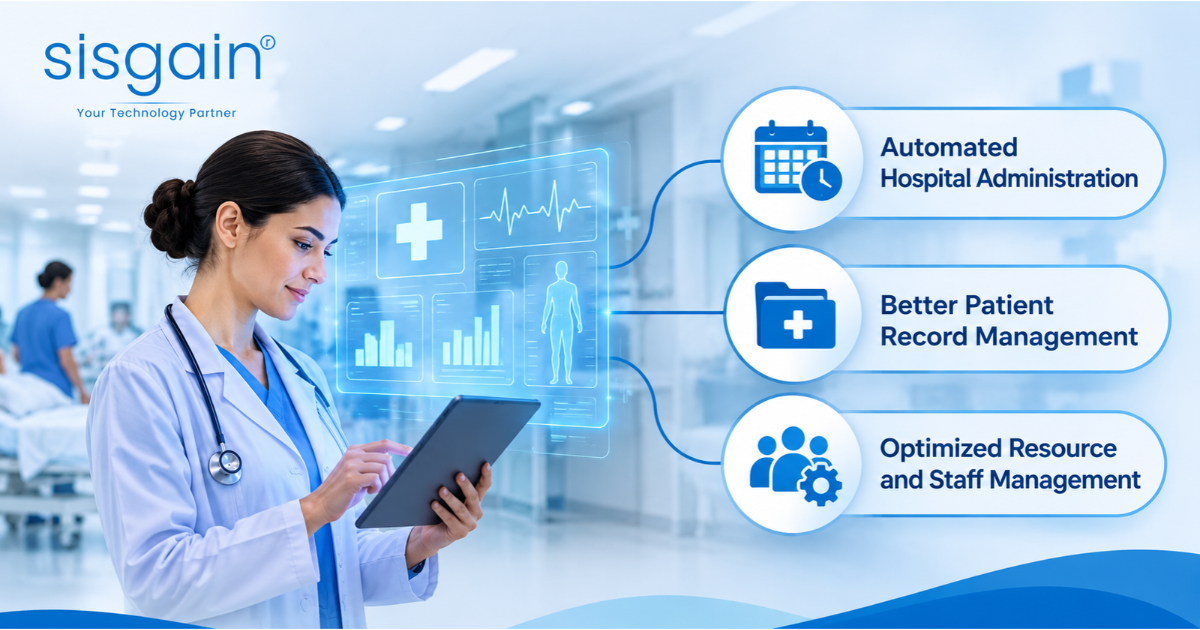
Automated Hospital Administration
Digital scheduling lets patients book, change, and cancel appointments online, which reduces no-shows and phone traffic. Automated billing captures charges as care is delivered, speeding up claims and cutting errors. Documentation tools generate consistent records, and automated reminders keep follow-ups on track. The cumulative effect is a lighter manual workload for front-desk and finance teams, who can redirect their attention to patient support.
Better Patient Record Management
Integrated electronic health records give every authorized clinician rapid access to medical history, allergies, medications, and past results. Faster access supports safer decisions, particularly in emergencies where minutes matter. When departments share a single record, handoffs become smoother, duplicate tests decline, and patients no longer repeat the same story to each new provider. Hospitals that want tailored platforms often work with a healthcare software development company Dubai to build systems around their own clinical workflows rather than forcing staff to adapt to generic tools.
Optimized Resource and Staff Management
Digital rostering helps managers match staffing levels to patient demand, reducing both burnout and idle capacity. Inventory systems track medicines and consumables, trigger reorders automatically, and limit waste from expired stock. Equipment usage data shows which scanners, ventilators, or operating rooms are underused or overbooked, helping leaders plan investments with evidence. Better utilization means more patients served without proportional increases in cost.
The Growing Role of Telehealth and Remote Patient Monitoring
Virtual care moved from convenience to core service during the last several years, and it continues to expand across the UAE. Residents value the ability to consult a physician from home or the office, particularly in a country with busy professionals, large expatriate communities, and a strong appetite for mobile services.
Video consultations and digital appointments remove travel time, cut waiting-room congestion, and make follow-up visits easier to keep. Patients with chronic conditions such as diabetes, hypertension, or heart disease benefit most from remote monitoring. Connected blood pressure cuffs, glucose meters, and wearables transmit readings to care teams, who can adjust treatment before a minor change becomes an emergency. When these devices integrate with hospital systems, readings flow directly into the patient record, so clinicians see trends rather than isolated numbers.
The result is better accessibility and stronger continuity of care. People in remote areas reach specialists without long journeys, and patients recovering after discharge receive support without occupying hospital beds. Organizations planning virtual services often partner with a telehealth app development company to create secure, user-friendly platforms that connect smoothly with existing clinical systems and meet the expectations of both patients and providers.
Personalized Patient Experiences Through Smart Healthcare Technology
Smart technology is shifting hospitals from provider-centric to patient-centric models. Patients increasingly expect the same simplicity from healthcare that they get from banking or shopping apps, and digital platforms make that possible.
Mobile health applications and self-service portals let patients view results, request prescription renewals, pay bills, and message their care team in one place. Data-driven tools can suggest personalized care plans based on a person’s history, risk factors, and preferences, while automated reminders and educational content keep people engaged between visits. Digital communication channels shorten response times and make patients feel heard.
The operational payoff is just as important. Online check-in, queue tracking, and pre-visit questionnaires reduce waiting times and paperwork at the front desk. Shorter waits, clearer communication, and more control over their own information raise satisfaction scores, and satisfied patients are more likely to follow treatment plans and return for preventive care.
Healthcare Data Security, Privacy, and Regulatory Compliance
A connected hospital holds some of the most sensitive information that exists, so security cannot be an afterthought. Every connected device, application, and user account expands the potential attack surface, and healthcare remains a frequent target for cybercriminals worldwide.
Common challenges include outdated devices that lack modern protections, weak credentials, phishing attacks on staff, and unsecured data transfers between systems. Effective defenses start with role-based access control, so employees see only the information they need for their job, along with strong encryption for data at rest and in transit. Secure cloud infrastructure, regular backups, continuous monitoring, and tested incident response plans further reduce risk and speed recovery.
Compliance is equally important. Digital healthcare platforms in the UAE must align with national and emirate-level health data and privacy requirements, and organizations should confirm the specific rules that apply to their location and service type. Providers that treat international patients face additional considerations, since records may cross borders and be subject to more than one regulatory framework. For US readers, the situation will sound familiar to HIPAA-driven programs: success depends on building privacy, auditability, and consent into the design from the beginning, not adding them later.
Challenges Hospitals Face When Implementing Smart Healthcare Systems

The benefits are substantial, but implementation is rarely simple. Understanding the obstacles helps leaders plan realistically.
Integration With Legacy Hospital Infrastructure
Many hospitals run older systems that were never designed to share data. Connecting them to modern platforms requires careful interface work, data cleaning, and sometimes phased replacement.
Data Privacy and Cybersecurity Risks
More connections mean more points to defend. Protecting patient information across devices, apps, and cloud services demands ongoing investment and staff awareness.
Staff Training and Technology Adoption
Technology only helps when people use it well. Clinicians need practical training, clear workflows, and visible support during rollout, or they may revert to old habits.
Implementation Costs and Scalability
Infrastructure, licensing, and maintenance require significant budgets. Hospitals should plan for long-term costs and choose architectures that scale gradually rather than demanding everything at once.
Choosing the Right Healthcare Technology Partner for Digital Transformation
The technology partner you select can determine whether a transformation project succeeds. Start by documenting your own requirements: patient volumes, specialties, existing systems, regulatory obligations, and growth plans. A partner who listens before proposing solutions is usually a better fit than one who leads with a fixed product.
Evaluate real experience in healthcare software, including case studies, references, and familiarity with clinical workflows. Ask how the team handles integration with existing electronic records, laboratory systems, and devices, and how much customization is possible. Examine security practices and compliance knowledge closely, including testing, encryption standards, and incident response. Finally, prioritize long-term support: a reliable partner provides scalability, technical assistance, updates, and maintenance well after launch. Many hospitals look to a custom healthcare software development company in UAE that understands local regulations, patient expectations, and the realities of running a clinical operation in the region.
Future Trends Shaping Smart Hospitals Beyond 2027
The transformation is far from finished. Several developments are likely to define the next phase of hospital technology.
AI-Powered Clinical Decision Support
Analytics will become more intelligent and more embedded in everyday workflows, offering context-aware recommendations while keeping clinicians firmly in control of final decisions.
Digital Twins in Healthcare
Virtual replicas of hospitals, departments, or even individual patients will allow leaders to simulate staffing changes, patient flow, and treatment pathways before applying them in the real world.
Advanced Robotic Healthcare Solutions
Robots will assist in surgery, disinfection, medication delivery, and logistics, reducing physical strain on staff and improving consistency.
Interoperable Healthcare Ecosystems
Connected platforms will exchange information seamlessly across hospitals, clinics, laboratories, and insurers, giving patients and providers a unified view of care. Institutions seeking a dependable healthcare software solution provider in Dubai will be well placed to build toward this interoperable future.

Conclusion:
Smart healthcare systems are reshaping how hospitals operate, from the way records are stored to how patients book, receive, and follow up on care. AI, automation, interoperability, and secure digital infrastructure now work together to deliver faster decisions, fewer errors, and more personal experiences. The long-term value lies in patient-centric technology that supports clinicians instead of burdening them. As hospitals in the UAE and around the world continue modernizing, choosing the right technology partner will remain the foundation of sustainable digital transformation.
Frequently Asked Questions
Q1. What are smart healthcare systems in modern hospitals?
They are integrated digital platforms that connect clinical, administrative, and device data. Hospitals use them to manage patient information, automate workflows, and improve clinical operations through real-time access to accurate records.
Q2. How is AI transforming hospitals across the UAE?
AI supports diagnostics, predicts patient risks, monitors vital signs, and automates administrative tasks. These capabilities help clinicians detect problems earlier and reduce paperwork.
Q3. What technologies are essential for building a smart hospital?
Key components include AI, IoMT, cloud computing, electronic health records, telehealth, and healthcare analytics, all connected through secure, interoperable infrastructure.
Q4. Why do hospitals need customized healthcare software solutions?
Every hospital has unique workflows, systems, and compliance needs. Tailored platforms integrate more smoothly, scale with growth, and protect data more effectively than generic tools.
Q5. How does telehealth improve patient care in the UAE?
Virtual consultations and remote monitoring improve accessibility, reduce travel, and support continuity of care, especially for chronic conditions and follow-up visits.