Truck axle weight distribution is vital for maintaining vehicle control. Proper distribution ensures maximum tire contact with the road for effective braking. If too much weight rests on the rear axles, steer control becomes light and unresponsive. Balanced axle loading prevents hazardous jackknifing scenarios during emergency stops.
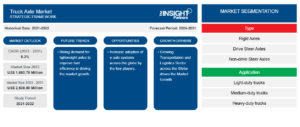
The global commercial vehicle component sector is experiencing substantial growth as global logistics network expansion, e-commerce operations, and commercial fleet modernization boost hardware demand. According to comprehensive industry research, the global Truck Axle Market size is projected to reach US$ 2,538.50 million by 2031, growing from US$ 1,680.79 million in 2023. The market is expected to register a compound annual growth rate (CAGR) of 5.3% during the forecast period from 2023 to 2031.
The steady expansion of the market is primarily propelled by increasing global freight transportation, rising production of heavy commercial vehicles, and continuous advancements in axle system lightweighting aimed at improving vehicle fuel efficiency.
Key Market Drivers & Growth Catalysts
-
Expanding Freight & E-Commerce Logistics: The rapid growth of global supply chains and cross-border trade has significantly elevated demand for medium- and heavy-duty commercial trucks. Modern logistics fleets require heavy-load capacity and durable drivetrains, creating sustained demand for advanced rigid and drive-steer axle systems.
-
Shift Toward Lightweight Materials: Fleet operators face strict payload restrictions and environmental mandates. Consequently, axle manufacturers are utilizing high-strength alloy steels, optimized housing geometries, and composite materials to lower overall curb weight without compromising structural integrity.
-
Electrification & Integrated E-Axles: The commercial transportation sector is witnessing a transition toward hybrid and battery-electric vehicles (BEVs). Electrified axles (e-axles) which combine electric motors, transmissions, and differential units into a unified assembly are rapidly becoming key growth vectors for original equipment manufacturers (OEMs).
Get a PDF Sample- https://www.theinsightpartners.com/sample/TIPRE00020405
Competitive Landscape
The global truck axle market features a consolidated yet competitive ecosystem populated by global component specialists and major automotive groups. Key manufacturers are focusing on R&D investment, modular axle design, smart monitoring sensors, and joint ventures to expand their global footprint.
Prominent market players highlighted in the report include:
-
American Axle & Manufacturing, Inc.
-
Dana Limited
-
Meritor, Inc.
-
Qingte Group Co., Ltd.
-
Raba Automotive Holding Plc.
-
SAF-HOLLAND SE
-
Shandong Heavy Industry Group Co., Ltd.
-
Sinotruk (Hong Kong) Limited
-
Sisu Axles, Inc.
These market leaders continue to introduce modular drive assemblies and integrated braking and suspension components to cater to both traditional internal combustion engine (ICE) trucks and emerging zero-emission vehicle platforms.
Market Segmentation Overview
-
By Axle Type: Rigid Axles, Drive Steer Axles, and Non-drive Steer Axles. Rigid and drive axles currently maintain strong market positions due to their widespread application in heavy transport vehicle platforms.
-
By Vehicle Application: Light-Duty Trucks, Medium-Duty Trucks, and Heavy-Duty Trucks. Heavy-duty commercial trucks account for a substantial market share owing to high payload demands across long-haul freight and mining construction operations.
-
By Region: Asia-Pacific continues to command a major market share due to expanding manufacturing bases and commercial fleet deployments in China and India, followed by strong replacement demand and safety-compliance adoption across North America and Europe.
Future Outlook
Looking forward, the global truck axle market is poised for transformative technological shifts. As fleet operators transition to smarter logistics, sensor-integrated axles equipped with real-time health-monitoring tools are expected to witness high adoption. These predictive-maintenance sensors track bearing temperatures, vibrations, and lubrication levels, directly reducing fleet downtime and operational expenditure.
Furthermore, strict regional emissions mandates will accelerate the integration of e-axle architectures in light- and medium-duty delivery vehicles over the coming years. While fluctuations in raw material prices (such as alloy steel) present short-term supply chain challenges, continuous investments in infrastructure projects and commercial fleet modernization ensure a strong growth trajectory through 2031.
Related Reports-
Driving Axle Market Analysis, Size, and Share by 2034
E-Axle Market Trends, Size, and Share by 2034
About The Insight Partners
The Insight Partners is a leading market research and consulting firm delivering actionable insights through in-depth industry analysis and strategic intelligence. The firm supports clients across various industries in making informed decisions by providing comprehensive market forecasts, competitive assessments, and growth opportunities.