Comparing TMT Test Prices: A Practical Guide to Charges and Service Inclusions
The price of a treadmill test varies according to the diagnostic provider, the services included, and the patient’s clinical requirements. If you are comparing the TMT test price in Bangalore and want to avoid unexpected charges, request a clear quotation, check what the fee covers, and confirm that the investigation is appropriate before scheduling an appointment.
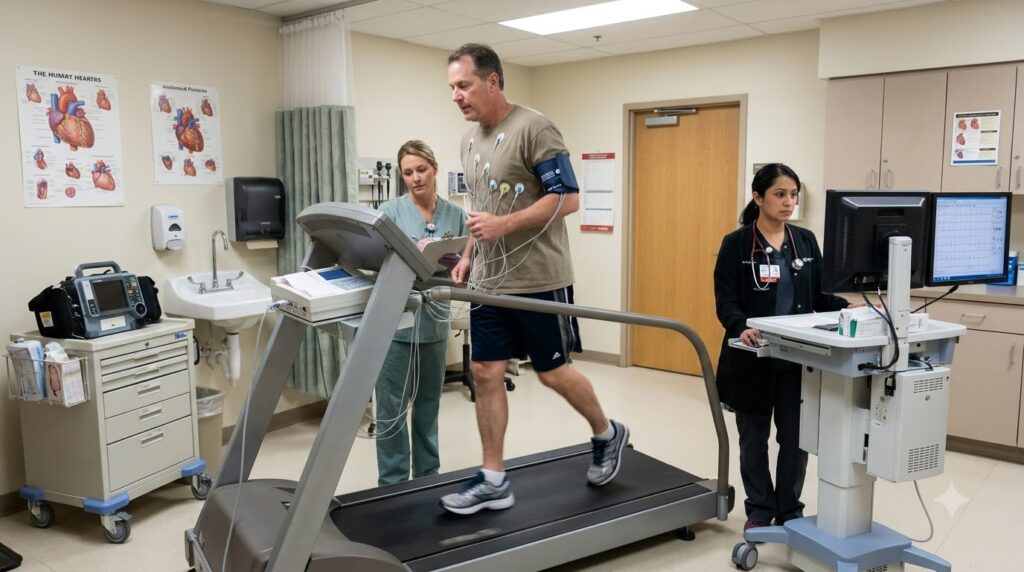
A treadmill test, commonly called a TMT, evaluates how the heart responds to controlled physical activity. The patient walks on a treadmill while the clinical team monitors the heart’s electrical activity, heart rate, blood pressure, and symptoms.
The procedure can help answer selected cardiac questions, but it is not appropriate for everyone and cannot rule out every heart condition. A good booking decision therefore combines price transparency with clinical suitability, appropriate supervision, and a clear reporting process.
Why TMT Prices Can Differ Between Providers
Comparing prices is more useful when patients understand what they are being charged for. Two quotations may appear different because they include different services or use different appointment arrangements.
The type of facility
A hospital, outpatient department, or diagnostic centre may have different staffing, equipment, and reporting arrangements. These operational differences can influence the amount quoted.
Patients should consider whether the facility can provide the required investigation and whether the location is convenient for the appointment and any follow-up care.
Services included in the fee
Ask whether the quotation includes the treadmill procedure, ECG monitoring, blood pressure measurements, clinical supervision, interpretation, and the written report.
Some providers may charge separately for consultation or additional investigations. A quotation that covers only the exercise recording should not be compared directly with a package that includes other services without accounting for the difference.
Appointment arrangements
The final amount may also depend on the location, scheduled service, or additional requirements. Ask whether any charges apply for consultations, reports, or rescheduling.
Do not assume that a price displayed online is current or applies to every patient. Confirm the exact amount directly with the provider before booking.
Clinical requirements
The clinician’s assessment determines whether a routine treadmill test is suitable. Some patients may require another investigation because of symptoms, mobility limitations, or other medical circumstances.
The test should not be selected merely because a particular package is affordable or readily available. The investigation must address the clinical question safely and appropriately.
What Should a Complete TMT Quotation Include?
When comparing the TMT test price in Bangalore, use a consistent checklist so that you can evaluate the same services across providers.
| Item to verify | Question for the provider | Why it matters |
| Exercise recording | Is the requested treadmill test included? | Confirms the correct service |
| ECG monitoring | Is monitoring performed throughout the required phases? | Clarifies the recording arrangements |
| Blood pressure measurements | Are measurements during exercise included? | Helps establish what the package covers |
| Clinical supervision | Who supervises the procedure? | Clarifies the testing arrangements |
| Interpretation | Who reviews the findings? | Establishes the reporting process |
| Written report | Is a report included in the fee? | Helps identify additional charges |
| Consultation | Is a doctor’s consultation separate? | Prevents unexpected costs |
| Follow-up | How will the results be communicated? | Connects the test to the next stage of care |
The exact arrangement depends on the provider. Request written confirmation of the inclusions if the quotation is unclear.
How to Compare Providers Without Sacrificing Suitability
Price should be one part of the decision rather than the only consideration.
First, confirm that the provider can perform the test requested by your clinician. Next, ask about preparation, supervision, interpretation, and reporting. Then compare the complete charges for equivalent services.
A provider that offers a clear explanation of the procedure and its limitations may make it easier to understand what to expect. However, the advertised fee alone cannot establish the clinical quality of a facility.
EcoTown Diagnostics is associated with the supplied treadmill testing page. You can visit the EcoTown Diagnostics website to review the provider’s information and contact it about current services, appointment availability, and charges. Confirm the current fee and all inclusions directly; a general service page does not establish a guaranteed price or appointment slot.
What Happens During a TMT Appointment?
A TMT generally begins with a review of the patient’s symptoms, medical history, medicines, and the reason for testing. This assessment helps the clinical team determine whether exercise testing is suitable.
Electrodes are placed on the skin to record ECG activity. The team takes baseline measurements and explains how the treadmill will operate.
The patient then walks at a controlled pace. Depending on the protocol, the speed or incline increases in stages. The team monitors the patient’s response and may stop the exercise when the planned endpoint is reached or when symptoms or findings indicate that continuing is inappropriate.
Monitoring can continue during recovery. The results are then interpreted in the context of the clinical question and other relevant information.
Patients should report chest discomfort, dizziness, unusual breathlessness, or other concerning symptoms immediately. They should not attempt to finish the test despite symptoms simply because they have paid for the appointment.
Preparing for the Test
Follow the instructions supplied by the treating clinician and testing centre. Preparation requirements vary, so avoid making assumptions based on advice intended for another cardiac investigation.
- Check the referral. Confirm that the requested test is a treadmill exercise test and that the provider can perform it.
- Review medicines. Some medicines affect heart rate or blood pressure. Change medication only when explicitly instructed by the treating clinician.
- Ask about meals. Clarify whether any meal-timing instructions apply.
- Wear suitable clothing. Choose comfortable exercise clothing and appropriate footwear.
- Bring relevant information. Carry your referral, medication list, and previous cardiac reports if available.
- Disclose recent symptoms. Report chest discomfort, fainting, unusual breathlessness, or changes in exercise tolerance.
- Confirm logistics. Verify the appointment time, reporting arrangements, total charges, and expected duration.
If concerning symptoms develop before the appointment, seek medical advice rather than automatically waiting for the scheduled test.
Is a TMT the Right Test for Every Patient?
No. The treating clinician must assess whether the patient can exercise safely and whether the results will help answer the clinical question.
Certain acute cardiac conditions, unstable symptoms, serious rhythm problems, and other circumstances may make a TMT inappropriate or require a different approach.
Patients with significant mobility limitations may also be unable to complete a standard exercise protocol. Depending on the clinical circumstances, a clinician may recommend an alternative investigation.
Do not book an exercise test solely because it is advertised as a routine heart check. The appropriate test depends on symptoms, medical history, physical ability, and the information needed to guide care.
Understanding the Results and Possible Additional Costs
A TMT report may describe the exercise protocol, duration, heart-rate response, blood pressure, symptoms, ECG changes, and the reason the test ended.
The findings may be reassuring, abnormal, or inconclusive. An abnormal result does not automatically confirm a particular diagnosis, and further investigations may be required to clarify its significance.
A reassuring result does not exclude every cardiac condition either. If symptoms persist, the treating clinician should reassess the situation rather than relying exclusively on the previous test.
When a clinician recommends another investigation, ask what question it is intended to answer and whether the initial report explains the reason. Additional testing may be medically appropriate, but patients should understand its purpose and the likely charges before proceeding whenever the situation allows.
In an emergency, necessary care must not be delayed while seeking a second quotation.
Two Practical Examples
Example 1: Comparing advertised prices
A patient receives a referral for a TMT and finds two online quotations. One appears less expensive, but the service inclusions are unclear. The other provider explains which monitoring and reporting services are included.
The patient contacts both providers, confirms the required test, and asks for the complete fee. They then compare the actual services and reporting arrangements rather than assuming the lowest headline price is the best option.
The lesson is to compare like with like and confirm the final amount before booking.
Example 2: A patient who needs additional assessment
A patient plans to book a TMT because of recurring symptoms during activity. During a clinical consultation, the treating clinician determines that the symptoms need further evaluation before deciding whether exercise testing is appropriate.
The patient follows the recommended assessment pathway instead of booking the test independently. Although this changes the original plan, it helps ensure that the chosen investigation fits the patient’s condition.
The lesson is that affordability matters only after the clinical suitability of the test has been established.
Illustrative Case Study: Avoiding Hidden Charges and the Wrong Test
Initial problem: A patient wants to book an exercise stress test and chooses a provider based on an online price advertisement.
Circumstances: The quotation does not specify whether the report, professional interpretation, or consultation is included. The patient also has concerns about their ability to exercise comfortably.
Solution: The patient contacts the provider to obtain a complete quotation and discusses their symptoms and exercise limitations with the treating clinician. The clinician confirms the appropriate investigation, and the patient verifies the final charges before booking.
Expected outcome: The patient has a clearer understanding of the service, its cost, and its suitability.
Practical lesson: A transparent quotation and appropriate clinical assessment help patients avoid unnecessary expenses and unsuitable appointments.
Common Mistakes When Comparing TMT Prices
- Choosing only by the advertised amount: Check the complete service and reporting arrangements.
- Assuming every provider offers the same package: Verify the inclusions directly.
- Ignoring the clinical referral: Make sure the test addresses the question the clinician is investigating.
- Changing prescribed medicines without advice: Follow specific instructions from the treating clinician.
- Assuming a normal result rules out all heart disease: The test has limitations.
- Delaying urgent medical care: Severe or persistent chest pain, significant breathing difficulty, or other concerning acute symptoms require immediate assessment.
Frequently Asked Questions
What is the current TMT test price in Bangalore?
The current charge depends on the provider and the services included. Request a direct quotation and confirm whether supervision, interpretation, and the written report are covered.
Is TMT the same as a treadmill stress test?
Yes. TMT is a common abbreviation for a treadmill test that evaluates the heart’s response to controlled exercise.
Does the price usually include a written report?
Inclusions vary by provider. Ask whether the report and professional interpretation are included or charged separately.
Can I undergo a TMT without a doctor’s recommendation?
Whether the test is appropriate depends on your clinical circumstances. A clinician’s assessment is important because exercise testing is not suitable for every patient.
Do I need to stop my medicines before a TMT?
Do not stop or change medication independently. Some medicines affect the test response, so follow the specific instructions provided by the treating clinician.
Is a normal TMT result a guarantee of good heart health?
No. A reassuring result provides information about the heart’s response to the particular exercise protocol but does not exclude every cardiac condition.
Conclusion
Comparing TMT prices is most effective when patients confirm the complete service, clinical supervision, reporting arrangements, and total charges before booking. A clear quotation makes it easier to evaluate providers without relying on incomplete promotional figures.
The test itself should be selected according to the patient’s symptoms, physical ability, and clinical assessment. Choose a suitable provider, follow the preparation instructions, and ensure that the findings are discussed with the treating clinician. Never delay urgent medical care to arrange a routine diagnostic appointment.