In today’s business environment, technology is no longer just a support function sitting quietly in the background. It has become the engine that drives innovation, customer experience, operational efficiency, and long-term growth. Whether you are running a startup, managing an enterprise team, or researching software development trends, one thing is becoming increasingly clear: businesses that align technology with strategy tend to move faster and adapt better. This is where IT consulting management enters the picture.
Think of technology as a high-performance sports car. Owning the car is one thing, but knowing how to drive it efficiently, maintain it properly, and navigate the right roads is something entirely different. Many businesses invest heavily in software, cloud platforms, cybersecurity tools, and emerging technologies, yet struggle to achieve their desired outcomes because they lack strategic direction.
IT consulting management helps organizations bridge this gap by transforming technology investments into measurable business results.
What Is IT Consulting Management and Why Does It Matter?
At its core, IT consulting management is the process of planning, organizing, implementing, and optimizing technology strategies that support business objectives.
Unlike traditional technical support, which focuses on fixing problems after they occur, consulting management takes a proactive approach. It helps businesses answer critical questions such as:
- Which technologies should we invest in?
- How can we reduce operational inefficiencies?
- What digital solutions will improve customer experiences?
- How do we scale our systems as the company grows?
- How can we stay competitive in a rapidly changing market?
The role extends beyond recommending software. It involves understanding business challenges, evaluating risks, identifying opportunities, and creating technology roadmaps that align with organizational goals.
In many ways, IT consultants function like architects. Before a building is constructed, an architect studies the environment, understands requirements, creates a blueprint, and ensures every component works together. Similarly, consultants design technology strategies that help businesses grow without creating unnecessary complexity.
Why Are Businesses Investing More in Strategic Technology Guidance?
The digital economy moves at a remarkable pace. New technologies emerge every year, customer expectations evolve rapidly, and competition can come from virtually anywhere.
Organizations often face challenges such as:
- Legacy systems slowing down operations
- Data silos affecting decision-making
- Increasing cybersecurity risks
- Difficulty integrating modern applications
- Rising technology costs
- Shortage of specialized technical talent
Without expert guidance, companies frequently end up purchasing tools that don’t solve their actual problems.
Strategic consulting helps organizations focus on outcomes rather than simply acquiring more technology. Instead of asking, “What software should we buy?” businesses start asking, “What problem are we trying to solve?” That shift in thinking often leads to better investments and stronger returns.
How Does IT Consulting Management Improve Operational Efficiency?
Every business has processes that consume more time, resources, and effort than necessary. Imagine a customer service team manually entering information across multiple systems every day. Each task may take only a few minutes, but over months and years, those minutes become thousands of lost productivity hours.
Effective IT consulting management identifies these inefficiencies and recommends solutions that streamline operations.
Some common improvements include:
Process Automation
Routine and repetitive tasks can be automated using modern software platforms. Employees spend less time on manual work and more time on high-value activities.
System Integration
Many organizations use separate applications for sales, finance, customer service, and operations. Consultants help connect these systems so information flows seamlessly.
Cloud Optimization
Cloud technologies allow businesses to scale resources efficiently while reducing infrastructure costs.
Data Accessibility
Decision-makers gain faster access to accurate information, enabling quicker responses to market changes.
The result is a more agile organization capable of adapting to challenges without sacrificing productivity.
What Role Does Digital Transformation Play in Business Growth?
Digital transformation has become more than a buzzword. It represents a fundamental shift in how organizations operate and deliver value. However, digital transformation is not simply about replacing paper forms with digital ones.
True transformation involves rethinking processes, customer interactions, and business models.
Many organizations pursue digital workplace productivity to improve collaboration, employee productivity, and operational efficiency. These services enable teams to work effectively regardless of location while maintaining secure access to information and tools.
For example, a manufacturing company might implement cloud-based collaboration systems that connect engineers, suppliers, and project managers in real time.
Similarly, healthcare providers may use digital platforms to improve patient communication and streamline administrative tasks.
The growing demand for digital workplace transformation services demonstrates how businesses are prioritizing flexibility, efficiency, and employee experience in the modern workplace.
Organizations that embrace these changes often discover new opportunities for innovation and revenue generation.
Can Emerging Technologies Create a Competitive Advantage?
The answer is yes—but only when implemented strategically. Businesses often hear about artificial intelligence, blockchain, augmented reality, virtual reality, and the Internet of Things. The challenge lies in understanding where these technologies create real business value.
Custom Blockchain Development
Trust and transparency have become critical in today’s digital economy. Through custom blockchain development, organizations can create secure and transparent systems for transactions, record management, supply chain tracking, and digital identity verification.
For example, logistics companies use blockchain solutions to track products throughout the supply chain, reducing fraud and improving visibility.
Financial institutions are also investing in custom blockchain development to strengthen security and simplify transaction verification processes.
When implemented correctly, blockchain technology can reduce costs, increase trust, and improve operational efficiency.
The Role of AR in Modern Business
Customer expectations continue to evolve. People increasingly want interactive and immersive experiences before making purchasing decisions.
This growing trend highlights the Role of AR in Modern Business. Augmented reality allows customers to visualize products, explore services, and interact with brands in entirely new ways.
Retailers use AR applications to help customers preview furniture in their homes before buying. Real estate companies offer virtual property tours. Manufacturing organizations use AR for employee training and equipment maintenance.
The expanding Role of AR in Modern Business demonstrates how immersive technologies can improve engagement, increase confidence, and enhance customer experiences.
Custom AR/VR App Development Services
As immersive technologies mature, businesses are investing in custom ar/vr app development services to create unique digital experiences.
Unlike generic solutions, custom applications are tailored to specific business goals and user needs.
Examples include:
- Employee training simulations
- Virtual product demonstrations
- Interactive customer experiences
- Remote collaboration environments
- Healthcare education platforms
Organizations using custom ar/vr app development services often discover new ways to improve learning, engagement, and operational effectiveness.
How Does the Internet of Things Support Smarter Decision-Making?
The Internet of Things (IoT) connects physical devices to digital systems, allowing businesses to collect and analyze real-time data. Imagine a fleet management company monitoring vehicle performance, fuel consumption, and maintenance needs through connected sensors.
Or consider a manufacturing facility where equipment automatically reports performance issues before failures occur.
An experienced IoT application development agency helps businesses design and implement connected ecosystems that gather actionable insights from devices, machines, and sensors.
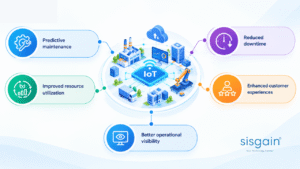
The benefits often include:
- Predictive maintenance
- Improved resource utilization
- Reduced downtime
- Enhanced customer experiences
- Better operational visibility
As organizations generate more data, IoT solutions become increasingly important for informed decision-making.
How Does IT Consulting Management Reduce Business Risks?
Technology creates opportunities, but it also introduces risks that can affect business continuity, customer trust, and financial performance. Cyberattacks, compliance violations, outdated systems, and unexpected downtime can quickly turn into costly challenges if they are not addressed proactively.
One of the most valuable aspects of IT consulting management is its ability to identify potential risks before they become major business problems. Instead of reacting to issues after they occur, consultants help organizations build a stronger and more resilient technology foundation.
Key areas where risk reduction becomes particularly important include:
Cybersecurity Assessment
Businesses receive recommendations for strengthening security controls, protecting sensitive customer and company data, and reducing exposure to evolving cyber threats. Regular assessments help identify vulnerabilities that may otherwise go unnoticed.
Compliance Management
Organizations operating in regulated industries must comply with various standards and regulations. Consultants help ensure technology systems, data handling practices, and operational processes align with these requirements, reducing the risk of penalties and reputational damage.
Business Continuity Planning
Unexpected disruptions such as cyber incidents, hardware failures, or natural disasters can impact operations. Strategic planning helps businesses prepare recovery procedures, minimize downtime, and maintain critical services when challenges arise.
Infrastructure Evaluation
Technology environments are reviewed to ensure reliability, scalability, and performance. Identifying outdated systems, integration gaps, or capacity limitations early helps prevent operational disruptions as the business grows.
Beyond solving immediate concerns, risk management also creates confidence. When employees, customers, and stakeholders know that systems are secure, reliable, and well-managed, organizations are better positioned to focus on innovation and long-term growth rather than constantly dealing with preventable technology issues.
Why Is Technology Alignment Important for Long-Term Success?
Many companies make technology decisions in isolation. A department purchases software because it solves an immediate problem. Another team implements a different solution. Over time, these disconnected decisions create complexity.
Systems become difficult to manage. Costs increase. Productivity declines. Successful organizations align technology investments with broader business objectives.
For example:
- Growth-focused companies prioritize scalability.
- Customer-centric businesses focus on experience improvements.
- Data-driven organizations emphasize analytics and reporting.
- Innovation-focused firms invest in emerging technologies.
By aligning technology with strategy, businesses create a cohesive ecosystem that supports sustainable growth.
This strategic alignment is one of the primary reasons organizations continue investing in professional consulting services.
What Does the Future of IT Consulting Look Like?
The future is increasingly centered around intelligent, connected, and experience-driven technologies. Several trends are shaping the consulting landscape:
- Artificial intelligence integration
- Advanced cloud ecosystems
- Blockchain innovation
- Hyper-automation
- Smart workplace solutions
- Immersive digital experiences
- Connected IoT environments
Businesses will require guidance not only on adopting these technologies but also on integrating them effectively.
The organizations that succeed will likely be those that view technology as a strategic business enabler rather than simply an operational necessity.
Consultants will continue playing a crucial role in helping businesses navigate complexity, reduce uncertainty, and identify opportunities for growth.
Why Are More Businesses Choosing SISGAIN for Digital Innovation?
Technology decisions can significantly influence a company’s future direction. SISGAIN helps organizations navigate these decisions by delivering practical software solutions designed around real business needs.
The company supports businesses with mobile application development, enterprise software solutions, cloud implementation, emerging technology integration, cybersecurity services, and digital transformation initiatives.
Its team focuses on building scalable, secure, and user-friendly systems that help organizations improve operational performance and customer experiences. By combining technical expertise with industry knowledge, SISGAIN enables businesses to transform ideas into impactful digital solutions that support long-term growth.

Conclusion
Technology continues to reshape how businesses operate, compete, and grow. However, achieving real business value requires more than adopting new tools—it requires a clear strategy that aligns technology investments with organizational goals. This is where IT consulting management becomes essential.
By helping businesses improve efficiency, strengthen security, optimize operations, and plan for future growth, IT consultants enable organizations to make smarter technology decisions. They also provide guidance on emerging innovations, ensuring companies adopt solutions that deliver practical results rather than unnecessary complexity.
As digital transformation accelerates across industries, businesses that combine the right technology with expert strategic direction will be better prepared to innovate, adapt, and succeed in an increasingly competitive marketplace. Investing in a well-planned technology strategy today can create stronger performance, better customer experiences, and sustainable growth for years to come.