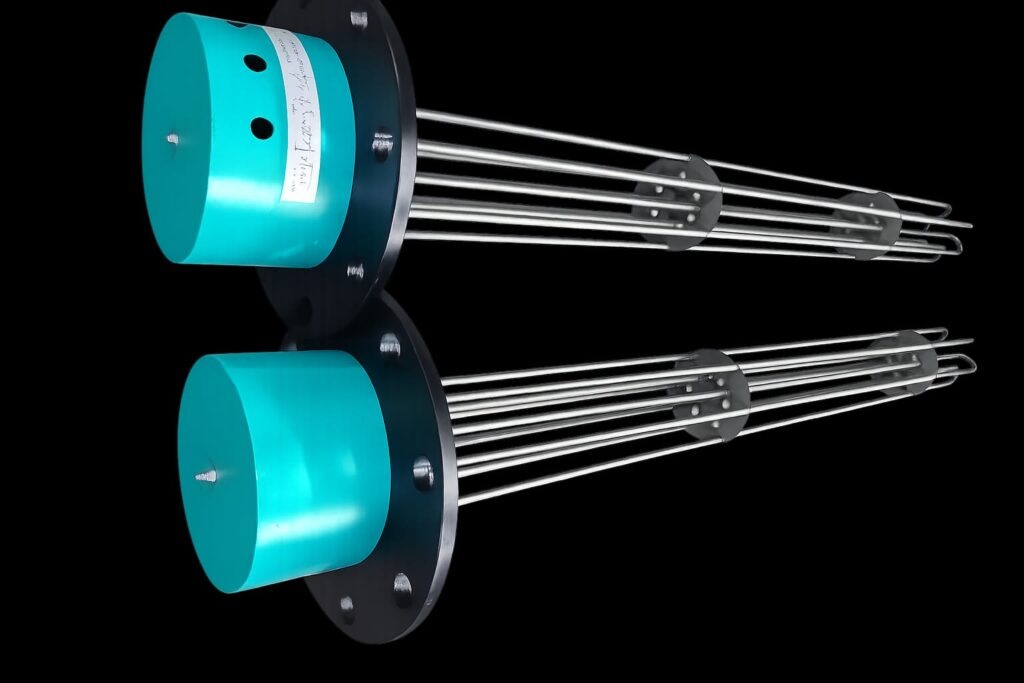
strip heating elements
Industrial heating works best when heat spreads evenly, and strip heating elements do this by radiating from a wide, flat surface. That larger surface lowers hot spots and keeps process temperatures steady, so parts dry, cure, or seal the same way every cycle. Even spread also saves energy, since less heat is lost to overshoot. Engineers use them in ovens, plastics equipment, packaging lines, and furnaces.
This guide explains how heat moves from the element into your process, where each design fits, and what to check before you order.
Heat Reaches Your Process Through Radiation and Convection
Strip heating elements pass current through a thin metal ribbon, and the ribbon gives off heat from both faces. Radiation warms nearby surfaces directly, while convection warms the air around it. A thin ribbon also has low thermal mass, so it heats quickly and reacts fast when the controller changes power.
If your process recovers after a door opens or a cold load enters, this response time matters more than the top temperature rating.
Each Application Needs a Different Heat Pattern
The heat pattern should follow the job, so the layout changes from one machine to the next. Match your process to these common examples:
- Ovens and dryers: Place elements in banks along the airflow so the air picks up heat evenly.
- Plastics processing: Keep the element close to the heated part, because a steady surface temperature protects material quality.
- Packaging lines: Use shorter, higher-power elements at sealing points that must reach temperature fast.
- Furnaces: Space elements along the walls or roof so no side runs hotter.
Watt Density Decides How Evenly an Element Heats
Watt density, the power released per unit of surface area, sets both heat evenness and element life. Set too high, the ribbon overheats in local spots and wears out early. Set too low, heat-up drags.
Fix this figure at the design stage. Well-sized strip and wire heating elements spread the load over more length, so each section runs cooler and lasts longer.
Confirm Four Details Before You Order
Give your supplier four details up front: operating temperature, wattage, mounting method, and atmosphere inside the equipment. Each one changes the element you receive:
- Operating temperature: Sets the alloy grade and safety margin.
- Wattage: Sets heat-up time and, with surface area, watt density.
- Mounting method: Affects spacing, insulation, and ribbon expansion when hot.
- Atmosphere: Humid air and reactive gases age metal faster, so alloys that form a protective oxide layer hold up better.
Custom sizes are normal. Manufacturers such as Asanjo Heating build strip and wire heating elements to a given length, shape, and power rating, so bring drawings rather than settling for a standard catalogue size.
Conclusion
Before you request a quote, walk the line and note where product temperature drifts. Those spots show where strip and wire heating elements can help most, whether through a wider strip, a tighter coil, or a change in spacing. Write down your target temperature, available space, and voltage, then discuss them with your supplier.
A practical proposal will name the wattage, the mounting method, and the expected heat-up time. If any of those are missing, ask for them in writing before you approve the order.