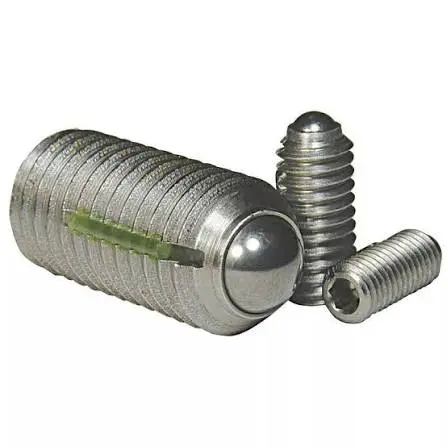
Reliable positioning and repeatable movement are essential in machinery, manufacturing equipment, and mechanical assemblies. Components that hold parts in place, create temporary stops, or provide controlled indexing help equipment operate consistently. A spring plunger mechanism is a compact solution for these tasks, using spring pressure and a movable pin to engage with a surface, recess, or locating feature. Its relatively simple construction makes it useful in applications where controlled positioning is needed without complicated locking arrangements.
Spring plungers are commonly found in fixtures, automation equipment, machine guards, adjustable assemblies, and other mechanical systems. Although they may look like small fasteners, choosing the right design requires attention to force, travel, material, mounting style, and operating conditions. Understanding these details helps engineers and maintenance teams select components that perform reliably over repeated cycles.
What Is a Spring Plunger Mechanism?
A spring plunger is a mechanical positioning device consisting of a housing, an internal spring, and a movable pin or ball. The spring pushes the pin outward, allowing it to engage with a mating surface or locating point. When an external force presses against the pin, it retracts into the housing. Once the force is removed and the alignment permits, the spring returns the pin toward its extended position.
This movement creates a simple engagement and release action. Depending on the design, a plunger may provide tactile feedback, temporary retention, repeatable positioning, or a stopping point for moving equipment.
For example, an adjustable fixture may use a spring plunger to locate a removable plate in one of several positions. The operator can move the plate against the spring pressure, then allow the pin to engage with a corresponding recess. This makes repositioning more consistent than relying on visual alignment alone.
Spring plungers should not automatically be treated as safety locks or primary load-bearing fasteners. Their intended function and rated performance must match the application.
How Does a Spring Plunger Work?
The mechanism operates through the relationship between spring force and pin movement.
When the pin is extended, the internal spring applies pressure against it. As a mating surface moves into contact, the pin is pushed inward and compresses the spring. When the pin reaches an opening, groove, or locating recess, the spring pushes it outward again.
The resulting engagement helps maintain a position until sufficient force moves the mating component and retracts the pin.
Three factors influence performance:
- Spring force: Determines how strongly the pin resists retraction.
- Plunger travel: Defines how far the pin can move into the housing.
- Contact geometry: Influences how smoothly the pin engages and releases.
A suitable combination allows the component to provide consistent positioning without requiring excessive operating force.
Common Types of Spring Plungers
Different designs accommodate different mechanical requirements. The right option depends on how the plunger will be operated and what type of contact it needs to make.
Ball-Nose Spring Plungers
Ball-nose plungers use a rounded ball at the contact end. The ball can roll or move against a mating surface, creating smooth engagement with suitable locating features.
They are often used in indexing plates, adjustment assemblies, fixtures, and positioning systems. Their rounded contact geometry can help reduce friction during movement, although the surrounding design must still provide appropriate alignment.
Pin-Nose Spring Plungers
Pin-nose designs use a projecting pin rather than a ball. Depending on the tip shape, they can provide more defined contact with a locating hole, slot, or surface.
These models are useful when a mechanical assembly needs a distinct engagement point. The pin dimensions and travel should be matched carefully to the mating feature to avoid binding or excessive wear.
Threaded Spring Plungers
Threaded models feature an externally threaded housing that screws into a compatible threaded opening. This arrangement allows the plunger to be integrated into machine plates, fixtures, brackets, and equipment frames.
Threaded spring plungers are practical where a compact, replaceable positioning component is needed. Their installation depth should be controlled so the pin has adequate movement and the housing remains securely seated.
Cam-Action and Specialized Plungers
Some positioning systems use cam-action or other specialized plunger designs to provide a particular engagement or release behavior. These mechanisms may be selected when an assembly requires controlled movement, a specific locking arrangement, or easier operation in a confined space.
The exact function varies by design, so product specifications should be reviewed before choosing one for a particular mechanism.
How to Select the Right Spring Plunger
Selecting a plunger involves more than choosing a thread size. A structured evaluation helps ensure compatibility and reliable operation.
Step 1: Define the Required Function
Determine whether the plunger will provide indexing, positioning, temporary retention, or a tactile stop. A component intended to locate a sliding plate may need different characteristics from one used to hold an adjustable machine component in place.
Also establish whether the plunger will engage manually or as part of an automated movement.
Step 2: Choose the Correct Force
Spring force determines how much resistance the pin provides when it retracts. If the force is too low, the engagement may feel loose or release too easily. If it is too high, operators may struggle to move the assembly, and mating surfaces may experience unnecessary stress.
Consider the expected operating force and consult the manufacturer’s specifications.
Step 3: Check Dimensions and Travel
Confirm the housing diameter, thread size, pin diameter, and available stroke. The plunger must fit the mounting location while providing enough movement to engage and release correctly.
Check the mating recess or locating feature as well. Poor dimensional compatibility can lead to incomplete engagement, sticking, or accelerated wear.
Step 4: Evaluate Materials and Environment
Material choice affects corrosion resistance, wear, and service life. Stainless steel may be appropriate for damp or frequently cleaned environments, while other steel grades may suit general industrial applications.
Consider exposure to dust, moisture, chemicals, temperature changes, and repeated contact. The housing, spring, and pin should all be suitable for the operating conditions.
Step 5: Verify Performance in the Assembly
Before full deployment, test the plunger in its intended mechanical arrangement. Check engagement consistency, release force, alignment, and movement across repeated operating cycles. Testing helps reveal problems that may not appear when examining the component separately.
Common Mistakes and Challenges
One frequent mistake is selecting a plunger based only on its physical dimensions. A model may fit the mounting hole but still have unsuitable spring force, travel, or contact geometry.
Another issue is overlooking alignment. If the pin approaches a locating recess at an angle, it may fail to engage properly or wear unevenly. Accurate positioning of the plunger and mating feature is therefore important.
Contamination can also affect performance. Dust, metal particles, and residue may interfere with pin movement, especially in equipment operating in demanding environments. In addition, using a spring plunger as a substitute for a rated safety lock can create serious mechanical risks.
Practical Tips for Reliable Performance
A few good practices can help spring plungers operate consistently:
- Follow manufacturer specifications: Confirm force ratings, dimensions, materials, and intended applications.
- Maintain proper alignment: Ensure the pin meets its locating feature squarely and consistently.
- Keep the mechanism clean: Remove accumulated debris using maintenance methods suitable for the equipment.
- Inspect for wear: Check the pin, housing, spring behavior, and mating surface during scheduled maintenance.
- Avoid excessive loading: Do not use a positioning plunger as a structural fastener unless specifically rated for that purpose.
- Plan for replacement: In frequently operated assemblies, make the plunger accessible for inspection and servicing.
For example, a production fixture that changes positions several times per shift benefits from a plunger selected for repeated engagement and a mating surface designed to limit unnecessary wear. Routine checks can help identify inconsistent engagement before it affects production accuracy.
Conclusion
A spring plunger mechanism provides a practical way to create repeatable positioning, indexing, and temporary retention in mechanical assemblies. Ball-nose, pin-nose, threaded, and specialized designs each serve different requirements. By evaluating spring force, travel, dimensions, materials, and operating conditions, equipment designers can choose a suitable component for reliable performance. Proper alignment and routine inspection further help maintain consistent operation throughout the component’s service life.