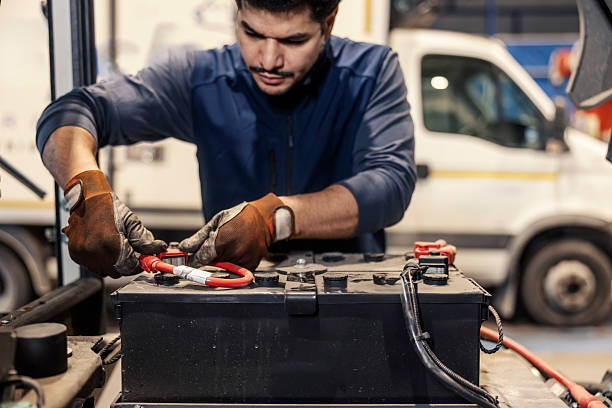
Selective focus on hands of multicultural repairman using battery charger at mechanic shop.
A car battery rarely gives a polite warning before it quits, yet the signs are usually there for weeks if you know what to look for. The engine takes a little longer to turn over, the headlights look weaker at idle, or a warning light appears on the dash for a moment and then disappears. Ignoring those hints often ends with a dead car at the worst possible time. If you are weighing Battery replacement in Indianapolis IN, this guide explains the common signs, what to ask, and what to expect from the visit. Local shops such as Paul’s Repair Shop test and replace batteries every week, and the clues below reflect what technicians see most often.
1. The Engine Cranks Slowly
When you turn the key or press the start button, the engine should respond with a quick, even crank. A slow, labored sound, especially on cold mornings, suggests the battery is struggling to deliver enough power. Indiana winters are hard on weak batteries because cold weather reduces their output while the engine needs more power to start. If this happens once or twice and then clears up, do not assume the problem has gone away. It is better to have the battery tested before the next cold snap. Many shops offer a quick test that takes only a few minutes, and the result gives you a clear picture of whether the battery is healthy, weak, or ready to be replaced.
2. Dim Lights and Electrical Glitches
Headlights that look weaker than usual, interior lights that flicker, power windows that move slowly, or a radio that resets itself can all point to a weak battery. Modern vehicles rely on steady voltage to run computers, sensors, and safety systems, so low power can create odd problems that seem unrelated. Because a failing alternator can cause similar symptoms, a proper test of both the battery and the charging system is the best way to find the true cause instead of guessing.
3. Clicking Sounds or a Dashboard Warning
A rapid clicking sound when you try to start the car usually means there is not enough power to turn the starter. A battery or charging system warning light on the dashboard is another reason to act quickly. Do not ignore either one, because they are early signals that the system needs attention. If the car will not start, avoid repeatedly cranking the engine, since that can drain what little charge remains.
4. Corrosion, Swelling, or Leaks
Take a careful look under the hood, keeping your hands and face away from the battery. White or bluish powder on the terminals indicates corrosion, which can block current. A swollen or bulging case, a rotten egg smell, or visible leaking are signs of serious trouble. A battery in this condition should be handled by a professional, so do not try to jump-start it or charge it yourself. A professional can also check the battery tray and hold-down for rust, because a loose battery vibrates and wears out faster. Wear eye protection and gloves if you must handle it, and keep sparks and flames away.
5. Age Is Catching Up
Most car batteries last roughly three to five years, though heat, short trips, and heavy electrical use can shorten that time. If yours is approaching that age, ask for a test during your next oil change or inspection. A reliable shop can check voltage, cold cranking performance, and the condition of cables and terminals in a few minutes. Keep a record of when the battery was installed, since a simple date written in your maintenance log makes it much easier to plan ahead. Planning Battery replacement in Indianapolis IN before the battery fails is usually cheaper and less stressful than paying for an emergency tow.
Symptom Cheat Sheet
This table pairs common symptoms with what they might mean and the smartest next step. A technician should confirm the real cause with a test.
| Symptom | Possible Meaning | Best Next Step |
|---|---|---|
| Slow engine crank | Weak battery or poor connection | Battery and starter test |
| Dim headlights at idle | Low battery or charging problem | Check battery and alternator |
| Clicking sound, no start | Not enough power to turn the starter | Jump-start safely, then test |
| Corroded terminals | Buildup blocking current | Professional cleaning and inspection |
| Swollen case or odd smell | Damaged battery | Stop use and replace |
Choosing the Right Replacement
Size and Fit
Batteries come in different sizes, terminal layouts, and power ratings. Your owner’s manual and a technician can confirm the correct group size for your vehicle. The wrong fit can cause loose mounting, poor connections, and damage.
Cold Cranking Amps and Type
Cold cranking amps show how well a battery starts an engine in low temperatures, which matters in winter. Some vehicles, especially those with start-stop systems, may require a specific battery type. Ask the technician which one meets your manufacturer’s requirements.
Warranty and Recycling
Ask about the warranty length and what it covers. In my experience, clear terms in writing prevent confusion later. Old batteries contain hazardous materials, so a responsible shop will recycle yours properly. Many shops include a small core charge or credit when you hand in the old battery, so ask how that works on your invoice. A dependable provider of Battery replacement in Indianapolis IN will explain all of this before the work begins.
Final Thoughts
A few minutes of testing can save you from a no-start morning and an expensive tow. Pay attention to slow cranks, dim lights, and warning signs, and do not wait until the battery is completely dead. When you are ready, contact a trusted Battery replacement in Indianapolis IN shop and ask for a full battery and charging system test.
Frequently Asked Questions
How long does a car battery usually last?
Many car batteries last around three to five years, though driving habits, climate, and vehicle demands can change that. Short trips and extreme temperatures can shorten battery life. Leaving lights or accessories on, and letting a car sit unused for weeks, can also drain a battery and reduce its lifespan. A regular test can tell you how much life remains.
Can I replace a battery myself?
Some people do, but modern vehicles may need computer resets or special procedures. Batteries are heavy and contain corrosive materials, so safety matters. A professional installation can also include testing and recycling of the old battery.
How can I tell if it is the battery or the alternator?
The symptoms can look similar, which is why testing is important. A technician can check both parts with specialized equipment. This avoids replacing the wrong part and paying for a repair that does not fix the problem.
Does cold weather really harm car batteries?
Cold weather reduces battery output while making engines harder to start. A weak battery may work fine in mild weather and then fail on a freezing morning. Testing before winter is a smart precaution.
What should I do with my old battery?
Do not throw it in the trash, because it contains hazardous materials. Most shops and many retailers recycle used batteries. Ask your technician to handle it properly when they install the new one.