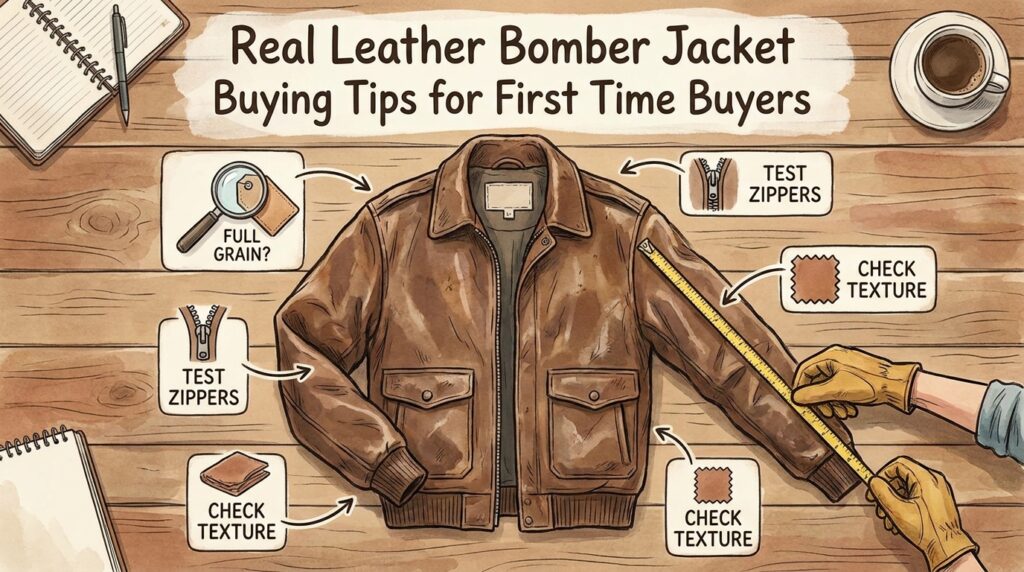
Real Leather Bomber Jacket Buying Tips for Beginners
Buying your first leather bomber jacket can feel surprisingly complicated. At first glance, many jackets look similar, but differences in leather quality, construction, fit, hardware, lining, and finishing can have a major impact on comfort, durability, and overall value. A good bomber jacket is not simply an item you wear for warmth; it can become a dependable wardrobe staple that develops character as the leather ages.
For first-time buyers, the smartest approach is to look beyond appearance. A jacket may have an attractive silhouette and convincing photographs, yet still disappoint if the leather is thin, the sizing is inconsistent, or the stitching and hardware are poorly finished. Understanding what to inspect before purchasing helps you spend your money on a jacket that looks better with age rather than one that quickly loses its shape and finish.
Understand What “Real Leather” Actually Means
The first step is learning the basic leather terminology. Genuine or real leather means the jacket is made from animal hide rather than synthetic polyurethane or PVC. However, the phrase alone does not tell you everything about quality. Different grades and types of leather can vary considerably in texture, durability, thickness, softness, and price.
Full-grain leather retains the natural outer surface of the hide and is generally prized for its strength and ability to develop a distinctive patina. Top-grain leather has been lightly processed to create a more uniform appearance while retaining many of the desirable properties of natural hide. Other leather types may be corrected, split, or heavily treated.
For a first purchase, ask the retailer exactly what type of leather is being used. Pay attention to descriptions such as cowhide, lambskin, goatskin, or sheepskin because each offers a different wearing experience.
- Cowhide: Usually sturdy, structured, and well suited to everyday wear.
- Lambskin: Lightweight, soft, smooth, and comfortable but generally more delicate.
- Goatskin: Flexible and durable, often with a naturally textured grain.
- Sheepskin: Soft and comfortable, with options ranging from lightweight leather to warmer shearling styles.
Choose the Right Leather for Your Lifestyle
There is no single leather type that is perfect for everyone. Your daily routine should influence your choice. Someone who wants a jacket for frequent commuting may prefer a tougher hide that can handle regular use. Someone purchasing a jacket primarily for evenings, social occasions, or fashion styling may prioritize softness and a lighter feel.
If durability is your biggest concern, look for leather with a substantial hand feel and consistent construction. If comfort is more important, softer hides can provide a more relaxed wearing experience from the beginning. Keep in mind that premium leather can feel firm when new and become increasingly supple as it is worn.
When comparing a Womens real leather bomber jacket, consider whether the silhouette complements the rest of your wardrobe rather than choosing solely because of a current fashion trend. A classic bomber shape with clean lines, a practical collar, ribbed cuffs, and a well-proportioned waist can remain useful for years.
Pay Close Attention to Fit and Measurements
Fit is one of the most important factors when purchasing a bomber jacket. Leather does not behave exactly like a lightweight cotton jacket, and a poorly fitted leather jacket can feel restrictive even when the measurements appear close.
Before ordering, measure a jacket you already own that fits comfortably. Compare its chest, shoulder, sleeve, and body measurements with the seller’s size chart. Do not rely exclusively on the size you normally purchase because sizing standards can vary between manufacturers.
| Measurement | What to Check | Why It Matters |
|---|---|---|
| Shoulders | Seam should sit close to the natural shoulder | Prevents a sloppy or overly restrictive appearance |
| Chest | Allow enough room for comfortable movement and layering | Improves comfort and prevents excessive pulling |
| Sleeves | Should reach the wrist without excessive bunching | Creates balanced proportions and practical coverage |
| Body Length | Should sit around the natural bomber-jacket waist area | Preserves the characteristic bomber silhouette |
| Cuffs and Hem | Should feel secure without being uncomfortably tight | Helps retain warmth and jacket shape |
Inspect Stitching and Construction Quality
Leather quality matters, but construction quality can determine how well the jacket performs over time. Examine product photographs carefully and, where possible, inspect the jacket physically before committing to a purchase.
Look for straight, even stitching around major stress points such as the shoulders, armholes, pockets, zipper area, and cuffs. Loose threads, uneven seams, puckering, or visibly inconsistent stitching can indicate weak production standards.
Pay particular attention to areas that experience frequent movement. The shoulder seams and armholes need to accommodate natural arm motion, while pocket openings should be reinforced well enough to withstand repeated use. A beautifully finished leather exterior cannot compensate for weak structural construction.
Evaluate the Zipper, Hardware, and Details
The smallest components can make a major difference to the everyday experience of wearing a bomber jacket. Zippers should move smoothly without catching or separating. Snaps and buttons should feel secure, while metal hardware should complement the overall design rather than appearing unnecessarily decorative.
A strong zipper is particularly important because the front closure experiences repeated stress. Check whether the zipper pull is easy to operate and whether the teeth align properly. If the jacket includes adjustable cuffs, pocket snaps, or decorative hardware, these components should also feel firmly attached.
Classic bomber jackets often benefit from restrained detailing. Excessive hardware can make a jacket harder to style, while simple metal zippers and carefully selected trims can create a timeless appearance.
Don’t Ignore the Interior Lining
Many first-time buyers focus almost entirely on the exterior leather. However, the lining affects comfort, breathability, layering, and the jacket’s long-term usability.
Look for a lining that is securely attached and appropriate for the jacket’s intended season. Lightweight linings can work well for transitional weather, while quilted or insulated interiors may be preferable for colder conditions. If you plan to wear sweaters underneath, make sure the sleeves provide enough room for layering without creating excessive bulk.
Also inspect interior pockets. A practical pocket can add considerable value for everyday use, especially if it has a secure zipper or snap closure. Think about what you normally carry and whether the jacket’s storage layout actually suits your routine.
Decide Between Fashion, Function, and Versatility
A bomber jacket can be styled in many ways, but first-time buyers should think about where they expect to wear it most. A highly distressed jacket may work brilliantly with casual denim and boots but may feel out of place in a more polished wardrobe. Conversely, a clean black or brown leather bomber can transition between casual and smart-casual outfits with much less effort.
For maximum versatility, consider neutral colors such as black, dark brown, or medium brown. These shades pair easily with jeans, chinos, sweaters, T-shirts, boots, and sneakers.
Men shopping for a Mens real leather bomber jacket should also consider how the jacket’s proportions interact with their usual clothing. A slightly streamlined cut can work well with fitted jeans and casual trousers, while a roomier bomber may be better for layering over knitwear or sweatshirts.
Consider Weight and Seasonal Use
Real leather jackets can vary substantially in weight. Heavy leather may offer a substantial, rugged feel, while lightweight leather can be more comfortable for extended wear and transitional seasons.
Do not automatically assume that the heaviest jacket is the best jacket. The ideal weight depends on your climate, transportation habits, and layering preferences. If you spend most of your day indoors and only need a jacket for commuting, an extremely heavy construction may become uncomfortable. If you regularly spend time outdoors in cooler weather, additional insulation can be more useful.
Think About Long-Term Leather Care
Real leather requires some maintenance if you want it to remain attractive. Avoid treating the jacket as if it were an ordinary washable garment. Excessive water, direct heat, harsh detergents, and unsuitable cleaning products can damage natural leather.
Store the jacket on a broad, sturdy hanger that supports the shoulders. Avoid overcrowding it in a wardrobe, and allow the leather to breathe. If the manufacturer recommends a particular leather conditioner, follow those instructions rather than applying an untested household product.
- Read the care instructions: Follow the manufacturer’s recommendations for cleaning and conditioning.
- Protect it from prolonged moisture: If the jacket becomes wet, allow it to dry naturally away from direct heat.
- Use proper storage: Hang the jacket on a suitable hanger to preserve its shape.
- Condition when appropriate: Use a product specifically designed for the leather type when conditioning is recommended.
- Address damage early: Have significant tears, broken zippers, or structural problems repaired before they worsen.
Compare Value Instead of Looking Only at Price
Price is an important consideration, but the cheapest jacket is rarely the best value if you need to replace it quickly. Instead, evaluate what you are receiving for the price. Consider the leather type, construction, lining, hardware, craftsmanship, fit options, and expected longevity.
A well-made leather bomber may cost more initially but provide years of regular use. Because natural leather can develop character over time, a quality jacket can become more distinctive rather than simply looking older.
A Simple Pre-Purchase Checklist
Before completing your first purchase, review the following points:
- Confirm that the product is made from real leather.
- Identify the specific leather type and understand its characteristics.
- Compare your measurements with the seller’s size chart.
- Check shoulder, chest, sleeve, and body proportions.
- Inspect stitching and reinforcement around stress points.
- Evaluate zipper and hardware quality.
- Review the lining and interior pockets.
- Choose a color that works with your existing wardrobe.
- Consider the jacket’s weight and intended season.
- Read the care and maintenance instructions before buying.
Frequently Asked Questions (FAQs)
How can I tell if a bomber jacket is made from real leather?
Start by checking the product description and material specifications. Reputable sellers should clearly identify the leather type rather than relying only on vague terms. Details about hide type, construction, lining, and care can provide additional insight.
Should a leather bomber jacket fit tightly?
It should generally feel comfortably fitted without restricting your shoulders, arms, or chest. Remember to account for the layers you expect to wear underneath, particularly during colder months.
Which leather is best for a first-time buyer?
There is no universal answer. Cowhide can be a strong choice for durability, while lambskin may appeal to buyers who prioritize softness and lightweight comfort. Your lifestyle and intended use should guide the decision.
Can real leather bomber jackets be worn year-round?
That depends on the leather weight, lining, insulation, and local climate. Lightweight versions can work well during transitional seasons, while insulated designs are better suited to colder conditions.
How long can a real leather bomber jacket last?
A well-made leather jacket can remain wearable for many years when it is properly stored, cleaned, and maintained. Longevity depends on leather quality, construction, frequency of use, environmental exposure, and care.
Make Your First Leather Jacket Purchase Count
Buying a real leather bomber jacket for the first time does not have to be overwhelming. Focus on the fundamentals: authentic leather, appropriate fit, dependable construction, quality hardware, practical lining, versatile styling, and proper care. Once you understand these factors, it becomes much easier to distinguish a genuinely useful wardrobe investment from a jacket that only looks impressive at first glance.
Take your time, compare measurements carefully, and choose a design that matches the way you actually dress and live. A thoughtfully selected leather bomber can become one of the most versatile pieces in your wardrobe, offering character, comfort, and enduring style season after season.