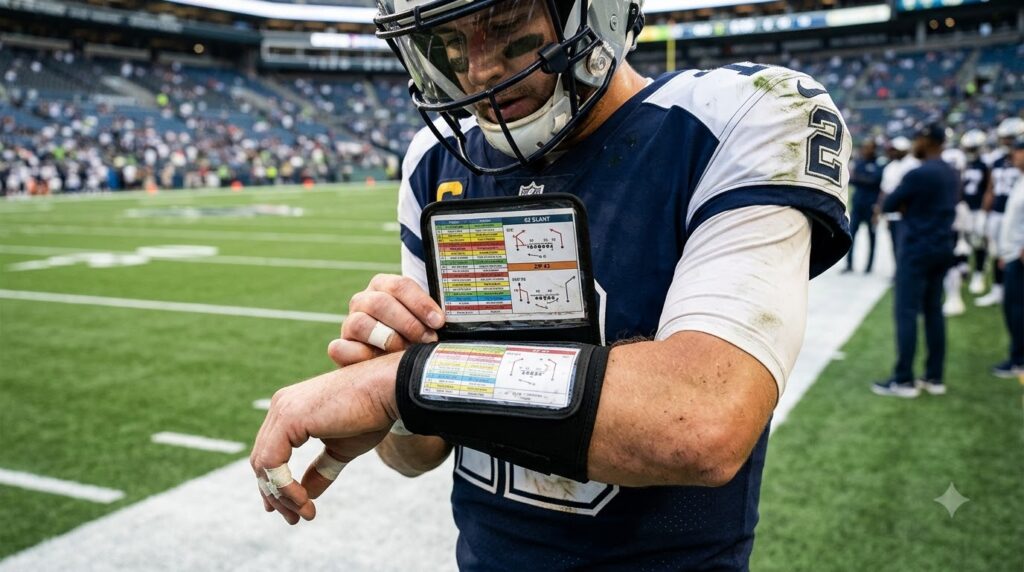
A quarterback’s wristband system can become a source of confusion when the printed calls do not match the current playbook, players use different terminology, or the coaching staff makes last-minute changes. The solution is to establish a reliable preparation process that checks the information, confirms player understanding, and prevents outdated references from reaching the field. A QB playbook wristband for organising game-day play calls can support this process when the coaching staff plans its layout and updates carefully.
The key is to treat the wristband as part of the team’s play-calling workflow. Printing the inserts is only one step. Coaches must also control revisions, confirm that the quarterback understands the calls, and ensure that teammates who use the same system are working from consistent information.
Why Playbook References Become Unreliable
Playbooks evolve throughout a season. Coaches add plays, adjust formations, remove ineffective options, and change assignments in response to the team’s development. These changes can create problems when the wristband is updated separately from the main playbook.
The most common causes of confusion include:
- Outdated inserts: The printed reference still contains an old play or number.
- Uncontrolled revisions: Coaches make changes without telling everyone who needs the information.
- Inconsistent abbreviations: The same concept appears under different names in different documents.
- Last-minute printing: Staff members prepare inserts shortly before a game without checking them properly.
- Insufficient rehearsal: Players receive the new information but have not practised retrieving it under pressure.
These are process problems rather than equipment problems. Even a clearly printed wristband cannot resolve conflicting instructions.
Create One Authoritative Version of the Playbook
The first step is to establish a single master document containing the approved calls. This document should identify the current version and distinguish active plays from those that have been removed or are still being tested.
A master document can be maintained digitally, provided the coaching staff has a clear process for approving changes. The team should avoid allowing multiple people to make independent edits to separate copies without reconciling them.
Each change should answer three questions:
- What information has changed?
- Which players need the updated information?
- Have the corresponding wristband entries and practice instructions been checked?
This simple process makes it easier to trace discrepancies. If a quarterback questions a call, the coach can compare the wristband with the approved playbook rather than trying to determine which unofficial version is correct.
Organising the Wristband for Quick Retrieval
A five-window wristband offers multiple spaces for arranging concise play information. The layout should help the quarterback find a call quickly without having to scan every entry.
A QB playbook wristband designed for a team’s established calling system can be organised around the team’s own categories, subject to the usable space and readability of the selected model.
Possible organisational methods include grouping entries by formation, play family, or game situation. The best choice is the one that aligns with how the coaches communicate and how players learn.
Three layout principles to follow
Use predictable categories. If a particular window contains a specific category, maintain that arrangement. Players should not have to guess where information has moved.
Keep labels concise. The wristband should contain enough information to identify a call, not a lengthy explanation of every assignment.
Make similar calls distinguishable. If two entries differ by only one detail, make that difference visible in the notation. Avoid relying on tiny text or subtle formatting that may be difficult to read quickly.
A layout should be tested in the actual wristband before a full set is printed. Screen previews cannot always show how comfortably the text fits inside the finished product.
A Game-Day Verification Process
The most effective preparation routine checks both the accuracy of the printed information and the player’s ability to use it.
- Freeze the approved play list. Set a clear deadline for the main playbook version that will be used for the game. Later changes should be controlled and communicated.
- Compare every entry. Check the wristband against the approved master list. Verify the play name, identifier, and relevant category.
- Remove obsolete information. Do not leave deleted calls on the insert simply because they were used in previous games. Replace them only with approved information.
- Check readability and fit. Place the insert inside the actual wristband. Confirm that the player can distinguish entries without excessive searching.
- Conduct a call-retrieval test. Give the quarterback a selection of play identifiers and ask the player to find the corresponding entries. Record any recurring hesitation or misreading.
- Confirm shared terminology. Review relevant calls with the teammates who need to recognise them. Make sure the wristband agrees with the coaching staff’s instructions.
- Complete a final version check. Before the game, confirm that the quarterback and other relevant players have the approved version. Remove superseded inserts from circulation.
This process can be adapted to the team’s size and resources. A smaller team may use a simple checklist, while a larger programme may assign responsibility for revisions and final verification to a designated staff member.
Which Preparation Method Works Best?
| Preparation method | Main strength | Main risk | Best application |
| Manual checking against the master list | Direct and easy to understand | Individual entries can be overlooked | Small playbooks and limited revisions |
| Version numbers and dates | Helps identify current inserts | Labels do not prove the contents are correct | Teams making regular changes |
| Independent second-person review | Adds another opportunity to spot errors | Requires time and staff coordination | Important game-day revisions |
| Player retrieval drills | Tests whether entries are understandable | Does not establish that the source data is accurate | Pre-game practice |
| Controlled digital master document | Helps centralise approved information | Depends on staff following the update process | Teams with frequent playbook changes |
No single method solves every problem. The strongest approach combines accurate source information, a final comparison, and a practical test with the player who will use the wristband.
Common Mistakes During Game-Week Preparation
Making a change without updating every copy
A coach might correct an identifier in the master playbook but forget that the quarterback’s insert has already been printed. A teammate may then refer to the same play using a different number.
The solution is to record each approved change and identify all affected materials before considering the update complete.
Relying on memory instead of checking the printed insert
A coach may remember the intended call and assume the printed version is correct. However, a typing error or an outdated entry can remain unnoticed.
Check the actual printed insert rather than reviewing only the digital source. The finished wristband is the version the player will use.
Introducing a new layout immediately before a game
A new layout may appear more logical to the coaching staff, but the quarterback may need time to learn it. Making a major change shortly before competition creates unnecessary uncertainty.
Whenever possible, introduce new layouts during practice. Use retrieval drills to identify problems before the game.
Confusing familiarity with understanding
A quarterback may recognise a play name without understanding the complete assignment. A quick lookup should not be mistaken for mastery of the play.
Continue teaching formations, responsibilities, and situational decisions through the normal playbook and on-field practice.
Practical Example 1: Correcting a Numbering Discrepancy
A hypothetical team changes the identifier assigned to an offensive play during the week. The coaching staff updates the master playbook, but the quarterback’s printed reference still contains the previous number.
During a rehearsal, the quarterback retrieves the wrong entry. Rather than blaming the player, the coach compares the two versions and discovers the mismatch.
The staff corrects the insert, checks the other relevant players’ references, and repeats the drill. The lesson is straightforward: when a player retrieves the wrong call, investigate both the training process and the accuracy of the information.
Practical Example 2: Preparing for a New Opponent
A team wants to organise a smaller selection of calls for a particular opponent. Coaches select the approved plays and arrange them into categories that match their game plan.
Instead of adding every possible adjustment to the wristband, the staff keeps the reference focused on the calls players need to identify. The full assignments and situational instructions remain part of the playbook and practice preparation.
This makes the wristband easier to navigate while preserving the detail required to execute the offence correctly.
Illustrative Case Study: Preventing Last-Minute Confusion
A hypothetical school football programme experiences repeated confusion after midweek playbook revisions. Players understand the plays during meetings, but the printed references occasionally contain outdated identifiers.
The coaching staff introduces a central master document, assigns one person to coordinate revisions, and requires a second review of the printed inserts. The quarterback then completes a retrieval exercise using randomly selected calls.
The expected benefit is a more dependable preparation process, with fewer opportunities for mismatched information to reach the field. No measured reduction in errors is claimed. The transferable lesson is that clear ownership and verification are more reliable than assuming everyone has received the latest change.
Choosing a Wristband That Fits the Workflow
The product should support the team’s preparation method rather than dictate it. Consider the number of entries required, the space available in each window, the player’s comfort, and how easily the inserts can be checked and replaced.
TAG Sportsgear offers a five-window quarterback wristband. Before choosing it, review the product details and confirm that the available layout suits your team’s information requirements.
You can visit TAG Sportsgear to explore its athletic equipment range. Confirm the current listing for product specifications, availability, and other purchasing details before ordering.
A wristband is a reference tool, not a substitute for coaching. If players cannot explain the calls, the team needs additional instruction. If the calls are understood but the printed entries conflict, the update process needs attention.
Conclusion
Reliable game-day preparation depends on more than printing a clear wristband. Coaches need one approved playbook version, consistent terminology, a controlled revision process, and a final test with the quarterback and relevant teammates.
Establish these steps before the season becomes busy, then repeat them whenever the playbook changes. This creates a predictable routine that helps players focus on understanding and executing the play rather than resolving avoidable information conflicts.
FAQs
What should a quarterback’s wristband contain?
It should contain concise, approved play identifiers or other agreed information that helps the quarterback retrieve the correct call. Detailed assignments should be taught through the playbook and practice.
How can coaches prevent outdated calls from being used?
Maintain one authoritative playbook, control revisions, compare printed inserts against the approved version, and remove superseded references.
Should coaches change wristband layouts during the season?
They can, but substantial changes should be introduced during practice where possible. Players need an opportunity to learn the new arrangement before using it in a game.
Who should verify the final wristband?
A coach or designated staff member should check the information. An independent second review can provide an additional safeguard, especially after significant revisions.
How can a team test whether the layout is easy to use?
Ask the quarterback to retrieve selected calls without assistance. Observe whether the player finds the correct entries, reads them accurately, and understands their meaning.