On a clear afternoon in the Blue Ridge, sunlight pours through living room windows with surprising force. Homeowners notice it first in small ways: a sofa cushion that has faded on one side, a home office too bright to see a screen, or an upstairs bedroom that stays warm long after sunset.
These everyday frustrations are why more families are looking into Premium Residential Window Tint near Mars Hill, NC. Modern window film has changed a lot from the dark, bubbly tint many people remember. Today’s options are clearer, longer lasting, and built to handle the specific conditions of mountain living.
This guide covers how residential window film works, why it matters in western North Carolina, which types are available, and what homeowners should consider before making a decision.
Why Mountain Homes Face Unique Sun Challenges
Western North Carolina is known for mild summers and scenic views. Many homes are designed to take advantage of those views, with large windows, sunrooms, and walls of glass facing the ridgelines.
That design choice comes with a tradeoff. Higher elevations generally receive stronger ultraviolet (UV) exposure because there is less atmosphere filtering the sun’s rays. A home sitting on a hillside may also have little shade from neighboring buildings or trees.
Seasonal shifts add another layer. In winter, the sun sits lower in the sky and shines deeper into rooms. Snow on the ground can bounce light back toward the house, creating harsh glare that’s hard to escape.
The result is a mix of heat, glare, and UV exposure that standard window glass doesn’t fully address.
How Residential Window Film Works
Residential window film is a thin, multi-layered material applied to the interior surface of existing glass. Depending on its construction, it can reflect, absorb, or filter different parts of the solar spectrum.
Sunlight reaches a window in three main forms. Visible light is what we see. Infrared light is largely responsible for the heat we feel. Ultraviolet light is invisible, but it causes fading and can damage skin over time.
A well-made film targets these elements separately. Most quality residential films block up to 99% of UV rays, while many advanced options reduce a significant share of infrared heat without making a room noticeably darker.
The Main Types of Home Window Film
Several categories of film are common in residential settings:
- Dyed films: An affordable option that absorbs some heat and reduces glare, though the color can fade over the years.
- Metallized films: These reflect heat effectively and are very durable, but they can look shiny and sometimes interfere with cell signals.
- Ceramic films: Built with non-metallic ceramic particles, these reject heat well while staying clear and signal-friendly.
- Spectrally selective films: Designed to block heat and UV while letting most visible light through, so rooms stay bright.
- Decorative and privacy films: Frosted, etched, or patterned looks that work well in bathrooms, entryways, and street-facing rooms.
When people talk about “premium” tint, they usually mean ceramic or spectrally selective films. These deliver strong performance with a nearly invisible appearance, which matters to homeowners who don’t want to lose their view.
The Practical Benefits for Homeowners
The most common reason people consider window film is comfort. Rooms that once felt too hot in the late afternoon become usable again. Families often find they can enjoy a sunroom in July or a west-facing kitchen at dinnertime without closing every blind.
Protection from fading is another major factor. Hardwood floors, rugs, artwork, and upholstered furniture all break down under constant UV exposure. Because film filters most of these rays, it can noticeably slow that process and help interiors keep their original color longer.
Glare control is especially valuable for people who work from home. A bright window behind a monitor or across from a TV can make a room frustrating to use. Film softens that glare while preserving natural light.
Energy savings are part of the picture, too. By reducing solar heat gain in summer, film can ease the workload on air conditioning. Some low-emissivity (low-E) films also help hold indoor heat during colder months, which is useful in mountain areas where winter nights can be chilly.
There’s also a health angle. The Skin Cancer Foundation has recognized certain UV-blocking window films as an effective form of sun protection, which offers peace of mind for people who spend long hours near windows.
Real-World Scenarios Across Western North Carolina
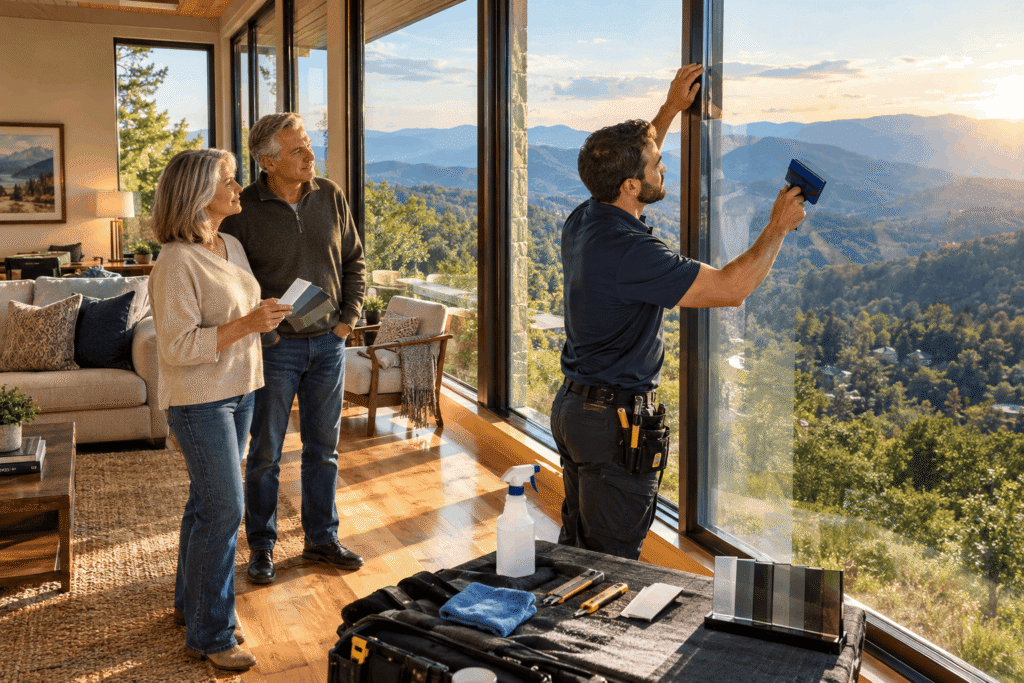
Consider a retired couple living in a hillside home outside Mars Hill, NC. Their great room has floor-to-ceiling windows facing west. Every summer afternoon, the space becomes too warm to enjoy, and their leather recliners have started to crack. A clear ceramic film keeps the view intact while making the room comfortable again.
Or picture a young family in a farmhouse along a quiet road. Their front windows face a busy driveway, and they want more daytime privacy without hanging heavy curtains. A light reflective or decorative film gives them that privacy and still lets in sunlight.
Vacation and second homes present a different situation. Many cabins sit empty for weeks at a time, with sunlight beating on furniture and floors the entire time. Owners searching for Expert Residential Window Tint in Cashiers, NC often have this exact concern, since homes in that higher-elevation area face intense sun and long stretches without anyone home to adjust the blinds.
Even small rooms can benefit. A bathroom with a large window might get a frosted film for privacy, while a nursery could use a UV-blocking film to keep the space cooler and protect a baby’s delicate skin.
What to Consider Before Choosing Window Film
Not every film suits every home. A few factors deserve careful thought before a homeowner commits.
Window type and warranty. Some window manufacturers have specific guidelines about aftermarket films, especially on dual-pane or low-E glass. Checking the window warranty first, or working with an installer who understands glass compatibility, can prevent problems.
Desired appearance. Some people want a film they can barely see. Others prefer a slight tint or a reflective finish. Viewing samples on the actual windows, at different times of day, gives the most accurate impression.
Nighttime privacy. Reflective films offer strong daytime privacy, but the effect reverses at night when interior lights are on. Homeowners who want privacy around the clock may need blinds or a frosted film in certain rooms.
Installer experience. Professional installation affects how the film looks and how long it lasts. Many homeowners look for certified installers, such as those trained through the International Window Film Association, and ask about manufacturer-backed warranties.
Local climate. Mountain conditions call for films that handle both strong summer sun and cold winters. Providers familiar with the region, including companies like EcoArc Home & Office Window Tinting, Inc., tend to understand how elevation, orientation, and seasonal changes affect film performance.
Making a Thoughtful Decision
Choosing Premium Residential Window Tint near Mars Hill, NC comes down to matching the right film to each room’s needs. A sun-drenched great room may need maximum heat rejection, while a bedroom might only need UV protection and a bit of glare control.
Homeowners in Mars Hill, NC and across the surrounding mountains benefit most when they start with their specific problem, whether that’s heat, fading, privacy, or glare, and then compare films that address it directly. Asking for samples, checking warranties, and getting a professional assessment can make the process far simpler.
Window film is a modest upgrade, but for many mountain homes, it changes how comfortable and usable a space feels every single day.
Frequently Asked Questions
Does residential window tint make a home darker inside?
Not necessarily. Many modern ceramic and spectrally selective films are nearly clear. They reduce heat and UV rays while letting most natural light through.
How long does residential window film last?
Quality residential films typically last 10 to 20 years, depending on the film type, sun exposure, and installation quality. Many come with long-term manufacturer warranties.
Can window film be installed on double-pane windows?
Yes, but not every film is suitable for every type of glass. A professional should check compatibility to avoid heat stress and protect the window warranty.
Is window tint worth it for homes in cooler mountain climates?
It often is. Higher elevations can bring stronger UV exposure, and some low-E films help retain indoor heat in winter. That makes them useful year-round, not just in summer.