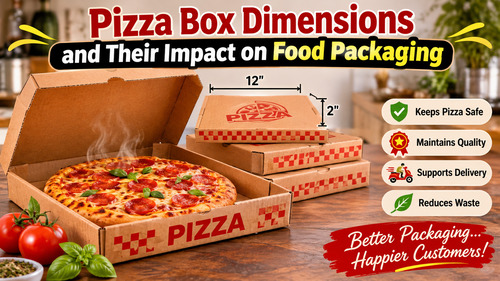
Pizza is one of the most popular fast foods worldwide, and its packaging plays an important role in maintaining quality, freshness, and customer satisfaction.
Choosing the correct pizza dimensions box is essential for restaurants, takeaway businesses, and food delivery services. The right box size protects pizza during transportation, prevents toppings from getting damaged, and helps maintain its original shape. Understanding pizza box dimensions also allows businesses to select suitable packaging materials, reduce waste, and improve the overall customer experience.
Understanding Standard Pizza Box Dimensions
Pizza boxes are available in different sizes to accommodate various pizza types. Standard dimensions usually depend on the diameter of the pizza, the thickness of its crust, and the space required for safe packaging.
The most common pizza box sizes include small, medium, large, and extra-large options. Small boxes are generally designed for personal pizzas, while medium and large boxes are suitable for sharing. Extra-large boxes provide additional space for family-sized pizzas and specialty varieties.
Here are some commonly used pizza box measurements:
Small Pizza Box: 8–10 inches
Medium Pizza Box: 12 inches
Large Pizza Box: 14 inches
Extra-Large Pizza Box: 16–18 inches
These measurements are approximate and can vary depending on the manufacturer and packaging design. Businesses should always measure their pizzas before ordering packaging.
Why Pizza Box Dimensions Matter in Food Packaging
Pizza box dimensions have a direct impact on food protection and presentation. A box that is too small can damage the crust, disturb toppings, and make the pizza difficult to remove. On the other hand, an oversized box may allow the pizza to slide around during delivery.
Proper dimensions help keep the pizza in place and maintain its appearance. They also provide enough room for steam circulation, reducing excessive moisture that can affect crust texture.
The right packaging size offers several advantages:
- Protects pizza from external damage.
- Maintains food presentation and quality.
- Supports safe and convenient transportation.
- Reduces unnecessary packaging material.
- Improves customer satisfaction.
For restaurants that handle hundreds of orders daily, choosing suitable box sizes can also improve packaging efficiency.
Different Types of Pizza Box Sizes
Different pizza varieties require different packaging solutions. Understanding the available sizes helps restaurant owners choose the most practical option.
Small Pizza Boxes
Small pizza boxes are commonly used for personal-sized pizzas. They are easy to carry, require less storage space, and use fewer packaging materials. These boxes are especially useful for restaurants offering individual meals and smaller pizza portions.
Medium Pizza Boxes
Medium boxes are suitable for pizzas designed for two or three people. Their dimensions provide enough space to protect the pizza without making the packaging unnecessarily large.
Large Pizza Boxes
Large pizza boxes are among the most commonly used options in the food industry. They are ideal for family meals, group orders, and traditional large pizzas. Their sturdy construction helps prevent damage during delivery.
Extra-Large Pizza Boxes
Extra-large boxes are designed for oversized pizzas and special menu items. They require strong materials and appropriate structural support to prevent bending or collapsing.
How Pizza Box Dimensions Affect Food Quality
Packaging is not only about appearance; it also influences the quality of delivered food. Pizza needs suitable ventilation to release excess steam while maintaining warmth.
When a box is too tight, toppings may stick to the lid, affecting the pizza’s appearance. When it is too large, the pizza may move around during transportation.
Properly designed boxes help balance temperature retention and moisture control. Small ventilation openings can allow excess steam to escape, helping preserve the crust’s texture.
Restaurants should also consider the height of the box. Thick-crust pizzas, stuffed-crust varieties, and pizzas with additional toppings may require deeper packaging.
Choosing the Right Packaging Materials
The material used for pizza boxes is just as important as their dimensions. Corrugated cardboard is a popular option because it provides strength, insulation, and protection during transportation.
Many businesses also prefer food-grade paperboard because it is lightweight and suitable for everyday takeaway orders.
Important packaging material considerations include:
Durability: The box should support the pizza without bending.
Food Safety: Materials should be suitable for direct food packaging.
Heat Resistance: Packaging should withstand normal hot-food handling conditions.
Moisture Management: The material should help prevent excessive moisture buildup.
Sustainability: Recyclable and responsibly sourced materials can reduce environmental impact.
Selecting the right material helps businesses deliver pizzas safely while maintaining packaging quality.
The Role of Packaging in Restaurant Branding
Pizza packaging provides an excellent opportunity for businesses to promote their brands. Customers often notice the box before opening it, making its design an important part of the dining experience.
Restaurants can print their logos, brand colors, contact details, and promotional messages on pizza boxes. Attractive packaging creates a professional impression and helps customers remember the business.
For businesses looking for packaging inspiration, Bizz Craves can be a helpful point of reference when exploring branding ideas and food business trends.
A well-designed pizza box can turn ordinary packaging into a valuable marketing tool. It also encourages brand recognition when customers share food pictures on social media.
Common Mistakes to Avoid When Selecting Pizza Box Dimensions
Choosing unsuitable packaging can create unnecessary problems for restaurants. Some businesses focus only on price and overlook the importance of proper measurements.
Here are common mistakes to avoid:
Choosing Boxes Without Measuring Pizza
Always measure the actual pizza diameter before purchasing boxes. Different recipes and crust styles may require different packaging sizes.
Ignoring Box Height
The box should provide enough vertical space for toppings and thick crusts. Insufficient height can damage the pizza.
Using Weak Packaging Materials
Low-quality cardboard may bend during transportation, especially when carrying larger pizzas.
Ignoring Ventilation
Poor ventilation can trap excessive steam and affect the crust’s texture.
Ordering Too Many Box Sizes
Maintaining too many packaging variations can increase storage requirements and inventory costs. Businesses should select a practical range based on their menu.
Benefits of Using the Correct Pizza Box Dimensions
Using appropriately sized pizza boxes offers benefits beyond food protection. It helps restaurants improve their daily operations and manage packaging expenses.
Correctly sized boxes can reduce material waste, improve storage efficiency, and make deliveries more convenient. They also help create a consistent presentation across different pizza orders.
Customers appreciate receiving food in packaging that keeps everything secure and clean. A positive delivery experience can encourage repeat purchases and improve customer loyalty.
For growing pizza businesses, investing in suitable packaging is a practical way to improve service quality and build a professional reputation.
Conclusion
Pizza box dimensions play an essential role in food packaging, product protection, and customer satisfaction. From small personal pizzas to extra-large family orders, every pizza requires packaging that matches its size, height, and specific requirements. Choosing the right dimensions helps maintain food quality, prevent transportation damage, and reduce unnecessary packaging costs.
Restaurants should consider box measurements, material strength, ventilation, and branding before selecting their packaging solutions. By understanding these factors, food businesses can create a better delivery experience and maintain consistent packaging standards. The right pizza box is not simply a container; it is an important part of food quality and business success.
Frequently Asked Questions
What are standard pizza box dimensions?
Standard pizza box dimensions commonly range from 8 to 18 inches, depending on the pizza size and packaging requirements.
Why are pizza box dimensions important?
They protect the pizza, maintain its presentation, reduce movement during delivery, and help preserve food quality.
What material is commonly used for pizza boxes?
Corrugated cardboard and food-grade paperboard are commonly used because they provide strength and practical food packaging solutions.
Does pizza box size affect food quality?
Yes. Proper box dimensions help prevent topping damage, excessive movement, and unnecessary moisture buildup.
How can restaurants choose the right pizza box size?
Restaurants should measure pizza diameter and height, consider toppings and crust thickness, and select packaging that provides adequate space and protection.