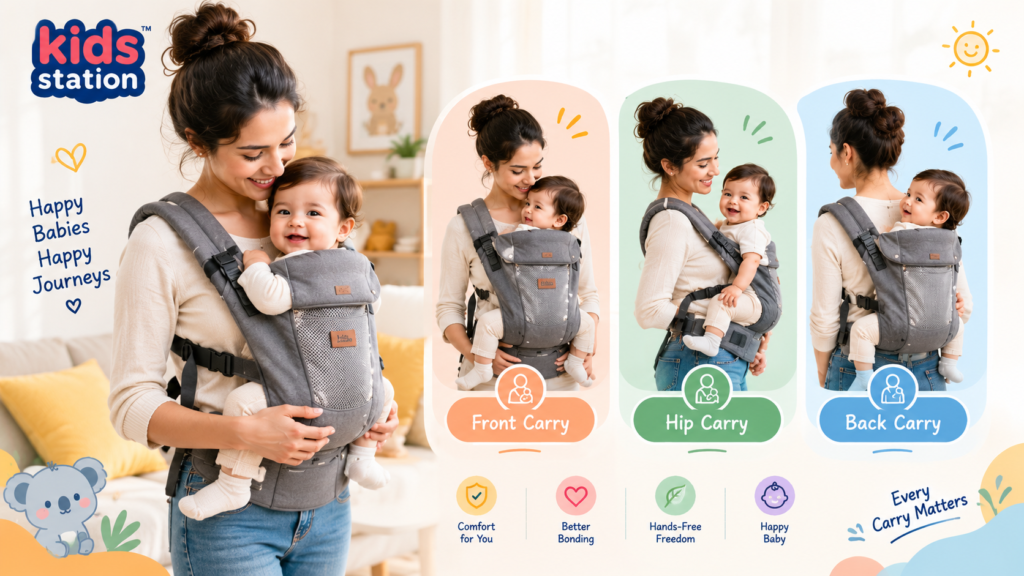
A newborn baby carrier can help parents keep their young baby close during everyday routines, short walks, and travel. However, newborns need more support than older babies, especially around the head, neck, and body. Choosing a carrier specifically designed for newborn use is therefore important.
Parents should always check the carrier’s minimum age, minimum weight, recommended position, and manufacturer’s instructions before using it with a newborn.
What Is a Newborn Baby Carrier?
A newborn baby carrier is a babywearing product designed to support very young babies when they are carried close to the caregiver’s body. Depending on the design, it may provide additional support for a newborn’s head, neck, back, and body.
Not every baby carrier is suitable from birth. Some models are designed for older infants, so checking the manufacturer’s specifications is essential.
Can a Newborn Use a Baby Carrier?
A newborn baby carrier can be used when the specific carrier is designed and approved for newborns and the baby meets its stated requirements.
Before using one, parents should check:
- Minimum recommended weight
- Minimum age requirement
- Newborn positioning instructions
- Head and neck support
- Available carrying position
- Whether a newborn insert is required
- Manufacturer’s safety instructions
If the carrier does not specifically support newborn use, it should not be assumed to be suitable for a newborn.
Why Is Newborn Positioning Important?
A newborn baby carrier needs to keep the baby’s body in an appropriate position while providing adequate support. Young babies have limited head and neck control, so their position needs to be checked regularly.
The baby’s face should remain visible and the airway should stay clear. Fabric, the caregiver’s clothing, or the baby’s position should not obstruct the nose or mouth.
What to Look for in a Newborn Baby Carrier
Choosing a newborn baby carrier involves more than looking at the carrier’s appearance. Parents should focus on fit, support, adjustability, and the manufacturer’s recommended use.
Head and Neck Support
Newborns have developing neck muscles. A suitable carrier should provide the support specified by the manufacturer for young babies.
Adjustable Fit
An adjustable carrier can help accommodate a small newborn and adapt as the baby grows. Follow the product instructions when adjusting straps and panels.
Secure Fastenings
Buckles, straps, and other fastening points should be checked before every use. Make sure they are properly secured according to the manufacturer’s instructions.
Comfortable Material
Soft and breathable materials may improve comfort for both the baby and caregiver, particularly during everyday use.
How to Use a Newborn Baby Carrier
Before placing a newborn in a newborn baby carrier, read the complete product instructions and adjust the carrier according to the baby’s size.
Once the baby is positioned, check that:
- The baby’s face is visible.
- The nose and mouth are unobstructed.
- The baby is held securely.
- The head and neck have appropriate support.
- The carrier is correctly fastened.
- The baby is positioned according to the manufacturer’s instructions.
Recheck the baby’s position regularly rather than assuming it remains unchanged throughout use.
Newborn Baby Carrier Safety Tips
A newborn baby carrier should be used carefully, particularly during the early weeks when babies have limited head and neck control.
Keep these safety practices in mind:
- Use only a carrier approved for your baby’s age and weight.
- Follow the manufacturer’s newborn instructions.
- Keep the baby’s airway clear and face visible.
- Check all straps and fastenings before use.
- Monitor the baby’s position and comfort regularly.
- Do not use a carrier for activities that increase the risk of falls or injury.
- Follow the manufacturer’s guidance about sleeping, feeding, and other activities while using the carrier.
Newborn Baby Carrier vs Regular Baby Carrier
A newborn baby carrier may offer features specifically intended for smaller babies, while some regular carriers are designed for older infants or toddlers.
The main difference is not simply the carrier’s size. Newborn suitability depends on the manufacturer’s stated age and weight requirements, positioning design, and level of support.
When Can You Move to Different Carrying Positions?
A newborn baby carrier is generally used according to the position specified for young babies. As the baby grows and develops better head and neck control, some carriers may allow additional positions.
Parents should change positions only when the baby meets the manufacturer’s requirements for that position.
Newborn Baby Carrier for Travel
A newborn baby carrier can be convenient during travel because it allows parents to keep their baby close without always relying on a stroller.
For travel, parents should check the carrier before leaving, ensure it fits correctly, and take regular breaks to check the baby’s position and comfort.
Newborn Baby Carrier from Kids Station
Kids Station offers practical baby-care products designed for everyday parenting needs. Parents looking for a newborn baby carrier should choose a product according to their baby’s age, weight, developmental stage, and the manufacturer’s recommended usage.
The right carrier, when used correctly, can make everyday babywearing more convenient while keeping the baby close to the caregiver.
Frequently Asked Questions
Is a newborn baby carrier safe for a newborn?
A carrier can be appropriate for a newborn when it is specifically designed for newborn use and is used according to the manufacturer’s instructions.
What age can a newborn baby carrier be used from?
The starting age varies by product. Always check the manufacturer’s stated minimum age and weight rather than assuming that every carrier can be used from birth.
Does a newborn need head support in a carrier?
Newborns have limited head and neck control, so appropriate support is important. Follow the carrier manufacturer’s positioning instructions.
Can a newborn sleep in a baby carrier?
Parents should follow the specific carrier’s safety instructions regarding sleep. A carrier should not be treated as a substitute for a safe, dedicated sleep environment.
How do I choose the right newborn baby carrier?
Check the minimum weight and age, newborn suitability, head and neck support, adjustability, carrying position, fastening system, and manufacturer’s instructions before choosing a carrier.
Final Thoughts
A newborn baby carrier can be a practical option for parents who want to keep their baby close during everyday activities. Because newborns require careful support and positioning, selecting a carrier specifically approved for their age and weight is essential.
Always follow the manufacturer’s instructions, keep the baby’s airway clear, check the fit regularly, and monitor the baby’s position throughout babywearing.