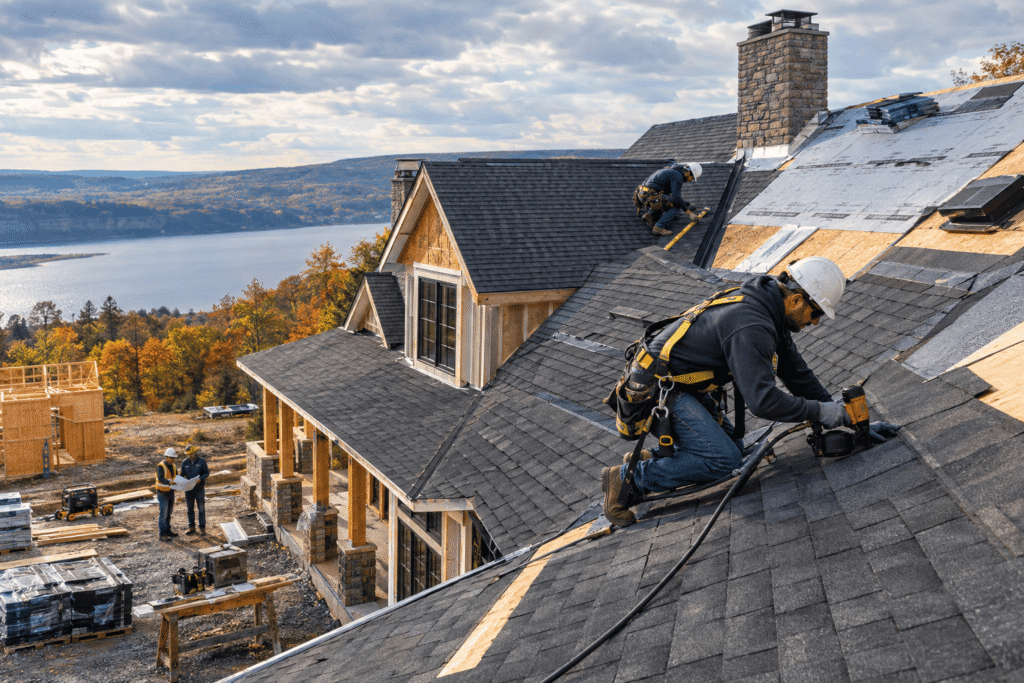
Picture a new home taking shape on a hillside above Seneca Lake. The framing is up, the windows are on order, and the owners can almost see themselves on the deck at sunset. Then the first November storm rolls in, and the open trusses are soaking up rain.
That moment is when many people realize how much rides on the roof. Choosing a new construction roofing contractor in Watkins Glen, NY is one of the most important early decisions in any building project. It shapes how well the home handles Finger Lakes weather for decades.
What New Construction Roofing Involves
Roofing a new build is very different from replacing an old roof. There’s no tear-off and no hidden rot to deal with. Instead, the roofer works with fresh framing, new sheathing, and a design that exists mostly on paper.
That brings its own challenges. The roofer has to coordinate with framers, HVAC installers, electricians, and the general contractor. Vent stacks, skylights, chimneys, and solar mounts all need planning before shingles go down.
Timing matters too. A roof that goes on too early can get damaged by other trades. One that goes on too late leaves the structure open to the weather. Good roofers fit into the build schedule instead of fighting it.
Why Local Climate Changes the Approach
The Finger Lakes region asks a lot of a roof. Winters bring heavy snow, long cold spells, and frequent freeze-thaw cycles. Wind coming off the lake can drive rain sideways and lift poorly fastened shingles.
Because of this, local building codes call for an ice barrier along the eaves in most homes. This membrane helps stop ice dams from pushing meltwater under the shingles. A roofer who knows the area treats this as basic, not optional.
Ventilation is just as important. A well-vented attic stays closer to outdoor temperatures in winter, which reduces snowmelt and refreezing at the edges. In summer, good airflow keeps heat from cooking the shingles and driving up cooling costs.
Roof pitch also plays a role. Steeper roofs shed snow more easily, while lower slopes may need extra underlayment or different materials. These choices are easiest and cheapest to make before construction starts.
Key Advantages of Bringing in the Right Roofer Early
A roofer who joins the project during planning can spot problems while they’re still easy to fix. A tricky valley, a poorly placed vent, or a skylight in a heavy snow zone can all be adjusted on paper. On a finished roof, the same fixes cost far more.
Early involvement also helps with material choices. Architectural asphalt shingles remain the most common pick for homes in the region. They balance cost, curb appeal, and wind resistance well. Metal roofing is gaining ground, especially on lake homes and rural properties where snow shedding is a priority.
Another benefit is warranty coverage. Many shingle makers offer extended warranties only when their full system is installed by a certified contractor. That system includes the underlayment, starter strips, ridge caps, and ventilation products. Missing one piece can quietly shrink the coverage.
Finally, a roofer familiar with local inspections can help the project move along. Inspectors in Schuyler County look closely at ice barriers, flashing, and ventilation. Getting those details right the first time avoids delays.
Real-World Situations Builders and Homeowners Face
Consider a couple building a retirement ranch home just outside the village. They want low maintenance and a roof that won’t need attention for 25 years or more. Their roofer suggests a simpler roofline with fewer valleys, upgraded underlayment, and a ridge vent system. The result is a roof that’s easier to maintain and less prone to leaks.
Now take a seasonal lake house with dramatic angles and big windows facing the water. The design looks stunning, but the complex roof creates many places for snow to pile up. Here, careful flashing and extra ice barrier in the valleys make a big difference.
Builders putting up several homes at once face a different set of concerns. They need a roofing crew that can keep pace with the build schedule and deliver consistent quality from one house to the next. Reliable crews help the whole project stay on track.
People often look beyond their own town when comparing options. A homeowner in Schuyler County might also review shingle roofing services in Big Flats, NY and other Southern Tier communities. That’s because many regional roofers cover a wide area and bring experience from different terrains and building styles.
What to Look for When Comparing Contractors
Experience with new construction specifically is worth asking about. Some roofers focus almost entirely on repairs and replacements. Others work closely with builders and understand how to fit into a construction timeline.
Proper licensing and insurance are a must. Liability coverage and workers’ compensation protect both the property owner and the crew if something goes wrong on site.
It also helps to ask how a contractor handles communication with the builder. Who orders materials? Who checks the sheathing before roofing starts? Clear roles prevent costly gaps.
Local firms such as Brockway Contracting are among the companies that handle new builds across the region. Comparing several options, checking reviews, and asking for references from builders is a smart way to narrow the field.
Thinking Long Term
A roof on a new home is more than a finishing touch. It protects the framing, insulation, drywall, and everything inside. Mistakes made during construction often stay hidden for years before showing up as stains, mold, or ice damage.
For anyone building in Watkins Glen, NY, the goal is simple. Plan the roof early, choose materials suited to the climate, and work with a roofer who understands both the trade and the region. That approach pays off every winter the home stands strong.
Whether someone is building near the lake or comparing shingle roofing services in Big Flats, NY and nearby towns, the same principles apply. Good planning and skilled installation are what make a roof last.
Frequently Asked Questions
How long does it take to roof a new construction home?
Most average-sized homes can be roofed in two to five days once the sheathing is ready. Weather, roof complexity, and crew size can extend that timeline.
What roofing material works best for homes in the Finger Lakes region?
Architectural asphalt shingles are the most popular choice thanks to their cost and durability. Metal roofing is also common because it sheds snow well and lasts a long time.
Is an ice barrier required on new roofs in New York?
In most areas with a history of ice damming, including the Finger Lakes, code requires an ice barrier along the eaves. It helps prevent water from backing up under shingles.
When should a roofer get involved in a new build?
Ideally, during the planning or early framing stage. Early input helps with roof design, ventilation, and material choices before changes become expensive.
How much does new construction roofing cost compared to a replacement?
New construction roofing is often less expensive per square foot because there’s no tear-off or disposal. Final costs still depend on materials, roof size, and design complexity.