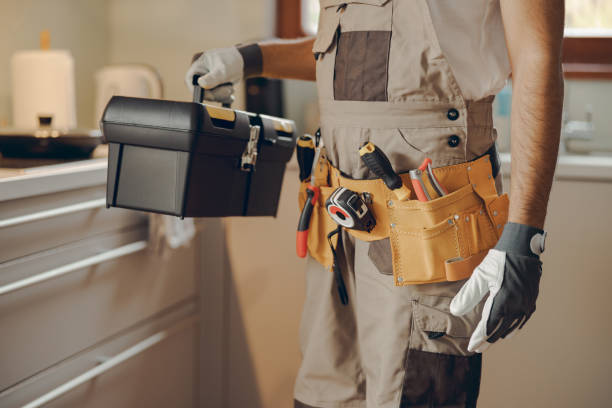
Close up of professional handyman standing on home kitchen and holding his tool bag
A dent in the wall looks small until you try to hide it. Patches that flash through fresh paint are the most common complaint after a quick fix. The crew at Call Me Handyman Spokane has repaired enough of them to know the secret is rarely the patch itself, but what happens around it.
Below is the method we rely on, from choosing materials to the final coat of paint, with notes on what to avoid.
Start With the Right Diagnosis
Every repair begins with reading the damage. The wrong fix for the right problem is why so many patches crack within a season.
Dents, Dings, and Nail Pops
Small dents need only a thin coat of lightweight spackle. Nail pops are different because they signal movement. Drive a screw an inch above or below the popped nail, remove the loose nail, and fill both spots. Covering a nail pop without fixing the fastener guarantees it will return.
Holes Bigger Than a Fist
Doorknob damage and old fixture cut-outs call for a proper patch. Cut a clean square around the damage, fasten backing strips behind the opening, and screw in a new piece of matching-thickness board. A square edge is far easier to tape and finish than a ragged circle.
Water Stains and Soft Spots
If the board feels soft or looks discolored, find the source before touching a knife. Leaks hide behind walls, and a fresh patch over wet board will bubble. Cut out the damaged section, let the cavity dry completely, and deal with any mold concerns before closing the wall.
Materials That Have Changed the Game
Drywall repair has improved quietly over the last decade. Products that once demanded years of practice now forgive many beginner mistakes, though they still reward good technique.
Lightweight and Setting-Type Compounds
Lightweight joint compound sands easily and shrinks less, which makes it ideal for finish coats. Setting-type compound, often called hot mud, hardens through a chemical reaction instead of drying. It suits deep fills because it cures in a set time and barely shrinks, so a second coat can go on the same day.
Self-Adhesive Mesh and Metal-Reinforced Patches
Peel-and-stick mesh patches handle holes up to several inches without any framing work. Metal-backed versions add rigidity for larger damage. They are fast, but they leave a raised edge, so wide feathering matters even more.
Finishing Is Where the Repair Disappears
Anyone can fill a hole. What separates a clean job from an obvious one is the finishing, and that takes patience more than skill.
Feathering Wide Instead of Building High
Apply thin coats and widen each one a few inches past the last. A broad, gentle slope blends into the wall, while a tall mound always shows under raking light. Hold a work light at a low angle to check your progress before sanding.
Matching Texture and Sheen
Spray texture in a can handles orange peel and knockdown finishes well if you practice on cardboard first. Sheen matters too. A flat patch inside a satin wall will glow differently in daylight, so use the original paint and roll it past the edges of the repair.
Priming Before You Paint
Fresh compound absorbs paint unevenly, which leaves a dull halo known as flashing. A coat of drywall primer seals the repair and evens out the color. Skipping it is the most common reason a good patch still shows.
Spokane Homes Have Their Own Quirks
Cold winters and dry indoor air make lumber shrink and swell, and that movement shows up as hairline cracks at seams and corners. A Handyman in Spokane WA also works in plenty of older houses where plaster and lath sit behind later drywall additions, and those walls need different fasteners and extra care. Homes built before the late 1970s may contain asbestos in joint compound or lead in paint. Test before sanding or cutting, and follow EPA lead-safe work rules for pre-1978 homes. These safety steps are not optional extras.
When to Call a Professional
Small dings suit a weekend project. Large damage, repeated cracking, ceiling repairs, and anything tied to water or electrical work deserve experienced hands. Hiring a Handyman in Spokane WA who is registered as a contractor in Washington and carries liability insurance protects your home if something goes wrong. Ask for photos of past repairs, a written estimate, and a clear explanation of how the cause of the damage will be handled. A trustworthy pro will welcome those questions.
Frequently Asked Questions
How long should joint compound dry between coats?
Standard compound usually needs several hours to a full day, depending on thickness and humidity. Setting-type compound hardens in the time printed on the bag. Press lightly with a fingernail to confirm the surface is firm. Rushing this step causes cracking and shrinkage.
Can I paint directly over spackle?
You can, but it rarely looks right. Spackle and bare compound soak up paint differently from the wall around them. A coat of primer fixes that and evens out the color. It adds one step and saves you a repaint.
Why does my patch show through after painting?
The usual cause is flashing from skipped primer or a repair that was not feathered wide enough. A texture mismatch can also draw the eye. Thin skim coats, careful sanding, and priming solve most cases.
Is it worth paying a Handyman in Spokane WA for a small patch?
Often yes, if you want a finish that disappears. Pros bring the right tools, matching materials, and a trained eye for blending. For a single nail pop, a DIY fix is perfectly reasonable.
Conclusion
Good drywall work is patient work: the right diagnosis, modern materials, thin coats, and proper priming. When the job goes beyond a weekend fix, a Handyman in Spokane WA can deliver a repair that blends in and lasts.