When parents search for the best baby blanket fabric, two popular options always stand out: Minky fabric and fleece fabric. Both are soft, warm, and widely used in baby products, but they are not the same. Choosing the right material matters because baby skin is very sensitive and needs gentle, breathable, and safe textiles. If you are confused between minky vs fleece for baby blankets, understanding their structure, comfort level, durability, and safety will help you make the right decision.
In this guide, we will break down everything in simple words so you can choose the best fabric for comfort, warmth, and long term use.
What Is Minky Fabric?
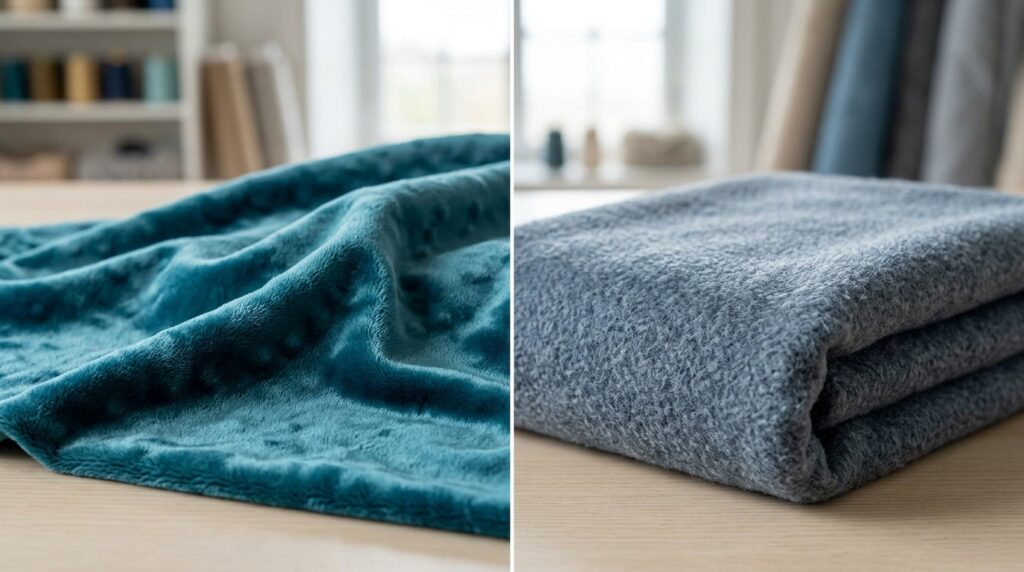
Minky fabric is a type of ultra soft plush fabric made from 100 percent polyester fibers. It is also known as microfiber plush fabric or cuddle fabric because of its extremely smooth and velvety texture. The surface of minky fabric is covered with tiny raised fibers that give it a silky, soft feel similar to animal fur but completely synthetic and safe.
Minky fabric is specially designed for comfort. It is thicker than regular fleece and provides a luxurious feel, which is why it is often used in premium baby blankets, stuffed toys, robes, and bedding accessories. One of the main reasons it is popular in baby products is its softness. Babies love the gentle touch, and parents appreciate its warmth and stylish appearance.
Another important feature of minky fabric is its insulating ability. Even though it is lightweight, it traps heat effectively, keeping babies warm without making them feel heavy or restricted. It is also available in different textures like dotted minky, embossed minky, and printed minky, making it a favorite for decorative baby items.
What Is Fleece Fabric?
Fleece fabric is another widely used soft fabric for baby blankets, made from polyester fibers as well. It is designed to mimic the warmth of wool but in a lightweight and affordable form. Fleece is brushed on both sides to create a fuzzy texture that feels warm and comfortable against the skin.
Unlike minky fabric, fleece has a more matte and slightly textured surface. It is less plush but more breathable, which makes it suitable for everyday use. Fleece is commonly used in jackets, hoodies, blankets, and sleepwear because it balances warmth and comfort without overheating the body.
There are different types of fleece fabric such as polar fleece, micro fleece, and coral fleece. Each type varies in thickness and softness, but all are designed to provide warmth and insulation. For baby blankets, fleece is often chosen because it is lightweight, easy to wash, and budget friendly.
Minky vs Fleece for Baby Blankets
When comparing minky fabric and fleece fabric for baby blankets, it is important to look at comfort, safety, warmth, and usability. Both fabrics are popular, but they serve slightly different purposes.
Minky fabric is extremely soft and plush, offering a luxurious feel that is unmatched by most fabrics. It is thicker and provides a cozy, comforting experience for babies. Fleece, on the other hand, is lighter and more breathable, making it suitable for everyday use and warmer climates.
Here is a simple comparison to understand the key differences:
Minky Fabric
- Ultra soft and plush texture
- Thicker and more luxurious feel
- Excellent warmth and insulation
- Slightly less breathable than fleece
- Premium appearance and higher cost
Fleece Fabric
- Soft but less plush than minky
- Lightweight and breathable
- Good warmth without overheating
- More affordable and widely available
- Easy to wash and quick drying
Both fabrics are safe for babies when made from high quality materials, but their usage depends on the season, climate, and personal preference.
Comfort and Baby Skin Sensitivity
When it comes to baby blanket fabric, comfort is the most important factor. Babies have delicate skin that reacts quickly to rough or synthetic materials. Both minky and fleece are made from polyester, but their texture feels very different on the skin.
Minky fabric is often considered more comforting because of its velvety surface. It gives a gentle, soothing touch that many babies enjoy during sleep or cuddle time. It is commonly used in premium nursery products because of its sensory comfort.
Fleece is also soft, but it has a slightly rougher texture compared to minky. However, it is still gentle enough for daily use and does not irritate the skin when made with quality fibers. Many parents prefer fleece for daytime blankets and minky for nighttime comfort.
Warmth and Breathability Comparison
Warmth is a key factor when choosing between fleece and minky fabric. Both fabrics are designed to keep babies warm, but they perform differently in terms of heat retention and airflow.
Minky fabric is thicker and holds more heat, making it ideal for colder environments or winter use. It creates a cozy cocoon effect that keeps warmth trapped inside. However, this also means it is slightly less breathable.
Fleece fabric offers a better balance between warmth and breathability. It keeps babies warm but allows more airflow, reducing the risk of overheating. This makes fleece a better option for moderate climates or all day use.
Durability and Maintenance
Baby products need to be durable because they are washed frequently. Both minky and fleece fabrics are strong, but they behave differently after repeated washing.
Minky fabric is durable but requires more care. It can lose its softness if washed in high heat or with harsh detergents. It is best washed on gentle cycles to maintain its plush texture.
Fleece fabric is easier to maintain. It dries quickly, resists wrinkles, and holds its shape well even after multiple washes. This makes it more practical for parents who prefer low maintenance baby blankets.
Both fabrics are resistant to shrinking and do not fray easily, which is an advantage over natural fabrics like cotton or wool.
Safety and Suitability for Babies
Safety is always a top priority when selecting baby blanket fabric. Both minky and fleece are generally safe because they are made from non toxic polyester fibers. However, breathability and weight play a role in safe sleep practices.
Fleece is often considered safer for unsupervised sleep because it is lighter and allows better air circulation. Minky, being thicker, is better suited for supervised cuddling, stroller use, or short rest periods.
It is always recommended to choose high quality, certified fabrics that are free from harmful chemicals and dyes when selecting baby products.
Which Fabric Is Better for Baby Blankets?
The answer depends on what you are looking for. If your priority is ultimate softness and a luxurious feel, minky fabric is the better choice. It provides unmatched comfort and warmth, making it ideal for winter blankets and special baby items.
If you are looking for practicality, breathability, and easy maintenance, fleece fabric is a better option. It works well for everyday use, travel blankets, and year round comfort.
Many parents actually use both fabrics for different purposes. Minky blankets are used for sleep and comfort, while fleece blankets are used for daily activities and outdoor use.
Choosing the Right Fabric for Long Term Use
When selecting between minky and fleece for baby blankets, consider the climate, usage, and washing frequency. In colder regions, minky fabric offers extra warmth and coziness. In warmer or mixed climates, fleece provides better airflow and versatility.
It is also important to consider fabric quality. High quality minky and fleece fabrics last longer, feel softer, and maintain their appearance even after repeated washing. Always check fabric density, stitching quality, and finish before purchasing.
The decision ultimately comes down to comfort preference and lifestyle needs. Both fabrics have their strengths, and both are widely trusted in the baby textile industry.
Soft Fabric Choices That Make Baby Comfort a Priority
Choosing the right fabric for baby blankets is more than just a design decision. It is about comfort, safety, and long term usability. Minky fabric offers unmatched softness and luxury, while fleece fabric provides practicality and breathability. Both are excellent options in the world of baby blanket fabric, and each serves a unique purpose in a baby’s daily comfort routine.
For high quality minky fabric and premium soft textile materials designed for comfort and durability, Ice Fabrics offers a wide range of options suitable for baby products, crafts, and professional textile needs.