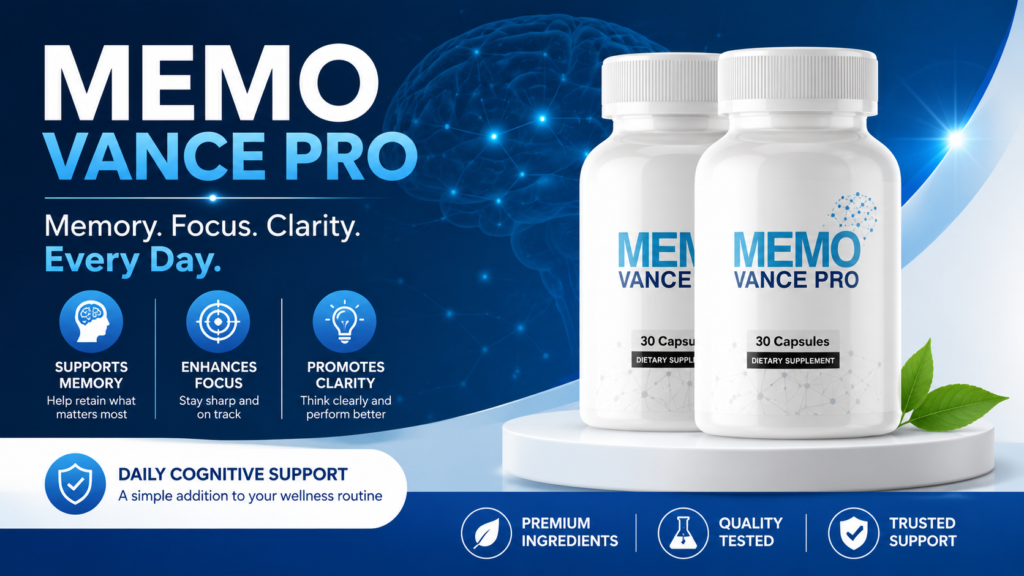
In a world filled with notifications, deadlines, multitasking, and constant information, staying focused and mentally organized can feel increasingly challenging. Whether you are managing a busy work schedule, studying for an important exam, learning new skills, or balancing everyday responsibilities, maintaining a consistent routine for cognitive wellness can make a meaningful difference in how you approach your day.
Memory and focus are essential parts of everyday life. They help us learn, organize information, solve problems, and complete tasks. However, mental performance can be influenced by several factors, including sleep quality, stress, nutrition, physical activity, age, and general health. Supporting cognitive wellness therefore involves more than searching for a quick solution.
MemoVance PRO™ – Memory, Focus & Cognitive Wellness Support is presented as a product for people interested in exploring cognitive wellness supplements as part of their daily routine. Before choosing any supplement, it is important to understand what cognitive wellness means, which lifestyle habits support normal brain function, and how to evaluate product claims responsibly.
This comprehensive guide explores memory support, everyday concentration, healthy lifestyle practices, supplement evaluation, safety considerations, and frequently asked questions about MemoVance PRO.
Your Wellness, Read the Complete Guide to discover practical ways to support your cognitive health while making informed decisions about supplements and everyday wellness.
What Is MemoVance PRO™ Memory and Cognitive Wellness Support?
MemoVance PRO™ is presented as a memory, focus, and cognitive wellness support product. It is intended for consumers who are exploring options to complement their existing wellness routines.
Cognitive wellness refers broadly to the mental abilities involved in learning, remembering information, maintaining attention, planning, reasoning, and making decisions. These abilities help people manage everyday activities and adapt to new situations.
Products marketed for cognitive support may focus on different areas, including attention, mental alertness, memory, or general neurological wellness. However, the effectiveness of any particular product depends on its actual ingredients, ingredient amounts, product quality, and supporting scientific evidence.
Without independently verified information about the complete MemoVance PRO formulation and appropriate clinical studies of the finished product, its specific benefits cannot be confirmed.
Who May Be Interested in MemoVance PRO?
Adults researching cognitive wellness products may be interested in understanding whether a supplement fits their individual needs and daily habits.
Common reasons people explore this category include:
- Maintaining a structured routine for everyday wellness.
- Learning about nutrition and its relationship with normal brain function.
- Exploring ways to support concentration during demanding tasks.
- Improving daily organization and study habits.
- Understanding the potential role and limitations of cognitive wellness supplements.
These are general interests associated with cognitive wellness, not verified outcomes of MemoVance PRO. Individual suitability should be assessed using the product label, safety information, and relevant professional advice.
Why Is Cognitive Wellness Important for Everyday Life?
Cognitive wellness influences many routine activities. Remembering appointments, following conversations, learning new information, planning a project, and completing household tasks all require different combinations of mental skills.
Although occasional forgetfulness and difficulty concentrating can occur in everyday life, persistent or worsening problems deserve attention rather than being automatically attributed to stress or aging.
How Does Memory Support Learning and Daily Organization?
Memory allows people to encode, retain, and retrieve information. It helps us remember instructions, recognize familiar places, learn from experience, and apply previously acquired knowledge.
Different forms of memory serve different purposes. Working memory helps you temporarily hold and manipulate information, while long-term memory allows information to be retained over longer periods.
Sleep, attention, practice, and the way information is organized can all influence how effectively people learn and remember.
For example, breaking a complex task into smaller steps and reviewing information at spaced intervals may make learning more manageable than attempting to memorize everything at once.
Why Is Focus Essential for Productivity?
Focus is the ability to direct attention toward a task while managing distractions. It helps you read carefully, solve problems, follow instructions, and finish activities that require sustained effort.
Concentration can be affected by poor sleep, interruptions, emotional stress, environmental noise, and frequent switching between tasks.
A practical way to support focus is to create a workspace with fewer distractions, set clear priorities, and take appropriate breaks between periods of concentrated work.
What Does Cognitive Wellness Mean as You Age?
Changes in certain cognitive abilities can occur with age, but significant memory loss should not automatically be considered a normal part of getting older.
Maintaining social connections, staying physically active, getting sufficient sleep, managing health conditions, and engaging in mentally stimulating activities can contribute to overall well-being.
If memory problems interfere with daily life, a healthcare professional can help assess potential causes, including medication effects, sleep disorders, mood-related concerns, and other medical conditions.
How Can You Support Memory Naturally?
Healthy routines can provide a practical foundation for supporting normal cognitive function. No single habit guarantees better memory, but several evidence-informed strategies can help create conditions that are favorable for learning and everyday mental performance.
1. Get Consistent, Quality Sleep
Sleep plays an important role in learning, memory consolidation, attention, and emotional regulation.
Insufficient sleep can make it harder to concentrate, process information, and recall details. Establishing a regular sleep schedule and creating a comfortable sleep environment may help improve sleep quality.
Helpful habits include maintaining consistent bedtimes, reducing stimulating activities before bed, and limiting late-day caffeine if it interferes with sleep.
Adults generally need at least seven hours of sleep per night, although individual requirements vary.
2. Eat a Balanced, Nutrient-Rich Diet
The brain depends on a steady supply of energy and essential nutrients to function normally.
A balanced eating pattern can include vegetables, fruits, whole grains, legumes, nuts, suitable protein sources, and healthy fats. Individual nutritional requirements vary, so food choices should reflect personal health needs and dietary preferences.
Eating a variety of foods can help provide nutrients involved in normal neurological function.
However, consuming extra amounts of a nutrient does not necessarily improve memory if your nutritional needs are already being met. Supplements should not be treated as automatic substitutes for a varied diet.
3. Stay Physically Active
Regular physical activity supports cardiovascular health, mobility, mood, and general well-being. It may also contribute to aspects of cognitive health.
Walking, cycling, swimming, dancing, and strength-building exercises can be incorporated into a routine according to your fitness level and medical needs.
You do not need to begin with a demanding exercise program. Choosing activities you enjoy may make it easier to remain consistent over time.
4. Manage Everyday Stress
Stress can affect attention, sleep, and the ability to retrieve information. When responsibilities accumulate, it may become more difficult to concentrate on one task at a time.
Consider incorporating short breaks, breathing exercises, outdoor walks, journaling, or other relaxing activities into your schedule.
If stress becomes persistent or significantly affects your daily life, consider speaking with a qualified healthcare professional.
5. Challenge Your Brain With Meaningful Activities
Learning new skills and engaging in mentally stimulating activities can keep your mind active.
Consider reading, learning a language, playing a musical instrument, completing puzzles, practicing a craft, or exploring an unfamiliar subject.
These activities can provide opportunities for learning and engagement, although no single activity guarantees protection against cognitive decline.
Can MemoVance PRO Help With Focus and Mental Clarity?
Consumers often explore cognitive wellness supplements because they want to feel more organized, maintain attention, or support their everyday routines.
It is important to distinguish between these goals and the effects demonstrated by scientific research.
Understanding Focus-Related Claims
Focus involves multiple processes, including attention, working memory, motivation, and the ability to manage distractions.
Some ingredients in cognitive wellness products have been studied for particular cognitive outcomes. However, evidence can vary considerably depending on the ingredient, dose, study population, and duration of use.
Without verified product-specific evidence, it is not possible to conclude that MemoVance PRO improves attention, mental clarity, or productivity.
What About Memory Retention?
Memory depends on several stages, including learning, storing, and retrieving information.
Strategies such as active recall, spaced repetition, adequate sleep, and minimizing distractions can help support learning. These techniques are practical options for students, professionals, and anyone trying to remember new information.
A supplement should not be assumed to improve memory retention simply because memory support appears in its marketing description.
Can a Cognitive Supplement Replace Healthy Habits?
No. A supplement should not replace adequate sleep, balanced nutrition, physical activity, or appropriate medical care.
Even a product containing ingredients with some scientific support may not produce the same effects in every person. Research on individual ingredients also does not automatically prove that a particular finished formula is effective.
Quotable takeaway: Cognitive wellness is best approached through consistent sleep, balanced nutrition, regular physical activity, mental engagement, and evidence-informed decisions about supplements.
How Should You Evaluate the MemoVance PRO Formula?
Before purchasing a cognitive wellness supplement, review the complete product label and determine whether its claims are supported by credible evidence.
Examine the Ingredient List
Look for the full list of active and inactive ingredients, serving size, and amount of each ingredient per serving.
If the label uses a proprietary blend without disclosing individual ingredient quantities, it may be difficult to determine whether the product contains amounts comparable to those used in scientific research.
Do not assume that a longer ingredient list means a product is more effective.
Look for Evidence Supporting the Claims
A trustworthy evaluation considers the quality and relevance of the available research.
Ask the following questions:
- Has the ingredient been studied in humans?
- Were the study participants similar to the intended users?
- Was the tested amount comparable to the amount in the product?
- Were the results clinically meaningful or limited to a narrow laboratory measure?
- Were possible side effects and interactions assessed?
- Has the finished product itself been studied in an appropriate clinical trial?
These questions help distinguish plausible marketing language from demonstrated effects.
Understand the Difference Between Ingredient Research and Product Research
Suppose a scientific study examines one ingredient in isolation. Its findings cannot automatically be applied to a supplement that combines several ingredients.
Other ingredients, different doses, formulation differences, and interactions may influence the final product’s effects.
For MemoVance PRO, product-specific conclusions require reliable evidence about its actual formulation. Without that information, it is more appropriate to describe its intended use than to promise a particular cognitive benefit.
Review Quality and Manufacturing Information
Look for clear manufacturer information, batch identification, appropriate quality-control details, and independent testing where available.
In the United States, dietary supplements are regulated differently from prescription medicines. The FDA does not generally approve dietary supplements for safety and effectiveness before they are marketed.
Claims that a supplement is made in an FDA-registered facility should not be interpreted as proof that the FDA has approved the product or verified its effectiveness.
What Does Science Say About Memory and Cognitive Health?
Scientific research on cognitive health covers several interconnected areas, including sleep, exercise, nutrition, cardiovascular health, social engagement, and the management of certain medical conditions.
No single lifestyle practice guarantees that a person will avoid memory problems. Nevertheless, evidence-informed health behaviors can support overall well-being and may help maintain aspects of cognitive function.
Why Is Sleep Important for Memory?
Sleep contributes to learning and memory consolidation. When sleep is consistently insufficient, attention and the ability to process new information may be affected.
A regular sleep schedule is therefore a useful foundation for people who want to improve their study habits or manage demanding work.
If you experience persistent insomnia, loud snoring accompanied by daytime sleepiness, or ongoing fatigue, discuss these symptoms with a healthcare professional.
How Does Exercise Relate to Brain Health?
Physical activity benefits several systems in the body, including the cardiovascular system. Research has also examined relationships between physical activity and cognitive performance across different populations.
The appropriate activity level depends on age, health, fitness, and individual circumstances.
People who have been inactive for an extended period or have medical conditions affecting exercise tolerance should seek guidance about beginning an appropriate routine.
Can Nutrition Influence Cognitive Function?
The brain requires nutrients to support normal physiological processes. Nutritional deficiencies can sometimes contribute to health problems, including symptoms that affect mental performance.
However, the relationship between diet, supplements, and cognitive outcomes is complex. Taking a supplement does not guarantee better memory, particularly when a person is not deficient in the relevant nutrient.
Persistent concentration or memory problems should not automatically be treated with over-the-counter products. A healthcare professional can assess whether nutritional, sleep-related, medication-related, or other factors may be involved.
A Data-Backed Statement About Sleep and Cognitive Wellness
The U.S. Centers for Disease Control and Prevention recommends that adults aged 18–60 get at least seven hours of sleep per night, providing an evidence-informed foundation for attention, learning, and overall health.
This recommendation concerns general adult sleep health. It does not establish that MemoVance PRO improves memory or that seven hours is sufficient for every individual.
Sleep requirements can vary with age and personal circumstances. Consistently poor sleep or ongoing daytime fatigue may warrant professional assessment.
How Can You Build a Daily Cognitive Wellness Routine?
A simple, repeatable routine may be more useful than an elaborate plan that becomes difficult to maintain.
Morning: Start With a Clear Plan
Begin your day by reviewing your priorities and identifying the tasks that require the most concentration.
Eat according to your nutritional needs, hydrate appropriately, and allow enough time for a consistent morning routine.
If you choose to use MemoVance PRO, follow the verified product label rather than assuming a serving size or schedule.
During the Day: Protect Your Attention
Reduce unnecessary notifications and divide large projects into manageable tasks.
Try working on one demanding activity at a time, then taking a brief break when needed. Keep a notebook, calendar, or digital task list available to reduce the need to remember every detail.
These practical tools can help organize information without relying on a supplement to improve concentration.
Afternoon: Add Movement and Recovery
A short walk or another suitable form of movement may provide a helpful break from prolonged sitting.
If you feel mentally fatigued, review your sleep, workload, hydration, meal patterns, and stress levels before assuming that a supplement is needed.
Evening: Prepare for Rest
Set aside time to wind down and reduce unnecessary stimulation before bed.
Review what you accomplished, identify important tasks for the next day, and maintain a sleep schedule that suits your needs.
Consistency can make routines easier to follow and can help you recognize which habits are working well.
Is MemoVance PRO Safe for Everyday Use?
The safety of any supplement depends on its ingredients, amounts, quality, and the person taking it.
Because the complete MemoVance PRO formulation has not been independently verified in this article, its specific safety profile cannot be established here.
Who Should Consult a Healthcare Professional?
Seek professional advice before using a cognitive wellness supplement if you:
- Take prescription medication or other supplements.
- Have an ongoing medical condition.
- Are pregnant, breastfeeding, or planning a pregnancy.
- Have previously experienced an adverse reaction to a supplement.
- Are scheduled for surgery or have been advised to avoid certain ingredients.
A physician or pharmacist can review the actual product label and assess possible interactions.
What Side Effects Should You Consider?
Potential side effects vary by ingredient. Depending on the formulation, supplements may cause digestive discomfort, headaches, sleep disturbances, allergic reactions, or interactions with medicines.
Do not exceed the recommended serving or combine products with overlapping ingredients without appropriate advice.
Stop using a product and seek medical guidance if you experience concerning symptoms. Severe symptoms require urgent medical attention.
When Should Memory Problems Be Medically Evaluated?
Occasional forgetfulness can happen to anyone. However, new, persistent, or worsening memory problems may have causes that deserve medical attention.
Seek professional evaluation if cognitive changes interfere with everyday activities, affect your ability to manage familiar tasks, or occur alongside other concerning symptoms.
Sudden confusion or an abrupt change in mental status can be an emergency and requires immediate medical assessment.
A cognitive wellness supplement should never be used to delay an appropriate medical evaluation.
MemoVance PRO Customer Reviews in the USA: What Should You Know?
Customer feedback can provide useful information about packaging, ease of use, ordering experiences, and customer service. It is less reliable as a way to establish whether a product improves memory or concentration.
Verified USA customer reviews: No independently verified U.S. customer testimonials were provided for this article. To maintain transparency, this guide does not invent customer names, star ratings, personal experiences, or claims about improved memory.
How to Evaluate Customer Feedback
When reviewing testimonials for MemoVance PRO, look for the following characteristics:
- The reviewer clearly identifies the product being discussed.
- The account reflects a genuine, identifiable purchasing experience where verification is available.
- Claims are presented as individual experiences rather than guaranteed outcomes.
- Any material relationship between the reviewer and seller is disclosed where required.
- The review provides reasonable context without promising universal results.
Why Testimonials Are Not Scientific Proof
A person may report feeling more alert after changing their routine, but that experience does not establish that a supplement caused the change.
Sleep improvements, reduced stress, changes in workload, medication, and other factors may contribute to perceived differences.
Likewise, a positive review does not establish that the product is safe for every user or that its advertised claims have been clinically validated.
When evaluating MemoVance PRO, consider authentic feedback alongside ingredient transparency, relevant research, safety information, and manufacturer documentation.
Common Mistakes to Avoid When Supporting Memory and Focus
Expecting Immediate Results
Learning and concentration are influenced by multiple factors. Be cautious of products that promise dramatic changes within a fixed period without credible evidence.
Ignoring Sleep and Stress
Insufficient sleep and persistent stress can make concentration difficult. Addressing these factors may be a more appropriate starting point than immediately adding a supplement.
Taking Multiple Cognitive Supplements Together
Combining products can increase the risk of overlapping ingredients, excessive intake, and unwanted interactions. Review the full ingredient lists and seek professional guidance when necessary.
Assuming Natural Products Are Always Safe
Natural ingredients can still cause side effects and interact with medicines. Safety depends on the substance, amount, quality, and individual circumstances.
Overlooking Persistent Symptoms
Do not assume that continuing memory problems are simply a normal part of aging or a sign that you need a stronger supplement. Persistent or worsening symptoms deserve appropriate assessment.
Frequently Asked Questions About MemoVance PRO™
1. What is MemoVance PRO™?
MemoVance PRO is presented as a memory, focus, and cognitive wellness support product. Its specific ingredients and effectiveness should be assessed using the current product label and reliable supporting evidence.
2. Can MemoVance PRO improve memory?
Its ability to improve memory cannot be confirmed without appropriate evidence about the finished product. Memory depends on several factors, including sleep, attention, learning strategies, general health, and medication effects.
3. Does MemoVance PRO support concentration?
The product is marketed for cognitive wellness, but a specific improvement in concentration should not be assumed without reliable product-specific evidence. Reducing distractions, taking suitable breaks, and maintaining consistent sleep may help support everyday focus.
4. How long does MemoVance PRO take to work?
A verified timeline for results has not been established in the information used for this article. Be cautious of claims promising noticeable cognitive changes within a guaranteed number of days.
5. Is MemoVance PRO suitable for older adults?
Suitability depends on the ingredients, medical history, and medications involved. Older adults experiencing new or worsening memory difficulties should consult a healthcare professional rather than relying solely on a supplement.
6. Can I take MemoVance PRO with medication?
Do not assume it is safe to combine with medication. Ask a physician or pharmacist to review the actual ingredient list and check for possible interactions before use.
7. Is MemoVance PRO FDA-approved?
Do not assume that MemoVance PRO is FDA-approved. Dietary supplements are not generally approved by the FDA for safety and effectiveness before marketing in the United States. Facility registration is not equivalent to product approval.
8. Are MemoVance PRO customer reviews reliable?
Reviews may help describe individual experiences, but they do not establish clinical effectiveness. Look for authentic feedback and independently supported product information, and remain cautious of dramatic or guaranteed results.
9. Can a cognitive supplement replace healthy habits?
No. A supplement should not replace adequate sleep, balanced nutrition, physical activity, mental engagement, or appropriate medical care. These broader factors remain important to overall cognitive wellness.
10. What should I check before buying MemoVance PRO?
Review the full ingredient list, serving size, safety warnings, manufacturer details, quality-control information, price, return terms, and any recurring-payment conditions. Consider professional advice if you take medication or have health concerns.
Your Wellness, Read the Complete Guide to Cognitive Health
Supporting memory and focus starts with understanding how everyday habits influence mental performance. Adequate sleep, balanced nutrition, regular movement, stress management, meaningful mental activity, and practical organizational strategies can all contribute to a thoughtful cognitive wellness routine.
MemoVance PRO™ may be a product to research if you are exploring cognitive wellness supplements. However, its specific benefits should not be assumed without a verified ingredient profile and reliable evidence supporting the finished formulation.
Take time to compare claims with the available science, check safety information, and speak with a qualified healthcare professional when necessary. Avoid products that promise guaranteed memory improvement or suggest that a supplement can replace medical evaluation.
Your Wellness, Read the Complete Guide before making your decision. Understanding the evidence and choosing sustainable daily habits can help you take a more informed approach to cognitive wellness.
Take the Next Step Toward Your Cognitive Wellness Goals
Make your daily routine work for you. Prioritize restorative sleep, nourishing meals, regular movement, focused work sessions, and time for activities that keep you learning and engaged.
Research MemoVance PRO™ carefully, verify the product information, and evaluate whether it is appropriate for your individual circumstances.
Choose informed wellness decisions, build consistent habits, and give your long-term cognitive well-being the thoughtful attention it deserves.
Health and Advertising Disclaimer
This article is for informational and educational purposes only and does not provide medical advice, diagnosis, or treatment recommendations. MemoVance PRO™ is discussed as a product marketed for memory, focus, and cognitive wellness. Its complete formulation, safety profile, and effectiveness have not been independently established in this article.
No claim in this article guarantees improved memory, concentration, mental clarity, or prevention of cognitive decline. Individual experiences and outcomes may vary. Dietary supplements should not replace a balanced diet, healthy lifestyle, prescribed treatment, or appropriate medical care.
Consult a qualified healthcare professional before starting a supplement, particularly if you take medication, have an existing medical condition, or are pregnant or breastfeeding. Seek medical evaluation for persistent, worsening, or sudden cognitive changes.
Under U.S. Federal Trade Commission (FTC) standards, health-related advertising claims must be truthful, not misleading, and supported by appropriate scientific evidence. Testimonials must reflect genuine experiences, and material connections must be disclosed where required. Any product-specific claims should be substantiated before publication.
Statements about dietary supplements have not been evaluated by the U.S. Food and Drug Administration unless specifically established otherwise. This disclaimer does not indicate that MemoVance PRO™ is FDA-approved or that its advertised benefits have been verified.