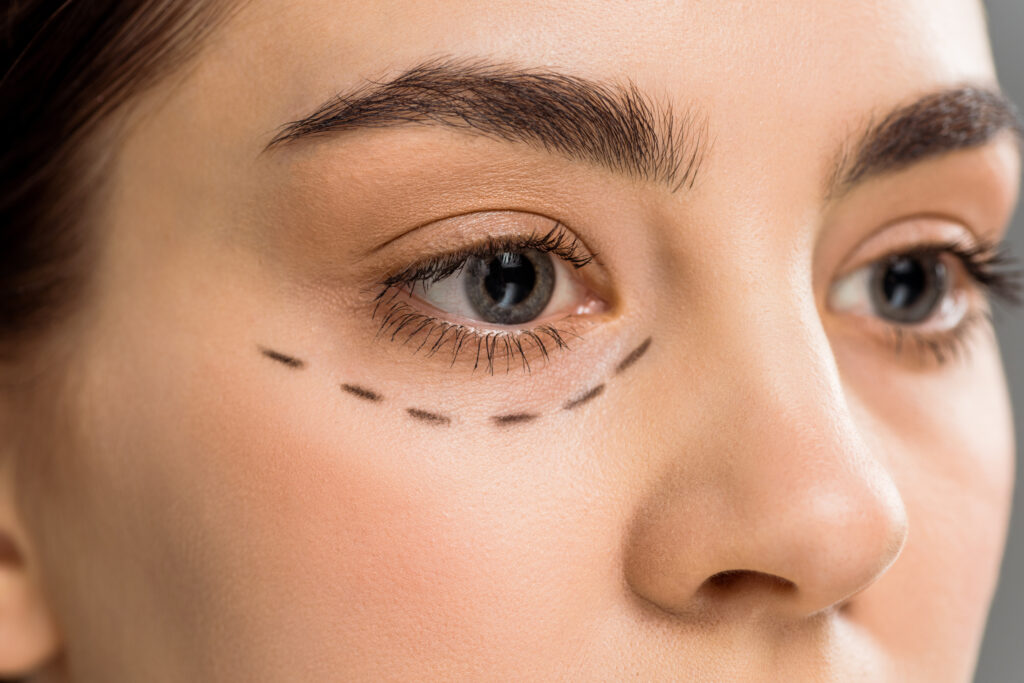
cropped view of young woman with marks on face isolated on grey
The appearance of the under-eye area plays an important role in overall facial balance and expression. The lower eyelids are particularly delicate, and even small changes in skin elasticity, fat distribution, and tissue support can influence how the face looks. Puffiness, under-eye bags, loose skin, and noticeable hollows may create an appearance of tiredness or make someone look older than they feel. These changes can develop gradually with age, although genetics and individual facial anatomy can also influence the appearance of the lower eyelids.
Lower blepharoplasty is a surgical procedure designed to address concerns affecting the lower eyelids. By assessing excess skin, prominent fat pockets, and the natural transition between the lower eyelid and cheek, a surgeon can develop an approach that aims to create a smoother and more balanced under-eye appearance.
For individuals exploring Lower Blepharoplasty in London, understanding how the procedure works and what it can achieve is an important part of making an informed decision. At Bodyvie Clinic, individual facial characteristics and aesthetic goals are important considerations when discussing lower eyelid surgery.
What Is Lower Blepharoplasty?
Lower blepharoplasty is a cosmetic surgical procedure that focuses on improving the appearance of the lower eyelids. It is commonly considered by individuals who have noticeable under-eye bags, excess skin, or changes in the contour beneath their eyes.
The procedure focuses on the tissues responsible for the appearance of the lower eyelid. Depending on the individual’s anatomy, the surgical approach may involve repositioning or removing selected fat deposits and addressing excess skin.
One of the main objectives is to improve the transition between the lower eyelid and the upper cheek. When fat pockets become more prominent or the surrounding skin loses elasticity, this transition may appear uneven. Lower eyelid surgery can help create a more refined contour by addressing the specific structural features contributing to the concern.
However, the procedure is not identical for everyone. Some individuals primarily have prominent fat pockets, while others experience loose skin or a combination of concerns. A personalised assessment helps determine the most appropriate surgical approach.
What Causes Changes in Under-Eye Contours?
Several factors can influence the appearance of the lower eyelids. Understanding these changes helps explain why under-eye concerns can develop at different ages and why treatment approaches may vary.
Natural Ageing and Skin Elasticity
As the skin ages, its natural collagen and elastin levels gradually change. These proteins contribute to skin firmness and flexibility. Reduced elasticity can make the lower eyelid skin appear thinner, looser, and less supported.
The tissues surrounding the eyes may also change over time. This can contribute to visible creases, folds, and under-eye puffiness.
Fat Distribution Beneath the Eyes
Fat naturally exists around the eyes and helps provide cushioning and protection. With age, the supporting structures that keep this fat in position may weaken.
As a result, fat pockets can become more noticeable beneath the lower eyelids, creating the appearance commonly described as under-eye bags.
In some individuals, these features are present from an early age because of inherited facial anatomy rather than ageing alone.
Genetics and Facial Structure
Genetics can influence the thickness of the lower eyelid skin, the position of under-eye fat, and the shape of the cheek area.
Some people naturally have prominent lower eyelid fat pads or a deeper transition between the eyes and cheeks. These characteristics may make under-eye bags more noticeable even when the skin remains relatively firm.
Changes in Facial Volume
The distribution of facial volume can change over time. Reduced fullness in the cheek area may make the lower eyelid appear more prominent by increasing the contrast between the under-eye region and the surrounding face.
This is one reason why an assessment should consider the entire lower eyelid and cheek relationship rather than focusing exclusively on visible bags.
How Can Lower Blepharoplasty Improve Under-Eye Contours?
The main purpose of lower eyelid surgery is to improve the appearance of the tissues beneath the eyes while maintaining natural-looking facial proportions.
The exact improvements depend on the individual’s anatomy, skin condition, and surgical technique.
Reducing the Appearance of Under-Eye Bags
Prominent fat pockets are one of the most common reasons people consider lower blepharoplasty. These pockets can create rounded areas beneath the eyes that remain noticeable even when someone is well-rested.
During surgery, the surgeon may carefully remove or reposition selected fat deposits, depending on the underlying anatomy.
The aim is to reduce excessive prominence and create a smoother appearance beneath the lower eyelids without removing more volume than necessary.
Creating a Smoother Eyelid-to-Cheek Transition
A noticeable difference between the lower eyelid and cheek can create an uneven under-eye contour. This may appear as a bulge followed by a hollow area.
Lower blepharoplasty may help improve this transition through carefully planned fat repositioning. Rather than simply removing fat, the surgeon may redistribute it to soften the contour between the eyelid and cheek.
This approach can be particularly relevant for individuals who have both prominent under-eye bags and visible hollows.
Addressing Loose Lower Eyelid Skin
Excess skin can contribute to fine folds and wrinkles beneath the eyes. When appropriate, lower blepharoplasty may involve removing a carefully selected amount of loose skin.
The objective is to improve skin smoothness while respecting the natural structure and position of the lower eyelid.
The amount of skin addressed depends on factors such as skin elasticity, eyelid support, and the individual’s facial anatomy.
Supporting a More Refreshed Appearance
Under-eye bags and uneven contours can make the face appear tired or older. By addressing the structural features contributing to these concerns, lower blepharoplasty may create a fresher and more rested appearance.
The intention is not to change someone’s natural facial identity. Instead, the procedure aims to improve the balance of the under-eye area while maintaining the individual’s existing facial characteristics.
What Is the Difference Between Fat Removal and Fat Repositioning?
Fat removal and fat repositioning are two techniques that may be considered during lower eyelid surgery. Although both approaches address under-eye fat, they serve slightly different purposes.
Fat removal involves carefully removing selected fat deposits that contribute to prominent under-eye bags. It may be appropriate when excess fat is the main concern and the surrounding tissues provide sufficient volume.
Fat repositioning involves moving existing fat to improve the transition between the lower eyelid and cheek. This may be considered when both under-eye bulging and hollowness are present.
The choice between these techniques depends on the individual’s facial structure. Removing too much fat may create an overly hollow appearance, which is why careful planning and preservation of natural volume are important considerations.
A qualified surgeon can assess the lower eyelid tissues and discuss which approach is most suitable.
Who May Be Suitable for Lower Eyelid Surgery?
Lower blepharoplasty may be considered by adults who are concerned about persistent changes in their lower eyelid appearance.
Potential candidates may include individuals who:
- Have noticeable under-eye bags caused by prominent fat pockets.
- Experience loose or excess skin beneath the lower eyelids.
- Have an uneven transition between the lower eyelids and cheeks.
- Notice under-eye changes associated with natural ageing.
- Have inherited prominent lower eyelid fat deposits.
- Want to improve under-eye contours through a surgical approach.
Suitability is not determined by age alone. Skin quality, eyelid position, general health, facial anatomy, and individual expectations are all relevant considerations.
A consultation allows the surgeon to examine these features and determine whether lower blepharoplasty is an appropriate option.
What Happens During a Lower Blepharoplasty Consultation?
A consultation is an important stage of planning lower eyelid surgery. It provides an opportunity to understand the concerns affecting the under-eye area and discuss the potential benefits of treatment.
The surgeon may assess the amount of excess skin, the position of fat pockets, the strength of the lower eyelid support, and the relationship between the eyelids and cheeks.
The discussion may also include previous treatments, medical history, existing eye-related concerns, and the results the individual hopes to achieve.
Based on these findings, the surgeon can explain whether fat removal, fat repositioning, skin adjustment, or another approach may be appropriate.
For anyone considering Lower Eyelid Surgery In London, choosing a clinic that offers an individualised consultation is an important step towards understanding the available treatment options.
What Surgical Techniques Are Used for Lower Blepharoplasty?
The surgical technique depends on the condition of the lower eyelids and the amount of skin or fat requiring attention. Two commonly discussed approaches are transconjunctival and transcutaneous lower blepharoplasty.
Transconjunctival Lower Blepharoplasty
The transconjunctival technique involves making an incision on the inside of the lower eyelid. This approach may be considered when the main concern is prominent fat pockets and there is little excess skin requiring removal.
Because the incision is placed inside the eyelid, there is no visible external incision along the lower lash line.
The suitability of this technique depends on the individual’s skin elasticity, fat distribution, and eyelid anatomy.
Transcutaneous Lower Blepharoplasty
The transcutaneous approach involves an incision close to the lower eyelashes. It may be considered when both prominent fat pockets and excess lower eyelid skin need to be addressed.
Through this approach, the surgeon can access the underlying tissues and make carefully planned adjustments.
The final decision depends on the individual’s requirements and the surgeon’s assessment of the lower eyelid structure.
What Should Patients Expect During Recovery?
Recovery following lower blepharoplasty varies between individuals and depends on the surgical technique and the extent of treatment.
Some temporary swelling, bruising, and tightness around the eyes are common during the initial recovery period. These changes gradually settle as the tissues heal.
Patients receive individual aftercare instructions explaining how to care for the treated area and when to return for follow-up appointments.
It is generally important to allow sufficient time for healing before judging the final appearance. Although early improvements may become noticeable as initial swelling settles, the under-eye contours can continue to refine over the following weeks and months.
Following the surgeon’s guidance and attending scheduled reviews helps support an appropriate recovery process.
How Long Do the Results of Lower Blepharoplasty Last?
Lower blepharoplasty can provide long-lasting improvements because the procedure addresses structural features such as prominent fat pockets and excess skin.
However, the natural ageing process continues after surgery. Changes in skin elasticity, facial volume, and surrounding tissues may gradually influence the appearance of the lower eyelids over time.
The longevity of results varies according to individual anatomy, skin quality, lifestyle factors, and the surgical approach.
Maintaining realistic expectations is important. The aim is to improve existing under-eye contours rather than permanently prevent future facial changes.
Choosing the Right Blepharoplasty Clinic in London
Selecting an appropriate clinic is an important part of considering lower eyelid surgery. Patients should look for a suitably qualified and experienced surgeon who understands the delicate anatomy of the eye area.
An appropriate consultation should include a detailed assessment, a discussion of available techniques, Blepharoplasty Clinic in London and an explanation of what results may realistically be achieved.
Patients may also wish to understand the surgeon’s experience with lower eyelid procedures, the proposed treatment plan, and the follow-up arrangements.
At Bodyvie Clinic, individuals exploring lower eyelid surgery can enquire about an assessment to discuss their aesthetic concerns and understand whether a personalised surgical approach may be appropriate.
The focus should remain on achieving balanced under-eye contours that complement the individual’s natural facial features.
Conclusion
Lower blepharoplasty is a surgical option for individuals who want to address under-eye bags, excess lower eyelid skin, and uneven contours between the eyes and cheeks. By carefully assessing fat distribution, skin elasticity, and eyelid structure, a surgeon can determine whether fat removal, fat repositioning, or a combination of techniques may help improve the appearance of the lower eyelids.
For those researching Lower Blepharoplasty in London, understanding the procedure, its techniques, and the importance of personalised surgical planning can help make the decision-making process more informed.
At Bodyvie Clinic, an individual consultation can help establish the underlying causes of under-eye concerns and explore suitable treatment options based on facial anatomy and aesthetic goals.
Frequently Asked Questions
1. What is lower blepharoplasty?
Lower blepharoplasty is a cosmetic surgical procedure that improves the appearance of the lower eyelids. It may involve addressing prominent fat pockets, excess skin, and uneven under-eye contours to create a smoother appearance.
2. Can lower blepharoplasty remove under-eye bags?
Yes. Lower blepharoplasty can reduce the appearance of under-eye bags by carefully removing or repositioning excess fat beneath the lower eyelids. The appropriate technique depends on the individual’s facial anatomy.
3. Does lower eyelid surgery improve dark circles?
Lower eyelid surgery may improve some dark-circle concerns when they are caused by shadows from prominent fat pockets or uneven under-eye contours. However, dark circles caused by pigmentation, thin skin, or visible blood vessels may require different treatment approaches.
4. What is the difference between upper and lower blepharoplasty?
Upper blepharoplasty focuses on the upper eyelids, particularly excess skin and changes that create a heavy or drooping appearance. Lower blepharoplasty addresses under-eye bags, excess lower eyelid skin, and uneven contours beneath the eyes.
5. Is lower blepharoplasty suitable for younger adults?
Yes. Younger adults may consider lower blepharoplasty if they have inherited prominent under-eye fat pockets or structural features that contribute to noticeable under-eye bags. Age alone does not determine suitability.
6. How long does lower blepharoplasty surgery take?
The duration varies according to the surgical technique and individual treatment requirements. The surgeon can provide a more accurate estimate after assessing the lower eyelids and discussing the proposed procedure.
7. How long does it take to recover from lower blepharoplasty?
Initial recovery generally takes around one to two weeks, although individual healing times vary. Swelling and bruising gradually improve, while the final under-eye contours may take several weeks or months to settle.
8. Are the results of lower blepharoplasty permanent?
The improvements can be long-lasting, particularly when the procedure addresses prominent fat pockets. However, natural ageing continues, and the skin and surrounding facial tissues may change over time.
9. Can lower blepharoplasty improve hollow under-eyes?
It may improve certain hollow areas when fat repositioning is suitable. This technique can redistribute existing fat to create a smoother transition between the lower eyelids and cheeks. Not every type of under-eye hollow can be corrected with blepharoplasty alone.
10. How do I choose a lower blepharoplasty clinic in London?
Look for a clinic with appropriately qualified surgeons, relevant experience in eyelid surgery, personalised consultations, and clear aftercare arrangements. A detailed assessment should explain the recommended technique and realistic treatment outcomes.