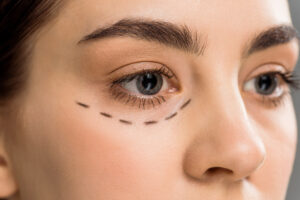
cropped view of young woman with marks on face isolated on grey
The appearance of the lower eyelids can have a significant influence on overall facial expression, making the eyes look tired, puffy or older than a person feels. For some individuals, these changes are associated with the natural distribution of fat around the eyes. Others may notice hollows beneath the lower eyelids, creating shadows that become more noticeable under certain lighting conditions. Understanding these differences is an important part of planning lower eyelid surgery.
Lower Blepharoplasty in London is a procedure designed to address selected concerns involving the lower eyelids, including prominent fat pockets, under-eye bags and certain contour irregularities. However, treatment planning is not simply about removing excess fat. The position, volume and relationship of fat to the surrounding tissues all influence how the lower eyelids appear and which surgical approach may be appropriate.
At Bodyvie Clinic, an individualised assessment can help patients understand the factors that influence lower eyelid treatment planning. By considering facial anatomy, skin quality, eyelid support and the distribution of under-eye fat, a practitioner can discuss suitable options in the context of the patient’s appearance and expectations.
Understanding Fat Distribution Around the Lower Eyelids
Fat around the eyes plays an important role in supporting the eyeball and maintaining the natural contours of the surrounding tissues. In the lower eyelid area, fat is organised into compartments that contribute to the transition between the eyelid and the upper cheek.
As people age, changes in the supporting tissues can allow some of this fat to become more prominent. The result may be a fuller appearance beneath the eyes, commonly described as under-eye bags. These changes can develop gradually and may become more noticeable because of inherited facial characteristics, changes in tissue support and the natural ageing process.
However, not everyone with prominent under-eye bags has the same anatomical pattern. Some people have localised fat protrusion, while others have a combination of fullness and hollowing. These distinctions matter because a treatment approach that suits one individual may not be appropriate for another.
During a consultation, the lower eyelid area can be examined to determine whether fat prominence is the main concern or whether other factors, such as loose skin, muscle changes or a deeper tear trough, contribute to the appearance.
How Prominent Under-Eye Fat Influences Surgical Planning
One of the primary reasons patients consider Lower Eyelid Surgery In London is the appearance of persistent under-eye bags. These may remain visible even when a person is well rested because they are related to anatomical features rather than temporary tiredness.
When fat protrudes forward from the lower eyelid compartments, it can create a rounded contour beneath the eyes. The prominence may be more noticeable near the inner corner, in the central lower eyelid or across a broader area.
The location and extent of this fullness help inform treatment planning. A practitioner may consider whether the concern is caused mainly by protruding fat, excess skin or a combination of changes.
Fat removal may be considered when localised prominence is the principal concern. However, removing too much fat can create a hollow or sunken appearance, particularly in patients who already have limited volume beneath the eyes. For this reason, conservative planning is important.
The objective is not necessarily to remove as much fat as possible. Instead, the aim is to improve the transition between the lower eyelid and cheek while respecting the person’s existing facial structure.
Fat Removal Versus Fat Repositioning
Two approaches that may be considered during lower blepharoplasty are selective fat removal and fat repositioning. The choice depends on the patient’s anatomy, the distribution of volume and the relationship between under-eye bags and nearby hollows.
When Fat Removal May Be Considered
Selective fat removal may be appropriate for individuals whose lower eyelids have distinct areas of excess fullness. In these cases, carefully reducing the prominence of the fat compartments can help create a smoother contour.
The amount of fat addressed depends on the individual’s anatomy. A conservative approach is particularly important because the lower eyelid naturally requires adequate volume to maintain a balanced appearance.
Patients with significant under-eye hollowing may need a different strategy. Removing additional fat in these circumstances could make the hollowing more pronounced rather than improving the overall contour.
When Fat Repositioning May Be Suitable
Fat repositioning may be considered when prominent under-eye bags sit directly above a noticeable hollow, often along the tear trough. Instead of removing the fat entirely, a surgeon may reposition selected tissue to soften the transition between the lower eyelid and the cheek.
This approach can be useful when both fullness and a depression are contributing to the appearance. The intention is to redistribute existing volume in a way that creates a more continuous contour.
Suitability depends on factors such as tissue availability, eyelid anatomy and the extent of the hollowing. Fat repositioning is not necessary for every patient, and the preferred technique should be determined following an individual assessment.
The Relationship Between Under-Eye Fat and Tear Trough Hollows
The tear trough is the natural groove that extends from the inner corner of the eye along the junction between the lower eyelid and the upper cheek. Its depth varies from person to person and may become more noticeable as facial tissues change with age.
A common concern occurs when prominent fat above the tear trough creates a sharp contrast with the hollow beneath it. This difference in contour can produce shadows that make the under-eye area appear darker or more tired.
In these circumstances, treating the visible bag alone may not address the entire concern. If the underlying hollow remains pronounced, the overall transition between the eyelid and cheek may still appear uneven.
A thorough assessment considers both sides of this relationship: the amount of fat that projects forward and the degree of volume deficiency beneath it. Where appropriate, fat repositioning or another carefully selected approach may help address the contrast between these areas.
It is also important to recognise that under-eye darkness can have several causes, including pigmentation, thin skin and visible blood vessels. Lower blepharoplasty does not correct every cause of dark circles, so treatment expectations should reflect the specific features identified during consultation.
Why Skin Quality Matters Alongside Fat Distribution
Although fat plays an important role in lower eyelid appearance, it is only one part of the treatment-planning process. Skin quality also influences which approach may be suitable and what type of improvement can reasonably be expected.
Some individuals have relatively firm skin with prominent fat pockets but little excess skin. Others have fine lines, reduced elasticity or loose skin that contributes to a creased or uneven appearance.
When excess skin is a significant concern, the surgical plan may need to address it in addition to the underlying fat. However, the amount of skin that can be treated must be considered carefully because the lower eyelid requires sufficient tissue to maintain its natural position and function.
A patient with good skin elasticity and isolated fat prominence may be assessed differently from someone with substantial skin laxity and reduced tissue support. In some cases, a combined approach may be considered.
The purpose of assessing skin quality is to establish which concerns surgery can address and whether additional measures are likely to be needed for a balanced result.
Assessing Lower Eyelid Support and Facial Anatomy
Lower eyelid anatomy varies considerably between individuals. The position of the eyelid, the strength of its supporting structures and the shape of the cheek can all influence the appearance of the under-eye area.
For example, two people with similar amounts of prominent fat may have different facial contours because one has a naturally fuller cheek while the other has a deeper hollow beneath the eye. Their treatment plans may therefore differ.
Eyelid support is another important consideration. A practitioner may examine eyelid position, tone and the relationship between the lower eyelid and the eyeball. These features help inform the choice of surgical technique and whether any additional support measures should be considered.
The assessment may also include facial symmetry, previous procedures, relevant medical history and the patient’s desired outcome. Photographs and an examination from different angles can help clarify the areas of prominence and hollowing.
This broader evaluation helps ensure that treatment planning focuses on the entire lower eyelid contour rather than one isolated feature.
Choosing the Appropriate Surgical Approach
The surgical approach to lower blepharoplasty is selected according to the findings of the consultation. Two commonly discussed approaches are transconjunctival and transcutaneous lower blepharoplasty.
A transconjunctival approach involves accessing the lower eyelid fat through the inside of the eyelid. It may be considered when fat prominence is the principal concern and there is little excess skin requiring direct removal.
A transcutaneous approach involves an incision through the skin, usually positioned just below the lower eyelashes. It may be considered when skin excess needs to be addressed alongside changes in the underlying tissues.
Neither approach is automatically the best option for every patient. Fat distribution, skin elasticity, eyelid support and individual anatomical features all contribute to the decision.
A consultation at a Blepharoplasty Clinic in London can help establish which options are appropriate and explain the reasoning behind the proposed treatment plan. Patients should understand what the selected approach is intended to improve, which concerns may remain and what recovery may involve.
Setting Realistic Expectations for Lower Blepharoplasty
A successful treatment plan should reflect the patient’s natural facial structure rather than aim to eliminate every line, shadow or difference in contour. The lower eyelids are a delicate area, and maintaining appropriate volume is an important consideration when planning surgery.
Patients may expect a reduction in prominent under-eye bags or a smoother transition between the eyelid and cheek. However, the degree of improvement depends on the underlying anatomy and the specific concerns being addressed.
Lower blepharoplasty may not eliminate pigmentation, skin texture changes or hollows caused by factors unrelated to prominent fat. Some patients may also require a different or additional approach if their main concern is not primarily related to the lower eyelid fat compartments.
During consultation, it is useful to discuss the desired outcome in practical terms. Patients can explain which features concern them most, while the practitioner can assess whether those changes are realistically achievable through surgery.
Clear communication helps establish an appropriate plan and supports informed decision-making.
Conclusion
Fat distribution is a central consideration when planning lower blepharoplasty because it influences the appearance of under-eye bags, tear trough hollows and the transition between the lower eyelids and cheeks. However, the most suitable treatment is not determined by fat volume alone. Skin quality, eyelid support, facial anatomy and the patient’s expectations also play important roles.
For some individuals, selective fat removal may help reduce prominent fullness. For others, repositioning existing fat may be more appropriate when bags and hollows occur together. The choice of surgical approach should follow a detailed assessment rather than a standardised treatment method.
At Bodyvie Clinic, patients considering Lower Blepharoplasty in London can discuss their concerns and learn how individual anatomical features may influence treatment planning. A personalised consultation provides an opportunity to explore suitable options, understand the intended improvements and develop realistic expectations for a natural-looking result.
Frequently Asked Questions
1. How does fat distribution affect lower blepharoplasty?
Fat distribution influences whether the lower eyelids appear puffy, hollow or uneven. Prominent fat may contribute to under-eye bags, while a lack of volume beneath the eyelids can create a deeper tear trough. Understanding both features helps guide treatment planning.
2. Is lower eyelid fat always removed during blepharoplasty?
No. Depending on the patient’s anatomy, a surgeon may remove selected amounts of fat, reposition existing fat or use another approach. The decision depends on whether fullness, hollowing or a combination of both is contributing to the concern.
3. What is the difference between fat removal and fat repositioning?
Fat removal reduces selected areas of prominent fat, while fat repositioning moves existing fat to improve the transition between the lower eyelid and cheek. The appropriate technique depends on the distribution of volume and the individual’s facial anatomy.
4. Can lower blepharoplasty improve tear trough hollows?
It may improve the appearance of tear trough hollows in selected patients, particularly when fat repositioning is suitable. However, hollows can have different causes, and not every patient will benefit from the same surgical approach.
5. Does skin quality affect lower eyelid surgery planning?
Yes. Skin elasticity, fine lines and excess skin can influence the surgical technique. Patients with prominent fat but minimal skin excess may be assessed differently from those who have both fullness and loose skin.
6. Who may be suitable for lower blepharoplasty in London?
Adults with persistent under-eye bags, selected lower eyelid contour concerns or certain combinations of fullness and hollowing may be considered. Suitability depends on an individual consultation, including an assessment of eyelid anatomy, skin quality, health history and expectations.
7. Will lower blepharoplasty remove dark circles completely?
Not necessarily. Dark circles may result from prominent fat, tear trough hollows, pigmentation, thin skin or visible blood vessels. Surgery may improve shadows caused by certain structural features, but it cannot be expected to correct every cause of under-eye darkness.
8. How is the surgical approach selected?
The approach is chosen after examining fat distribution, skin excess, eyelid position and tissue support. A transconjunctival approach may be considered for selected patients with fat prominence and minimal excess skin, while a transcutaneous approach may be appropriate when direct skin treatment is also required.
9. Can lower blepharoplasty create a hollow appearance?
Excessive removal of fat can contribute to an overly hollow appearance. Careful assessment and conservative treatment planning help preserve appropriate volume and maintain a balanced lower eyelid contour.
10. What should I discuss during a lower blepharoplasty consultation?
Patients should discuss their main concerns, desired changes, relevant medical history and previous eye-area procedures. Asking whether the concern is primarily caused by fat prominence, hollowing, skin laxity or a combination of factors can also help clarify the proposed treatment plan.