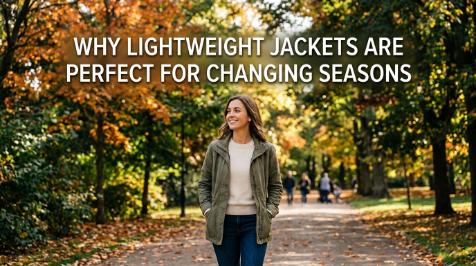
Why Lightweight Jackets Are Perfect for Changing Seasons
Changing seasons can make getting dressed surprisingly complicated. A chilly morning can quickly turn into a mild afternoon, while an evening breeze may bring temperatures back down again. Heavy winter coats can feel excessive once temperatures rise, yet heading outside without an extra layer can leave you uncomfortable. This is exactly where lightweight jackets earn their place in a practical wardrobe.
Designed to provide a comfortable layer without the bulk of a traditional winter coat, lightweight jackets are remarkably adaptable. They can be worn over a T-shirt on a cool spring morning, layered over a sweater during autumn, or carried along for unpredictable evenings when the weather refuses to settle. Their versatility makes them useful well beyond a single season.
Beyond temperature control, today’s lightweight jackets also combine practical construction with distinctive styling. Bomber silhouettes, hooded designs, reversible options, and workwear-inspired pieces can all provide different ways to build an outfit around transitional weather. For anyone looking for a balance between comfort, functionality, and everyday fashion, a lightweight jacket is one of the easiest wardrobe investments to justify.
What Makes a Jacket Suitable for Transitional Weather?
The defining characteristic of a good transitional jacket is balance. It needs to provide enough coverage to make cooler conditions comfortable without becoming so insulated that it feels restrictive when temperatures rise.
Weight, construction, breathability, and layering potential all influence how useful a jacket becomes between seasons. A lightweight outer layer can act as a barrier against cool air while leaving enough room underneath for a shirt, sweatshirt, or thin knit.
| Jacket Feature | Why It Matters | Best Transitional Use |
|---|---|---|
| Lightweight construction | Provides coverage without excessive warmth or bulk | Spring and early autumn |
| Layer-friendly fit | Allows shirts, sweaters, or hoodies underneath | Cool mornings and evenings |
| Hooded design | Adds extra protection from wind and light weather | Unpredictable outdoor conditions |
| Reversible construction | Provides two styling options in one garment | Travel and everyday wear |
| Durable outer material | Handles frequent use and changing conditions | Daily commuting and outdoor activities |
The Importance of Layering Between Seasons
One of the biggest advantages of a lightweight jacket is how naturally it fits into a layering system. Transitional dressing is rarely about finding one garment that works perfectly in every temperature. Instead, it is about combining several adaptable pieces so you can adjust your outfit throughout the day.
For example, a simple spring outfit might start with a breathable T-shirt, followed by a lightweight jacket. If the afternoon becomes warmer, the outer layer can be removed without completely changing the outfit. In autumn, the same jacket can be worn over a crewneck sweatshirt or thin sweater when additional warmth is required.
This flexibility is particularly useful for people who spend part of the day indoors and part outdoors. Offices, shops, restaurants, public transportation, and vehicles can all have different temperatures. A removable outer layer makes it easier to respond to those changes without sacrificing comfort.
Layering also creates more opportunities for personal style. Neutral jackets can provide a clean foundation for colorful tops, while statement outerwear can become the focal point of a simple outfit. The result is a wardrobe that feels more varied without requiring a large number of individual garments.
Bomber Jackets: A Natural Fit for Mild Weather
Among the many lightweight outerwear styles available, the bomber jacket stands out for its combination of casual styling and practical coverage. Its compact shape works well with jeans, chinos, joggers, sneakers, boots, and other everyday staples.
The bomber silhouette is also naturally suited to layering. Its structured shape gives an outfit definition while remaining relatively easy to wear over a T-shirt or lightweight knit. Ribbed cuffs and hems commonly associated with bomber styling can further help create a secure fit around the body.
Color can also transform how a bomber jacket works within a wardrobe. A bold red carhartt jacket, for instance, can add visual energy to a neutral outfit while maintaining the practical character associated with casual outerwear. Paired with black jeans and understated footwear, a strong jacket color can become the central element without making the overall outfit feel overdone.
Lightweight Jackets Work Across Multiple Seasons
Seasonal clothing is often divided into rigid categories: coats for winter, shirts for summer, and jackets for everything in between. In reality, weather does not follow such convenient boundaries. Temperatures fluctuate throughout the year, and transitional months can be especially unpredictable.
Spring
Spring often brings a mixture of cool mornings, warmer afternoons, and occasional breezes. A lightweight jacket offers enough coverage for the beginning of the day while remaining easy to remove once temperatures climb.
Spring is also an excellent time to experiment with lighter colors. Soft neutrals, pastels, muted greens, and brighter accent shades can complement the visual character of the season while keeping outfits relaxed.
Autumn
Autumn is perhaps the most obvious season for lightweight outerwear. As summer warmth fades, a jacket becomes useful for commuting, weekend outings, and evening activities. Instead of immediately reaching for a heavy winter coat, you can build warmth gradually through layering.
An autumn outfit can combine a lightweight jacket with denim, a long-sleeve shirt, and a thin sweater. As temperatures fall further, that same jacket can remain useful as part of a more substantial layered ensemble.
Early Winter and Late Winter
In relatively mild climates, lightweight jackets can remain useful during parts of winter. They can serve as mid-layers beneath heavier coats or as standalone outerwear when temperatures are cool rather than genuinely cold.
This makes them particularly valuable for people who live in regions where winters fluctuate instead of remaining consistently freezing.
Women’s Lightweight Jackets Can Add Both Color and Function
Lightweight outerwear does not have to be purely utilitarian. Modern designs allow wearers to use jackets as a significant part of their personal style while still benefiting from practical protection.
A pink carhartt jacket demonstrates how a functional-inspired outer layer can also introduce personality into an everyday wardrobe. A colorful jacket can be paired with simple basics so the outerwear becomes the visual highlight, or coordinated with complementary tones for a more deliberate look.
The same principle applies to silhouettes. A slightly relaxed jacket can create an effortless streetwear-inspired outfit, while a more structured fit can produce a cleaner appearance. The best choice depends on how the jacket will be worn and what already exists in the wearer’s wardrobe.
- For casual outfits: Pair a lightweight jacket with denim, sneakers, and a simple T-shirt.
- For smart-casual dressing: Combine a clean jacket with chinos, a knit top, and minimal footwear.
- For weekend activities: Choose comfortable trousers, a sweatshirt, and a practical outer layer.
- For travel: Look for lightweight construction and versatile colors that coordinate with multiple outfits.
- For statement styling: Let a brightly colored jacket provide contrast against understated basics.
Reversible Jackets Offer Extra Wardrobe Versatility
People who want to pack efficiently can benefit from jackets that offer more than one styling option. Reversible designs effectively provide two visual identities within one garment, making them particularly practical for travel and minimalist wardrobes.
A coach men’s reversible bomber jacket can provide this type of flexibility, allowing the wearer to switch the visible side depending on the outfit or occasion. Instead of packing multiple jackets for a trip, one reversible piece can potentially provide contrasting looks while occupying the same amount of luggage space.
This concept is especially valuable during transitional seasons because the jacket itself may need to adapt to different environments. One side might suit a more understated daytime outfit, while the alternative side can provide a different color or aesthetic for an evening look.
How to Choose the Right Lightweight Jacket
Not every lightweight jacket will perform equally well for every lifestyle. The ideal choice depends on climate, daily activities, preferred styling, and how frequently the garment will be layered.
- Consider your local climate. If your area experiences strong winds or frequent light precipitation, prioritize designs that offer additional coverage and weather resistance.
- Think about your layering habits. If you frequently wear sweaters or hoodies, choose a fit that provides enough room underneath without becoming excessively loose.
- Evaluate the material. Look for a fabric that feels comfortable against your preferred base layers and suits the amount of daily wear you expect.
- Choose a practical silhouette. Bomber, utility, hooded, and other designs each create different styling possibilities.
- Check the details. Pockets, cuffs, closures, hoods, lining, and construction quality can significantly influence everyday usability.
- Think beyond one outfit. The most useful jacket is one that coordinates with several items already in your wardrobe.
Why Lightweight Outerwear Is Useful for Travel
Travel exposes the limitations of highly seasonal clothing. A destination may be warm during the afternoon but cool at night. Airports and airplanes can feel chilly, while walking outdoors may require additional protection from wind.
A lightweight jacket solves several of these problems at once. It can be worn during transit, folded or carried when temperatures rise, and layered with other garments when conditions become colder.
Reversible and compact designs can be especially attractive for travelers because they maximize outfit combinations without significantly increasing luggage requirements. A versatile jacket can coordinate with several pairs of trousers and tops, helping travelers create different looks from a relatively small selection of clothes.
Practical Benefits Beyond Temperature Control
The appeal of lightweight jackets extends beyond simply staying warm. A well-designed jacket can improve everyday convenience in several ways.
Pockets, for example, provide quick storage for keys, a phone, wallet, or other small essentials. A hood can offer additional coverage when the weather changes unexpectedly. Durable construction can also make a jacket suitable for repeated commuting, errands, walks, and weekend activities.
There is also a psychological advantage to having a reliable transitional layer. When you know a jacket can handle a range of temperatures, getting dressed becomes easier. Instead of trying to predict exactly how the weather will behave several hours from now, you can simply build an outfit that accommodates change.
Building a More Versatile Seasonal Wardrobe
A strong wardrobe does not necessarily require dozens of garments. It requires pieces that can perform multiple roles. Lightweight jackets are particularly effective in this regard because they bridge the gap between indoor clothing and heavier seasonal outerwear.
Start with one versatile jacket in a color that works with most of your existing wardrobe. Black, navy, gray, olive, tan, and other neutral shades are easy foundations. Once that core layer is established, a second jacket in a distinctive color or pattern can add variety.
It is also useful to consider different silhouettes rather than buying several versions of the same design. For example, a classic bomber can cover everyday casual needs, while a hooded jacket can provide additional practicality for outdoor activities. A reversible design can then offer two distinct looks from one garment.
The result is a more efficient approach to seasonal dressing. Instead of constantly replacing your wardrobe as the weather changes, you can rely on adaptable layers that remain relevant for months at a time.
Frequently Asked Questions (FAQs)
Why are lightweight jackets good for changing seasons?
They provide a layer of coverage without the weight and insulation of heavy winter coats. This makes them easy to wear during cool mornings, mild afternoons, and chilly evenings.
Can a lightweight jacket be worn in winter?
Yes. In mild climates, some lightweight jackets can work as standalone outerwear. In colder conditions, they can also function as an additional layer beneath a heavier coat.
Are bomber jackets suitable for spring and autumn?
Yes. Their versatile silhouette makes bomber jackets particularly practical for transitional weather. They can be worn over lightweight tops in spring and layered over sweaters during cooler autumn days.
How should a lightweight jacket fit?
The ideal fit depends on how you intend to layer it. It should provide comfortable movement without being excessively loose, while leaving enough space for the base layers you normally wear underneath.
What color lightweight jacket should I choose?
Neutral colors are generally the easiest to coordinate with an existing wardrobe, while brighter colors can serve as statement pieces. The best choice depends on your personal style and how much versatility you want.
Make Every Season More Comfortable
Changing weather does not have to mean constantly changing your wardrobe. Lightweight jackets provide the adaptable middle ground that modern dressing often requires, offering comfort, layering potential, practical features, and plenty of opportunities for personal style.
Whether you prefer classic bomber styling, colorful workwear-inspired designs, or reversible outerwear that gives you multiple looks, the right lightweight jacket can become one of the most frequently worn pieces in your closet. Choose a versatile layer that fits your climate and lifestyle, build outfits around it, and make transitional seasons considerably easier to navigate.