Protecting products during storage, handling, and transportation is essential for businesses that depend on safe and reliable packaging. Whether shipping furniture, industrial equipment, construction materials, appliances, or palletised goods, products can experience pressure, impact, vibration, and movement throughout the supply chain. Without suitable protection, these conditions can damage exposed edges and corners, weaken packaging, and increase the risk of costly product returns. An L Shaped Paper Angle Board provides a practical packaging solution by protecting vulnerable edges, reinforcing corners, and improving the stability of packaged products.
Also known as paper edge protectors, cardboard angle boards, or paper corner protectors, these packaging components are manufactured from multiple layers of compressed paperboard. Their L-shaped profile allows them to fit around product edges and corners, providing additional structural support during stacking, strapping, palletising, and transportation.
Businesses across manufacturing, warehousing, logistics, construction, and retail use paper angle boards to improve packaging performance without relying entirely on heavier materials such as plastic or metal.
This guide explains what L-shaped paper angle boards are, how they are manufactured, their main benefits, different types, common applications, and how to select the right product for commercial packaging requirements.
What Is an L Shaped Paper Angle Board?
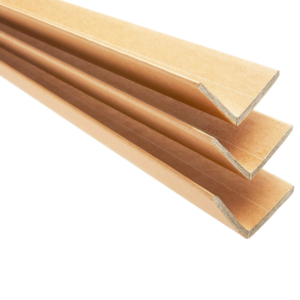
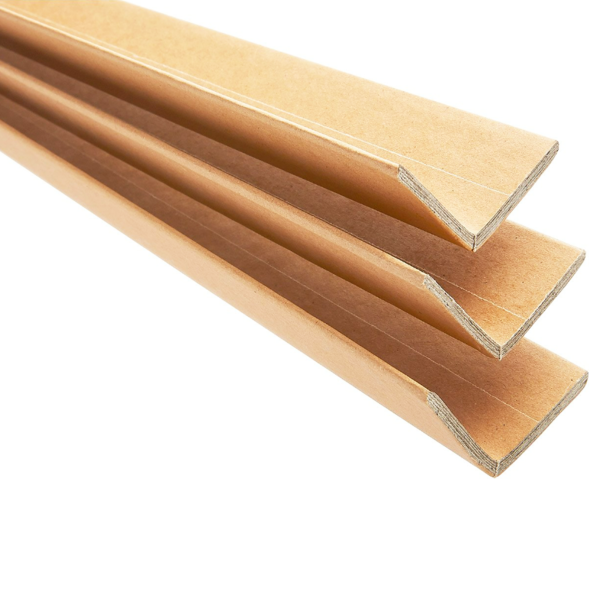
An L-shaped paper angle board is a protective packaging component made from multiple layers of paperboard bonded together to create a rigid right-angle profile.
Its cross-section resembles the letter L, allowing it to cover two adjoining surfaces of a product’s edge.
The angle board is commonly positioned along the corners of cartons, pallets, furniture, appliances, and other packaged goods.
Its primary purpose is to distribute external pressure, protect exposed edges, and reinforce packaging during transportation and storage.
Unlike ordinary cardboard sheets, paper angle boards are manufactured to provide additional rigidity and resistance to compression.
They are available in different lengths, thicknesses, widths, and strength specifications to suit various packaging requirements.
Depending on the application, businesses may use them vertically, horizontally, or along multiple edges of a packaged product.
How Are L Shaped Paper Angle Boards Manufactured?
Understanding the manufacturing process helps explain why paper angle boards provide effective edge protection.
Although manufacturing methods can vary between producers, the general process involves several stages.
1. Selecting Paperboard Materials
Manufacturing begins with selecting suitable paperboard materials.
Multiple layers of kraft paper or other paper-based materials are used to create the required thickness and strength.
The quality and characteristics of the raw materials influence the final product’s rigidity, compression resistance, and durability.
Some manufacturers also use recycled paper content as part of their production process.
2. Applying Adhesive
Selected paper layers are bonded together using suitable adhesives.
The adhesive helps maintain the structural integrity of the finished angle board and prevents individual layers from separating during handling and use.
3. Forming the L-Shaped Profile
The bonded paper layers are shaped into a right-angle profile.
Specialised forming equipment helps create consistent dimensions and maintain the required angle.
The finished profile provides two protective surfaces that fit around adjoining product edges.
4. Pressing and Drying
The formed material is pressed to achieve the required rigidity and dimensional stability.
It is then dried or cured according to the manufacturing process to allow the adhesive to bond properly.
5. Cutting and Finishing
The angle boards are cut to the required lengths and inspected for dimensional consistency.
Depending on customer requirements, additional finishing options may include printing, surface treatment, or customised dimensions.
Quality checks help ensure that the finished product meets the intended packaging specifications.
Key Benefits of Using L Shaped Paper Angle Boards
Paper angle boards offer several practical advantages for businesses that regularly package, transport, and store products.
1. Excellent Edge and Corner Protection
Product edges and corners are particularly vulnerable to damage during handling and transportation.
Strapping pressure, accidental impact, and contact with other packages can cause dents, scratches, and deformation.
An L Shaped Paper Angle Board provides a protective barrier around these vulnerable areas.
It helps distribute external pressure across a larger surface and reduces the likelihood of concentrated damage.
This makes it particularly useful for products with sharp edges, delicate finishes, or easily damaged corners.
2. Improved Packaging Strength
Paper angle boards add rigidity to packaging systems.
When positioned along carton or pallet edges, they help reinforce the overall structure and improve resistance to external pressure.
This is especially useful when products are stacked during warehouse storage or transportation.
The additional support can help reduce carton deformation and maintain the shape of palletised loads.
3. Better Pallet Stability
Palletised products can shift or become unstable during handling, lifting, and transportation.
Vertical paper angle boards placed along pallet corners help reinforce the load and provide additional support when used with suitable stretch wrapping or strapping.
They can also help distribute strapping pressure more evenly and reduce the risk of straps cutting into cartons.
4. Reduced Product Damage
Damaged goods can lead to financial losses, customer complaints, product replacements, and additional logistics expenses.
Using appropriate edge protection helps reduce the risk of damage caused by compression, friction, and accidental impacts.
Although angle boards cannot eliminate every transportation risk, they provide an additional layer of protection within a properly designed packaging system.
5. Lightweight and Easy to Handle
Compared with many metal or rigid plastic alternatives, paper angle boards are lightweight and relatively easy to handle.
Their low weight can make packaging operations more convenient without adding significant weight to shipments.
Warehouse employees can position them quickly around products and secure them using suitable strapping, wrapping, or other packaging materials.
6. Cost-Effective Packaging Solution
Paper angle boards can provide effective edge reinforcement without requiring more expensive protective materials.
Their availability in different dimensions and thicknesses allows businesses to select products according to their packaging requirements.
Using the correct specification can help avoid unnecessary material usage while maintaining suitable protection.
7. Recyclability and Sustainable Packaging
Paper-based angle boards can support packaging strategies that prioritise recyclable materials.
Depending on their composition, coatings, and adhesive systems, they may be suitable for recycling through appropriate paper and cardboard recycling streams.
Businesses should check local recycling requirements and confirm whether specific product treatments affect recyclability.
Different Types of L Shaped Paper Angle Boards
Not all packaging applications require the same level of edge protection.
Paper angle boards are available in different specifications to accommodate product dimensions, weight, and transportation conditions.
Standard L Shaped Paper Angle Boards
Standard angle boards are commonly used for general packaging and pallet protection.
They are suitable for reinforcing carton corners, protecting product edges, and improving the stability of packaged goods.
Their dimensions and thickness can be selected according to the required level of protection.
Heavy-Duty Paper Angle Boards
Heavy-duty angle boards are designed for applications involving heavier products or greater stacking pressure.
They generally use thicker paperboard constructions to provide additional rigidity and compression resistance.
These products are commonly used for industrial packaging, heavy machinery components, construction materials, and large palletised shipments.
Custom-Sized Paper Angle Boards
Some packaging applications require specific dimensions that are not available in standard products.
Custom angle boards can be manufactured according to required lengths, leg widths, thicknesses, and strength specifications.
This allows businesses to achieve a closer fit around their products and improve packaging efficiency.
Moisture-Resistant Paper Angle Boards
In certain packaging environments, products may be exposed to humidity or occasional moisture.
Moisture-resistant angle boards may include specialised materials or surface treatments designed to improve performance under specific conditions.
Their suitability depends on the expected exposure and packaging requirements.
Printed Paper Angle Boards
Printed angle boards allow businesses to include branding, handling instructions, or identification information on the packaging material.
They can help improve package identification and provide additional branding opportunities during transportation and distribution.
Common Applications of L Shaped Paper Angle Boards
L-shaped paper angle boards are used across several industries because of their versatility and ability to protect exposed product edges.
1. Pallet Packaging
Pallet packaging is one of the most common applications for paper angle boards.
When products are stacked on pallets, vertical angle boards can be positioned along the outer corners to improve load stability.
They help reinforce the palletised structure and distribute pressure from stretch wrapping and strapping.
Horizontal angle boards can also be used between layers to provide additional support.
2. Furniture Packaging
Furniture products often have large exposed edges and corners that can be damaged during transportation.
Tables, cabinets, shelves, desks, and other furniture items may experience impacts or friction while being moved.
Paper angle boards provide additional protection around these vulnerable sections.
They can be used alongside corrugated cardboard, foam sheets, and protective wrapping.
3. Glass and Window Packaging
Glass panels, mirrors, and window products require careful handling because their edges are particularly vulnerable to damage.
Suitable paper angle boards can provide additional edge protection when combined with appropriate cushioning and packaging materials.
For fragile glass shipments, angle boards should be selected as part of a complete protective packaging system rather than used as the only form of protection.
4. Metal and Steel Products
Manufacturers and distributors of metal sheets, steel profiles, aluminium components, and fabricated products often use edge protectors during storage and transportation.
Metal products may have sharp edges that can damage packaging or nearby items.
Paper angle boards help separate and protect these edges while providing additional support during strapping and handling.
5. Appliances and Electronics
Large appliances such as refrigerators, washing machines, ovens, and other equipment require suitable packaging protection.
Angle boards can reinforce carton corners and help maintain packaging structure during distribution.
They are particularly useful when products are stacked or transported over long distances.
6. Construction Materials
Construction products such as panels, boards, profiles, and decorative building materials may require edge protection during storage and transportation.
Paper angle boards help protect exposed corners and reduce the risk of surface damage.
They can also improve the stability of bundled construction materials.
7. Warehouse and Distribution Operations
Warehouses handle large quantities of products that may be stacked, moved, and transported multiple times.
Paper angle boards can help maintain package integrity during these activities.
They are particularly useful for businesses that rely on palletised storage and regular freight distribution.
L Shaped Paper Angle Boards vs Plastic and Metal Edge Protectors
Businesses often compare paper angle boards with plastic and metal alternatives when selecting packaging materials.
Each option has different characteristics and applications.
| Feature | Paper Angle Boards | Plastic Edge Protectors | Metal Edge Protectors |
| Weight | Lightweight | Generally lightweight | Usually heavier |
| Material | Paperboard | Plastic | Metal |
| Customisation | Flexible dimensions and printing | Available in different designs | Depends on design |
| Recyclability | Often recyclable, depending on construction | Depends on plastic type | Often recyclable |
| Handling | Easy to handle | Easy to handle | Requires additional care |
| Applications | General and industrial packaging | Reusable or specialised packaging | Heavy-duty applications |
Paper angle boards are often preferred when businesses want lightweight, paper-based packaging reinforcement.
Plastic and metal alternatives may be more suitable for specialised environments, repeated use, or applications involving particular load requirements.
The best option depends on product weight, transportation conditions, packaging design, and budget.
How to Choose the Right L Shaped Paper Angle Board
Selecting the correct angle board specification is important for achieving effective product protection.
Using a product that is too weak may provide insufficient support, while an unnecessarily heavy specification can increase packaging costs.
Consider the following factors before selecting a product.
1. Product Weight
The weight of the packaged product influences the required strength of the angle board.
Heavier products may require thicker and stronger paperboard constructions.
Consider the weight of individual items as well as the total pallet load.
2. Leg Width
Leg width refers to the size of each side of the L-shaped profile.
Wider legs cover a larger surface area and may provide better protection for larger product edges.
The selected dimensions should match the product’s shape and packaging design.
3. Thickness
The thickness of the angle board affects its rigidity and compression performance.
Thicker products are generally used where additional structural support is required.
However, the appropriate thickness should be determined according to the actual packaging application.
4. Length
Angle boards are available in different lengths to suit individual products and pallet dimensions.
Vertical applications generally require lengths that cover the relevant pallet corners, while horizontal applications may require longer sections.
Accurate measurements help avoid unnecessary material waste.
5. Compression Strength
Compression strength is an important consideration for products exposed to stacking pressure.
Businesses should request technical specifications from manufacturers and select angle boards suitable for their expected loading conditions.
6. Moisture Exposure
If products are stored or transported in environments with elevated humidity, moisture resistance may become an important requirement.
Ask manufacturers about suitable material constructions or protective treatments.
7. Packaging Method
Consider how the angle board will be used with other packaging materials.
For example, a pallet packaging system may combine angle boards with stretch film, strapping, corrugated sheets, and protective wrapping.
The selected angle board should work effectively within the complete packaging system.
Best Practices for Using Paper Angle Boards
Correct positioning is important for achieving the intended protective benefits.
Position Boards Along Vulnerable Edges
Place angle boards along exposed product corners and edges where impact or pressure damage is most likely to occur.
Ensure that the protective surfaces fit properly around the product.
Use Suitable Strapping
When angle boards are used with packaging straps, position them between the straps and the product edges.
This helps distribute pressure and reduces the likelihood of straps damaging cartons or packaged materials.
Reinforce Pallet Corners
For palletised loads, vertical angle boards can be positioned at the outer corners to provide additional structural support.
The boards should be appropriately sized for the pallet height and load configuration.
Combine With Other Protective Materials
Paper angle boards are most effective when used as part of a complete packaging system.
Depending on the product, additional materials may include:
- Corrugated cardboard.
- Stretch wrapping.
- Foam cushioning.
- Protective sheets.
- Bubble wrap.
- Suitable strapping.
Inspect Packaging Before Dispatch
Before shipping, check that angle boards are correctly positioned and securely held in place.
Also inspect the complete packaging structure to ensure that products are adequately protected.
Why Businesses Should Invest in Quality Paper Angle Boards
Packaging materials directly influence how products perform during storage, handling, and transportation.
Choosing suitable paper angle boards can help businesses reduce avoidable damage and improve packaging consistency.
Quality products offer several operational advantages.
Consistent dimensions: Uniform angle boards are easier to position and help maintain consistent packaging standards.
Reliable bonding: Properly bonded paper layers help maintain structural integrity during handling.
Suitable compression performance: Correctly specified boards provide additional support under expected stacking and strapping conditions.
Efficient packaging operations: Standardised sizes can make it easier for warehouse teams to apply edge protection.
Reduced material waste: Selecting suitable dimensions and thicknesses helps avoid unnecessary packaging materials.
Businesses should request product specifications and, where necessary, sample testing before choosing a manufacturer for regular supply.
Conclusion
An L Shaped Paper Angle Board is an effective packaging solution for protecting exposed product edges, reinforcing corners, and improving pallet stability. Its lightweight construction, practical design, and availability in different specifications make it suitable for a wide range of commercial and industrial applications.
From furniture and appliances to glass panels, metal products, construction materials, and palletised shipments, paper angle boards provide additional protection during storage, handling, and transportation.
Choosing the right product requires consideration of dimensions, thickness, compression strength, product weight, moisture exposure, and packaging methods.
By selecting suitable angle boards and using them correctly alongside other protective packaging materials, businesses can improve packaging performance, reduce the risk of product damage, and support more efficient supply chain operations.
Frequently Asked Questions About L Shaped Paper Angle Boards
1. What is an L shaped paper angle board?
An L-shaped paper angle board is a protective packaging component manufactured from multiple layers of bonded paperboard. Its right-angle profile fits around product edges and corners to provide additional protection and structural support during storage and transportation.
2. What is the main purpose of paper angle boards?
The main purpose is to protect exposed edges, reinforce corners, distribute strapping pressure, and improve the stability of packaged products. They also help reduce the risk of damage during handling and transportation.
3. Are L-shaped paper angle boards suitable for pallet packaging?
Yes. They are commonly used in pallet packaging to reinforce vertical corners and improve load stability. They can be combined with stretch wrapping and strapping for additional support.
4. What materials are used to manufacture paper angle boards?
Paper angle boards are generally manufactured using multiple layers of kraft paper or other paperboard materials bonded together with suitable adhesives. The number of layers and material construction influence the final product’s strength and rigidity.
5. Can paper angle boards be customised?
Yes. Manufacturers can offer different lengths, leg widths, thicknesses, and other specifications according to packaging requirements. Some suppliers also provide printed or specially treated products.
6. Are paper angle boards environmentally friendly?
Paper angle boards are paper-based packaging products and may be recyclable depending on their composition, adhesives, coatings, and local recycling requirements. Businesses should confirm the recyclability of the specific product.
7. What is the difference between L-shaped and U-shaped paper angle boards?
L-shaped angle boards have two sides forming a right angle and are generally used to protect product edges and corners. U-shaped profiles have three sides and can cover a wider section of a product edge.
8. Can paper angle boards protect heavy products?
Yes, appropriately specified heavy-duty paper angle boards can provide additional support for heavier products. Their suitability depends on thickness, dimensions, material construction, compression strength, and the expected packaging conditions.
9. How do paper angle boards improve pallet stability?
They reinforce the vertical corners of palletised loads and help distribute pressure from strapping and wrapping. This can reduce package deformation and improve load integrity during handling and transportation.
10. Can paper angle boards be used for glass packaging?
Yes. They can provide additional protection for glass edges and corners when used with suitable cushioning and protective packaging. Fragile glass products still require a complete packaging solution designed for their handling and transportation risks.
11. Are paper angle boards waterproof?
Standard paper angle boards are not fully waterproof. Some manufacturers offer moisture-resistant versions with specialised materials or protective treatments. The appropriate option depends on the expected storage and transportation environment.
12. How do I choose the correct paper angle board size?
Consider the product dimensions, weight, exposed edge size, required thickness, compression requirements, and packaging method. Consulting a manufacturer and requesting samples can help determine the most suitable specification.
13. Can paper angle boards be reused?
Reuse may be possible when the boards remain structurally sound and have not been damaged by moisture, compression, or handling. Their condition should be checked before reuse to ensure they provide adequate protection.
14. Are paper angle boards suitable for export packaging?
Yes. They are commonly used in export packaging to reinforce palletised loads and protect products during longer transportation journeys. The specification should be selected according to the shipment’s weight, handling conditions, and packaging requirements.