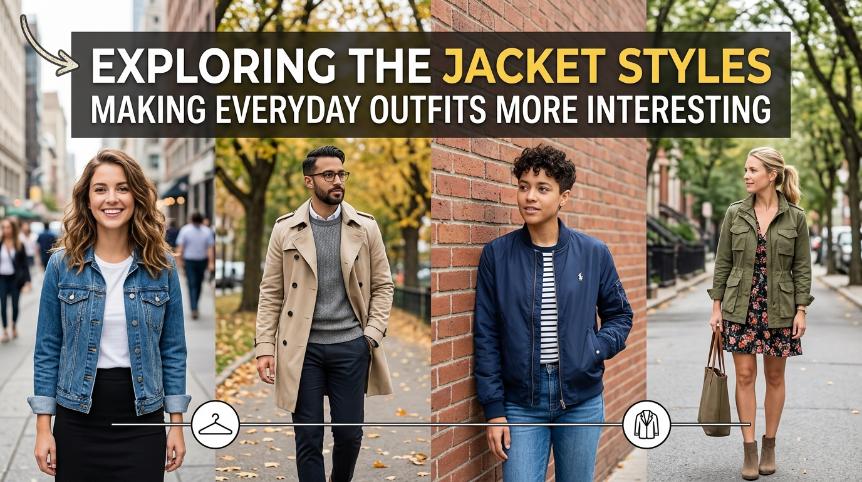
Exploring the Jacket Styles Making Everyday Outfits More Interesting
Everyday dressing does not have to mean predictable dressing. A simple combination of jeans, sneakers, trousers, or a basic T-shirt can take on an entirely different character when the right jacket becomes part of the outfit. Outerwear has a unique ability to change proportions, introduce color, add texture, and communicate personal style without requiring an entirely new wardrobe.
That is why jackets continue to play such an important role in contemporary fashion. They can be practical layers for changing weather, statement pieces for social occasions, or dependable everyday staples that make familiar clothes feel fresh. The best styles also offer versatility, allowing one jacket to work across casual weekends, travel days, nights out, and relaxed workplace settings.
From classic bombers and heritage-inspired designs to reversible pieces and culturally influenced outerwear, today’s jacket landscape offers plenty of ways to experiment. Understanding how different silhouettes, materials, colors, and details affect an outfit makes it easier to choose outerwear that feels intentional rather than simply functional.
Why the Right Jacket Can Transform an Outfit
A jacket often becomes the visual anchor of an everyday look. Even when the layers underneath are understated, outerwear can provide the defining shape and personality. A cropped bomber creates a different silhouette from a long coat, while a brightly colored jacket can immediately draw attention to an otherwise neutral outfit.
There are several reasons jackets have such a strong styling impact:
- They introduce structure: A well-shaped jacket can sharpen relaxed clothing and create a more balanced silhouette.
- They add visual contrast: Color, texture, hardware, and fabric can prevent simple outfits from looking flat.
- They provide versatility: Many jacket styles transition naturally between seasons and different occasions.
- They express personality: Graphics, embroidery, vintage details, bold colors, and distinctive cuts allow clothing to feel more individual.
- They create layering opportunities: Jackets can be worn over T-shirts, shirts, knitwear, sweatshirts, and lightweight hoodies.
The key is choosing a jacket that complements the rest of the outfit rather than competing with every other element. When outerwear has a strong identity, keeping the underlying layers relatively simple can make the entire look feel more polished.
The Bomber Jacket: A Reliable Everyday Favorite
Few jacket silhouettes are as adaptable as the bomber. Originally associated with functional military outerwear, the style has become a major part of casual and streetwear wardrobes. Its defining characteristics often include a shorter body, ribbed cuffs, a ribbed hem, and a front zip closure. These features give the bomber its distinctive proportions while making it easy to layer.
The cropped or waist-length shape works particularly well with everyday trousers and denim because it helps create a clean visual relationship between the upper and lower halves of an outfit. Pairing a bomber with straight-leg jeans and minimalist sneakers creates an effortless casual combination, while swapping in tailored trousers and leather shoes can make the same jacket feel more refined.
Color also changes the personality of a bomber considerably. Black, navy, olive, and charcoal are dependable options for people who want maximum versatility. Brighter shades can become the centerpiece of an outfit, particularly when worn with neutral basics underneath.
For those interested in distinctive seasonal outerwear, an adidas chinese new year jacket can demonstrate how a familiar sporty silhouette becomes more visually interesting through cultural motifs, color combinations, and limited-edition styling. The broader lesson is useful for everyday dressing: recognizable jacket shapes become much more expressive when designers introduce unexpected visual details.
Reversible Jackets: Two Looks in One
Versatility has become increasingly important in modern wardrobes, and reversible jackets offer one of the simplest ways to expand styling possibilities without adding multiple bulky layers to a closet. A reversible design essentially provides two distinct outerwear aesthetics in one garment, making it particularly useful for travel, transitional weather, and anyone who enjoys changing their look throughout the week.
The appeal goes beyond convenience. One side may feature a subdued color suitable for everyday wear, while the opposite side can introduce a bolder print, contrasting fabric, or different texture. This allows the wearer to adapt the same jacket to different outfits and settings.
| Jacket Style | Best Styling Strength | Ideal Everyday Pairing |
|---|---|---|
| Classic Bomber | Casual versatility | Jeans, T-shirt, sneakers |
| Reversible Bomber | Multiple looks | Denim, chinos, casual trousers |
| Hooded Bomber | Utility and comfort | Joggers, denim, knitwear |
| Statement Jacket | Visual impact | Neutral basics and simple footwear |
| Heritage-Inspired Jacket | Vintage character | Workwear denim and boots |
A reversible bomber can be especially effective when the two sides occupy different positions on the style spectrum. For example, a clean solid exterior can serve as a daily staple, while a patterned reverse side can provide a more expressive option for evenings or weekends.
The coach men’s reversible bomber jacket illustrates the broader appeal of this category: a familiar bomber silhouette becomes more flexible when its construction gives the wearer another aesthetic option. When shopping for a reversible jacket, pay attention to both sides rather than treating one as the “main” side. Ideally, each should look intentional and complete when worn independently.
Heritage Jackets Bring Character to Modern Wardrobes
Not every interesting jacket needs a futuristic design or highly technical construction. Heritage-inspired outerwear has become increasingly appealing because it carries a sense of history and authenticity. Workwear jackets, utility coats, canvas outerwear, and vintage-inspired bombers can add personality to contemporary outfits without appearing overly styled.
One of the strongest examples is the influence of traditional workwear. Heavy fabrics, practical pockets, sturdy zippers, reinforced seams, and relaxed silhouettes were originally developed for durability, but these same features now contribute to a distinctive fashion aesthetic.
Color can make heritage outerwear particularly effective. Deep brown, faded navy, forest green, tan, rust, and red can introduce warmth into outfits dominated by black, gray, or blue denim. A saturated shade is also an easy way to make an older-inspired silhouette feel current.
A red carhartt jacket, for example, combines the visual impact of a strong color with the practical character associated with workwear-inspired outerwear. The styling possibilities are broader than they might initially appear. A red jacket can be balanced with dark denim and neutral footwear, paired with black trousers for stronger contrast, or worn over simple gray layers to let the outerwear remain the focal point.
How Color Changes the Personality of a Jacket
Color is one of the quickest ways to determine whether a jacket functions as a background layer or a statement piece. Neutral jackets tend to integrate seamlessly into existing wardrobes, while saturated colors demand more attention and can transform the entire mood of an outfit.
For everyday versatility, consider the role you want the jacket to play. A black or charcoal jacket can support dozens of combinations without becoming visually dominant. Olive and brown shades work particularly well with denim, cream, beige, and other earthy tones. Red, orange, cobalt, and brighter greens are more expressive and can be used to create a focal point.
When wearing a colorful jacket, the rest of the outfit does not necessarily need to match it. In fact, excessive color coordination can make a look feel forced. Instead, use neutral garments to create breathing room around the statement outerwear.
Texture Makes Simple Outfits Feel More Considered
Texture is another understated way to make everyday clothing more interesting. Smooth nylon creates a sporty appearance, while canvas gives a jacket a rugged workwear character. Wool can make outerwear feel sophisticated, and quilted or padded materials introduce visual depth as well as warmth.
Mixing textures can also create contrast without relying on loud colors. Consider a smooth cotton T-shirt underneath a slightly textured bomber, or a knitted sweater beneath a durable canvas jacket. The differences between the materials give the outfit dimension while keeping the overall color palette controlled.
Texture becomes particularly useful during transitional seasons. Instead of immediately reaching for the heaviest coat available, a medium-weight jacket can provide enough warmth while allowing more freedom to combine layers. This makes transitional outerwear an important part of a functional wardrobe rather than merely a seasonal purchase.
Proportions Matter More Than Trends
Trends can influence which jacket styles receive attention, but proportions ultimately determine whether a jacket works with an individual’s existing wardrobe. A cropped jacket emphasizes the waist and works naturally with higher-rise trousers. An oversized jacket creates a relaxed silhouette but usually benefits from some balance elsewhere in the outfit.
When selecting a new jacket, consider these practical questions:
- What do you normally wear underneath it? If you frequently layer hoodies or sweaters, allow enough room through the chest and shoulders.
- What trousers dominate your wardrobe? The jacket should work with your most-used jeans, chinos, cargos, or tailored trousers.
- Where will you wear it? A statement piece may be ideal for weekends but less useful if you need conservative everyday outerwear.
- How does the hem sit? The length can dramatically change your overall proportions.
- Does the shoulder line feel intentional? Poor shoulder fit can make even an expensive jacket look awkward.
These considerations are more valuable than simply choosing whatever silhouette happens to be trending. A jacket that works with several existing outfits will generally receive much more wear than an impressive piece that only suits one specific combination.
Styling Jackets Across Different Occasions
One of the biggest advantages of versatile outerwear is the ability to adjust the rest of an outfit according to the occasion. The jacket can remain largely unchanged while the supporting pieces shift around it.
For a relaxed daytime look, combine a bomber with a plain T-shirt, straight-leg denim, and low-profile sneakers. For a smarter casual setting, replace the T-shirt with an Oxford shirt or fine-gauge knit and choose chinos or tailored trousers. Evening styling can become more sophisticated through darker colors, cleaner footwear, and minimal accessories.
Travel is another environment where versatile jackets perform especially well. Multiple pockets can provide useful storage, while durable fabrics and adaptable silhouettes make it easier to move between different temperatures and activities. Reversible styles are particularly practical when packing space is limited.
Building a More Versatile Jacket Collection
A wardrobe does not need dozens of jackets to offer variety. A carefully selected collection of complementary styles can cover most everyday needs while providing plenty of room for experimentation.
A practical jacket rotation might include:
- A neutral everyday bomber for casual outfits and regular commuting.
- A statement-color jacket for adding personality to simple combinations.
- A reversible design for maximum flexibility when traveling or changing styles.
- A heritage or workwear-inspired jacket for rugged texture and vintage character.
- A weather-focused outer layer for colder, wetter, or more demanding conditions.
The objective is not to collect every jacket category. Instead, choose pieces that perform different functions and create different visual effects. This approach makes getting dressed easier because every jacket has a clear role.
Frequently Asked Questions (FAQs)
What jacket style is most versatile for everyday outfits?
The bomber jacket is one of the most versatile choices because its relatively simple silhouette works with jeans, chinos, casual trousers, T-shirts, shirts, knitwear, and sneakers. Neutral colors make it even easier to incorporate into different outfits.
How can I style a bold-colored jacket?
Use the bold jacket as the focal point and keep the rest of the outfit relatively simple. Black, white, gray, navy, denim, and other understated colors can help balance brighter outerwear without making the outfit look overly coordinated.
Are reversible jackets practical for everyday wear?
Yes. A well-designed reversible jacket can provide two distinct styling options while taking up the space of one garment. It can be particularly useful for travel, transitional seasons, and wardrobes where versatility is a priority.
How can I make a casual jacket look more polished?
Focus on fit, clean layering, and complementary footwear. Pairing a casual jacket with well-fitted trousers, a simple knit or structured shirt, and understated shoes can create a more refined appearance without losing the relaxed character of the outerwear.
Should a statement jacket match the rest of the outfit?
It does not need to match exactly. Coordinating through neutral colors and subtle complementary tones usually creates a more natural result than attempting to match every detail. Letting the jacket provide contrast can make the outfit more visually interesting.
Make Everyday Dressing More Interesting
The most effective jacket styles do more than protect against the elements. They give familiar clothes a new direction, introduce texture and color, and make personal style easier to express. Whether the preference is for the clean versatility of a bomber, the flexibility of a reversible design, or the character of heritage-inspired outerwear, the right jacket can become one of the hardest-working pieces in a wardrobe.
Rather than treating outerwear as an afterthought, consider it the finishing layer that brings an outfit together. Start with the silhouettes that fit your lifestyle, experiment with color and texture, and prioritize pieces that work across multiple combinations. With the right approach, even the simplest everyday outfit can feel distinctive, intentional, and effortlessly put together.