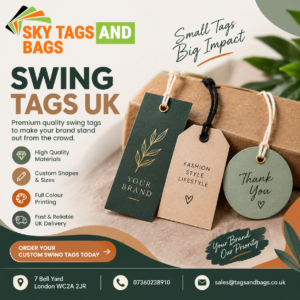
In a competitive retail environment, small packaging details can make a meaningful difference to how customers perceive a product. From clothing and accessories to handmade goods and lifestyle products, businesses need clear and attractive ways to communicate brand identity. Swing tags offer a practical solution by combining product information, visual design and brand messaging in one compact format.
Across the United Kingdom, retailers and e-commerce businesses are paying greater attention to packaging consistency and customer experience. Well-designed Swing tags can help products look more professional, communicate essential details and create a recognisable identity across different product ranges. Their value extends beyond appearance, making them a useful part of modern retail packaging.
Understanding the Role of Swing Tags in Retail
Swing tags London are detachable labels commonly attached to products using string, ribbon, plastic fasteners or other suitable attachments. Although frequently associated with clothing, they are also used for jewellery, bags, footwear, gifts, accessories and selected homeware products.
A swing tag can carry several types of information, including:
- Brand name, logo and visual identity
- Product descriptions and material details
- Size, colour or product reference numbers
- Care instructions and manufacturing information
- Website addresses, social media handles or QR codes
- Promotional messages or sustainability information

The most effective designs balance appearance with readability. A tag should communicate the most important information quickly without becoming overcrowded. Retailers should consider the product’s size, target audience and packaging style before deciding on its layout.
Choosing Materials, Shapes and Finishes
Material selection influences both the appearance and functionality of a swing tag. Cardstock remains a popular choice because it supports different printing methods and is available in a variety of thicknesses, textures and colours.
Businesses can consider several options depending on their requirements:
- Uncoated cardstock: Suitable for a natural, understated appearance and designs that benefit from a tactile finish.
- Coated card: Useful when a smoother surface and sharper printed graphics are important.
- Recycled paper: An option for brands seeking to incorporate recycled materials into their packaging choices.
- Textured or premium card: Can add visual interest and support a distinctive product presentation.
Shape and size are equally important. A compact rectangular tag may suit minimalist clothing labels, while a circular or custom-shaped design can help a product range stand out. However, unusual shapes should not compromise readability or durability.
Finishing techniques such as foil stamping, embossing and spot UV can introduce additional visual detail. These treatments are often associated with premium presentation, but their suitability depends on the brand’s positioning, budget and overall packaging strategy.

How to Choose Swing Tags UK Retailers Can Use Effectively
When selecting Swing tags UK businesses should evaluate more than the initial design. The tags need to suit the products, withstand normal handling and remain consistent with the wider brand identity.
Consider the following practical factors before finalising an order.
1. Match the tag to the product
A lightweight garment may require a small paper tag, whereas a larger accessory might need a thicker card with a stronger attachment. The tag should complement the product rather than overpower it.
2. Prioritise clear information
Use readable typography, sufficient spacing and a logical information hierarchy. Brand names should be easy to recognise, while essential product details should remain legible at the finished size.
3. Maintain brand consistency
Colours, fonts, logos and design elements should align with other packaging materials, including shopping bags, labels, boxes and tissue paper. Consistency helps customers recognise a business across different retail touchpoints.
4. Check attachment and durability
The fastening method should suit the product’s material and intended display environment. Tags must remain securely attached during storage, transportation and handling without damaging the item.
5. Review a sample before production
A physical sample can reveal issues that may not be obvious on a computer screen. Check print quality, colour accuracy, hole placement, card thickness and readability before approving a larger quantity.

Businesses researching Best Swing tags should compare these practical characteristics alongside visual appeal. The most suitable option is one that meets the product’s requirements and supports a consistent customer experience.
Common Challenges and Practical Solutions
Even a carefully designed tag can create problems if its production and use are not properly planned.
One common issue is overcrowding. Businesses sometimes try to include every possible detail, leaving little space for the brand identity. The solution is to prioritise essential information and direct customers to a website or QR code for additional details where appropriate.
Another challenge is inconsistent colour reproduction. Colours may appear different across screens, printed samples and production runs. Providing clear artwork specifications and approving a representative proof can help reduce discrepancies.
Sustainability claims also require care. Using recycled paper or recyclable materials may support a packaging strategy, but businesses should verify the actual material composition and relevant disposal requirements before making environmental statements.

Finally, ordering unsuitable quantities can increase costs or create unnecessary waste. Estimating demand, considering seasonal changes and standardising tag dimensions across compatible products can improve production planning.
Final Takeaway The Growing Importance of Thoughtful Product Presentation
Retail packaging continues to evolve as businesses balance visual identity, practical information and environmental considerations. Swing tags remain relevant because they offer a relatively compact and adaptable way to connect these elements.
For example, a fashion retailer may use a tag to communicate garment care information, while a handmade accessories business might highlight craftsmanship and material details. An online retailer can also use consistent tags to maintain its brand presentation when orders reach customers in different types of packaging.
Businesses exploring packaging options can review specialist providers such as Tags and Bags at https://www.tagsandbags.co.uk/swing-tags/ to understand the range of formats available for different retail applications.
Ultimately, effective swing tag design begins with a clear purpose. By choosing suitable materials, prioritising readable information, maintaining brand consistency and checking production quality, retailers can create tags that contribute to professional product presentation and a more considered customer experience.
Contact Us : https://www.tagsandbags.co.uk/contact-us/
About Us : https://www.tagsandbags.co.uk/about-us/
Website Link : https://www.tagsandbags.co.uk/
Social Media :
- https://smautoservicecouk.blogspot.com/2026/09/why-rope-handle-paper-bags-are.html
- https://vxengine.ru/blogs/2978/Why-Embossed-Swing-Tags-Add-Value-to-Retail-Packaging
- https://mingolive.com/blogs/12613/How-Foiled-Swing-Tags-Add-Detail-and-Clarity-to-Retail
- https://www.linkedin.com/pulse/choosing-wholesale-paper-bags-uk-retail-e-commerce-david-method-jjwxc
- https://logcla.com/blogs/1996374/How-Can-Well-Designed-Swing-Tags-Strengthen-UK-Retail-Packaging
- https://logcla.com/blogs/2015780/Embossed-Swing-Tags-Enhancing-Product-Presentation-and-Brand-Identity
- Where to Donate Paper Shopping Bags: 10 UK Options – Sky Tags and Bags
If you’re wondering where to donate paper shopping bags, the best places include charity shops, food banks, schools…www.tagsandbags.co.uk - https://www.tagsandbags.co.uk/qr-code-swing-tags-merging-print-with-digital-experiences/