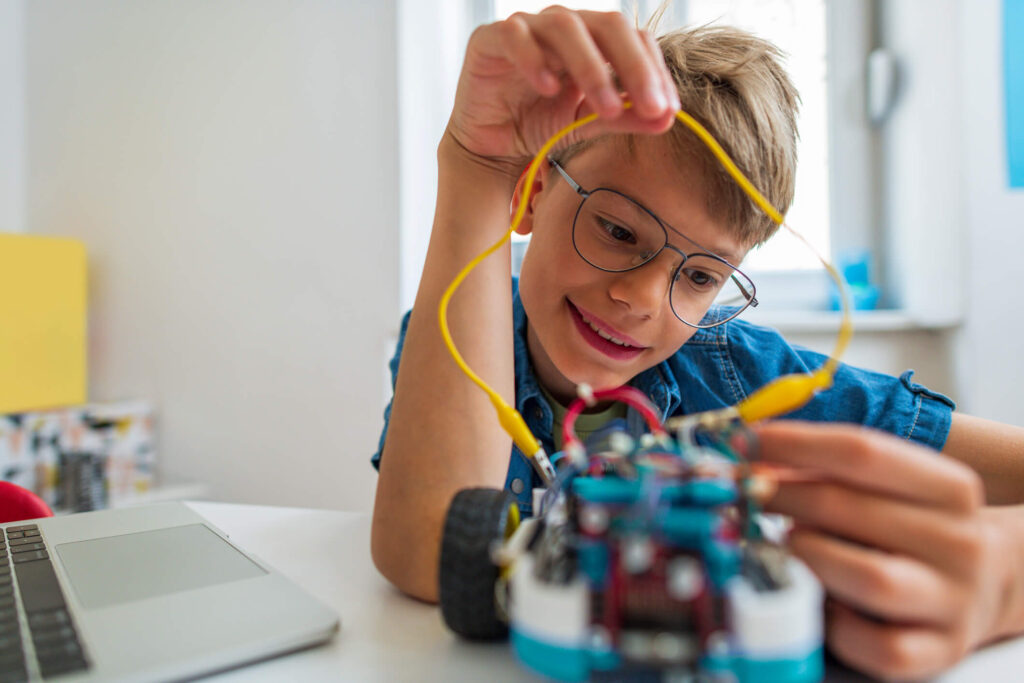
Finding the right technology program for your child can feel a little like choosing the right toolbox. There are plenty of options available, but not every toolbox contains the right tools for the job. The same is true when parents start searching for Robotics courses for kids.
Robotics can introduce children to engineering, coding, electronics, automation, logical thinking, creativity, and problem-solving in a practical way. Instead of only reading about technology, children can build projects, test ideas, discover mistakes, and figure out how to make their creations work.
But how do you identify a quality institute? Should you search for robotics classes near me, choose a specialized academy, or look for a robotics camp? More importantly, what separates an ordinary program from one that genuinely helps children develop STEM skills?
This guide explains the key factors parents should consider when selecting a robotics training institute, particularly for families looking for opportunities in New Jersey. It also explores how Brainy n Bright approaches STEM and robotics education for children in the USA.
Why Robotics Training Is Valuable for Kids
Robotics is more than assembling a small machine and watching it move. A well-designed program can bring several areas of STEM education together in one practical learning environment.
When children build and program robots, they have to think logically. They need to understand instructions, observe results, identify problems, and make changes. That process naturally encourages patience and critical thinking.
Robotics Turns Ideas Into Real Projects
One of the biggest advantages of robotics is that children can see their ideas come alive. A line of code can make a motor turn, a sensor can detect an object, and a programmed sequence can make a robot respond.
That connection between an idea and a physical result can make technical concepts easier for children to understand and remember.
Robotics Encourages Children to Learn From Mistakes
What happens when the robot does not work?
That is often where the most valuable learning begins. Children can investigate whether the problem comes from the design, wiring, instructions, code, or another part of the project. Instead of treating mistakes as failures, robotics can turn them into opportunities to experiment.
What Makes a Good Robotics Training Institute?
Not every institute that offers robotics classes provides the same learning experience. A good program should have more than attractive equipment or impressive advertisements.
Parents should examine the curriculum, teaching approach, instructors, project work, class structure, age groups, and opportunities for continued learning before enrolling their child.
Look for a Structured Robotics Curriculum
A structured curriculum gives children a clear learning path. Instead of jumping randomly between activities, students can begin with basic concepts and gradually develop more advanced skills.
When comparing best robotics courses for kids, check whether the curriculum is organized according to age and experience. A beginner should have a different learning pathway from a student who has already completed several robotics projects.
Beginner-Friendly Learning
Children who are new to robotics should not immediately be overwhelmed with complex programming or engineering concepts. Introductory lessons should make technology approachable.
Simple building challenges, basic programming logic, sensors, movement, and guided projects can give beginners the foundation they need to progress confidently.
Advanced Learning Opportunities
Once students understand the basics, they should have opportunities to explore more challenging concepts. Advanced programs can introduce increasingly complex programming, automation, sensors, engineering challenges, and independent projects.
This progression helps children continue learning rather than feeling that they have reached the end of the program after mastering basic activities.
Check the Experience of the Instructors
A curriculum is only as effective as the way it is taught. Experienced instructors understand that children learn differently and may need different levels of guidance.
A good robotics teacher should be able to explain technical concepts in language children understand. Instead of making robotics sound like a complicated textbook, the instructor can turn difficult ideas into manageable challenges.
Teachers Should Encourage Questions
Children naturally ask questions when they are curious. A robotics classroom should make room for those questions.
If a child asks why a sensor behaves differently in two situations, the instructor can use that question as a learning opportunity. Encouraging curiosity helps students become active learners rather than passive listeners.
Prioritize Hands-On Robotics Projects
When researching Robotics courses for kids, always ask how much of the program is hands-on.
Children learn robotics by doing. They should have opportunities to build, program, test, troubleshoot, modify, and improve projects. Watching an instructor demonstrate everything may look impressive, but it does not give every child enough practical experience.
Why Project-Based Learning Matters
Project-based learning gives children a reason to use what they have learned.
Instead of memorizing what a sensor does, a student may need to use that sensor to solve a particular challenge. Suddenly, the concept becomes part of a real problem rather than an isolated fact.
Search for Robotics Classes Near Me Carefully
Searching robotics classes near me is a natural starting point for parents. A nearby institute can make regular attendance easier and reduce travel time.
However, proximity should not be the only consideration. The closest center may not necessarily have the right curriculum or teaching environment for your child.
When comparing nearby options, consider the course structure, age groups, class size, project work, instructors, schedule, and learning outcomes alongside location.
How to Evaluate Robotics Course in New Jersey Options
Parents looking for a robotics course in New Jersey have several factors to consider before choosing an institute.
Start by identifying what your child wants to learn. Is your child completely new to robotics, or have they already built and programmed robots? Do they enjoy coding, mechanical construction, electronics, or general STEM activities?
Understanding your child’s interests can help you select a program that feels challenging without becoming frustrating.
Consider Your Child’s Age and Skill Level
Age-appropriate instruction is extremely important in robotics. A course designed for young beginners should use different teaching methods from one intended for experienced teenagers.
A good institute should clearly explain its age groups, prerequisites, course levels, and progression. This allows parents to choose a class that matches their child’s current ability.
Programs for Younger Children
Younger learners can begin with basic robotics concepts, creative building challenges, simple programming, and guided STEM activities.
The goal at this stage is often to develop curiosity and confidence. Children should finish activities thinking, “I want to try something else,” rather than feeling overwhelmed.
Programs for Older Students
Older learners can explore more advanced coding and robotics concepts. They may be ready for more independent projects and increasingly complex challenges.
At this stage, students can begin connecting robotics with programming, automation, engineering design, and other areas of technology.
Compare Robotics Courses Center for Kids in New Jersey
If you are researching a robotics courses center for kids in new jersey, do not stop after looking at the website or advertisement.
Ask what happens inside the classroom. How much time do students spend building? How are projects evaluated? Do students work independently? Can they ask questions? What happens when a project fails?
These questions can reveal much more about an institute’s educational approach than a list of course features.
Examine Class Size and Individual Attention
Class size can affect how much attention each child receives. Robotics involves practical work, so students may encounter different problems at different times.
An instructor should have enough opportunity to observe student projects and provide guidance when necessary. Children should not spend an entire session waiting for help with a technical problem.
A well-organized small-group environment can also encourage collaboration while still giving students opportunities to work independently.
Look at the Equipment and Learning Tools
Robotics equipment matters, but it should support learning rather than simply serve as decoration.
Ask what tools students actually use during lessons. More importantly, ask how those tools are incorporated into projects. Expensive equipment does not automatically mean better education.
The real value comes from how effectively students use the available technology to understand concepts and solve challenges.
Why Coding Should Be Part of Robotics Training
Robotics and programming naturally complement each other. A robot becomes significantly more interesting when children can tell it what to do.
Coding helps students understand instructions, logic, conditions, sequences, repetition, and problem-solving. Robotics then gives those abstract programming ideas a physical outcome.
Connecting Software With Hardware
When children write code and immediately see a robot respond, the connection between software and hardware becomes easier to understand.
For example, a student can discover that changing a command can change the robot’s movement. This creates a practical feedback loop: write, test, observe, improve, and test again.
Consider Robotics Courses Camp New Jersey Programs
A robotics courses camp New Jersey program can be another option for children who enjoy intensive STEM activities.
Camps can provide concentrated learning experiences where children spend more time building projects, experimenting with technology, and collaborating with other students.
What Should a Robotics Camp Include?
A quality robotics camp should have educational goals rather than simply offering entertainment with robots.
Look for a camp that includes structured activities, hands-on projects, coding or programming concepts, problem-solving challenges, teamwork, and age-appropriate instruction.
The ideal camp should leave children with something more valuable than a completed activity: a better understanding of how technology works.
What Parents Should Know About a Robotic Training Center for Kids in NJ
When looking for a robotic training center for kids in nj, parents should think about both short-term enjoyment and long-term skill development.
Ask whether the program provides a pathway for children to advance. If your child enjoys the introductory course, can they move into a more challenging level?
A progressive learning structure can keep children engaged as their abilities develop.
Look for Creativity Alongside Technical Skills
Robotics should not be limited to following instructions.
Children should have opportunities to make design decisions, test different solutions, and develop their own ideas. Creativity and engineering can work together like two sides of the same coin.
A student may begin with a basic assignment and eventually think, “What if I make it work differently?” That kind of independent thinking is worth encouraging.
Why Brainy n Bright Can Be Considered for Robotics Training in New Jersey
For families searching for a robotics training center for kids in nj, Brainy n Bright provides STEM-focused learning opportunities that include robotics and technology education for children.
Brainy n Bright’s approach brings together practical STEM activities, technology concepts, problem-solving, and project-oriented learning. The goal is to give children opportunities to explore technology rather than simply memorize technical information.
Parents comparing local programs can explore Brainy n Bright’s offerings and determine whether its learning approach, course structure, and age groups align with their child’s needs.
Brainy n Bright and Hands-On STEM Learning
Hands-on learning can make technical concepts more accessible to children. Instead of explaining every concept only through theory, students can learn by creating and experimenting.
At Brainy n Bright, robotics can be part of a broader STEM learning journey where children explore technology, logical thinking, creativity, and problem-solving.
Building Confidence Through Practical Challenges
A child does not need to get every project right on the first attempt.
When students are encouraged to troubleshoot and try again, they can gradually become more comfortable with difficult problems. That confidence can influence how they approach challenges in other areas of learning as well.
What Makes Brainy n Bright Different for Families?
Parents searching for the best robotics training institute for kids often want more than a basic robotics activity. They want an environment where their children can develop useful skills while enjoying the learning process.
Brainy n Bright positions its STEM programs around technology-oriented learning for children, with robotics and related subjects forming part of its educational offering.
For New Jersey families, it can be one of the options to consider when comparing STEM and robotics learning providers.
How to Compare the Best Robotics Courses for Kids
The phrase best robotics courses for kids can mean different things to different families. There is no single course that will be perfect for every child.
For one student, the most important factor may be hands-on projects. For another, it may be coding. Another child may benefit most from collaborative activities or a flexible schedule.
Create a Simple Comparison Checklist
Before enrolling, compare each institute based on a few important questions:
- Is the curriculum suitable for my child’s age?
- Is the course beginner-friendly?
- How much hands-on project work is included?
- Does the program include coding?
- Are instructors available to help students?
- Is there a clear progression to advanced learning?
- Is the class schedule convenient?
- Does the learning environment encourage creativity?
- Can my child continue learning after the introductory course?
Using a checklist can make the decision less confusing because you are comparing actual learning factors instead of relying only on promotional claims.
Common Mistakes Parents Should Avoid
Choosing a robotics institute based only on distance is one common mistake. Convenience is useful, but educational quality should also be considered.
Another mistake is focusing entirely on the robotics kit. A fancy kit can attract children, but the curriculum and teaching methodology determine what they actually learn.
Parents should also avoid choosing an advanced program simply because it sounds impressive. If the content is not appropriate for the child’s current level, the experience can become frustrating.
Why STEM Education and Robotics Work Well Together
Robotics is naturally connected to STEM. Science helps students understand how things work, technology provides tools, engineering supports design, and mathematics helps with measurements, logic, and calculations.
When these areas come together through projects, children can see how classroom concepts connect to real-world applications.
That is one reason STEM and robotics programs can be valuable for children who enjoy making things, asking questions, solving puzzles, or experimenting with technology.
How Robotics Can Prepare Kids for Future Learning
Nobody can predict exactly which technologies today’s children will use as adults. However, problem-solving, logical thinking, creativity, collaboration, and technological confidence are broadly useful skills.
Robotics gives children a practical environment in which they can develop many of these abilities.
The objective is not to decide a child’s future career at an early age. Instead, it is about giving children opportunities to discover what they enjoy and develop skills that can support future learning.
Final Thoughts on Choosing a Robotics Training Institute
Choosing the right Robotics courses for kids requires more than searching for the nearest institute. Parents should look carefully at the curriculum, instructors, age suitability, hands-on projects, coding opportunities, class size, equipment, and progression options.
If you are searching for robotics classes near me, a robotics course in New Jersey, or a robotics courses center for kids in new jersey, take time to compare what each program actually offers.
For families in New Jersey, Brainy n Bright is a STEM and robotics training provider that parents can explore when looking for technology-focused learning opportunities for children. Its STEM-oriented approach combines robotics and related technology learning with practical activities designed to encourage curiosity, creativity, and problem-solving.
The right robotics program should not simply teach a child how to make a robot move. It should encourage them to ask why it moves, how it works, what could be improved, and what they can build next. That curiosity is where meaningful STEM learning begins.
FAQs About Robotics Training for Kids
1. What should I look for in the best robotics training institute for kids?
Look for an institute with an age-appropriate curriculum, experienced instructors, hands-on projects, coding opportunities, manageable class sizes, and a clear progression from beginner to advanced learning.
2. How can I find robotics classes near me in New Jersey?
Start by searching for robotics classes near me and create a shortlist of nearby providers. Then compare their curriculum, instructors, schedules, project work, age groups, learning environment, and opportunities for continued education.
3. Are robotics courses camp New Jersey programs suitable for beginners?
Yes, many robotics camps can introduce beginners to robotics through guided projects and practical activities. Before enrolling, check whether the camp separates students according to age or experience level and whether the activities have clear educational objectives.
4. What age can children start robotics courses for kids?
Children can begin robotics at different ages depending on the program. Younger students can start with simple building and programming activities, while older students can progress toward more advanced coding, sensors, automation, and engineering projects.
5. Why should parents consider Brainy n Bright for robotics training?
Brainy n Bright offers STEM-focused learning opportunities that include robotics and technology education for children. Families searching for a robotic training center for kids in nj can explore its programs and compare the curriculum and learning approach with their child’s individual needs.