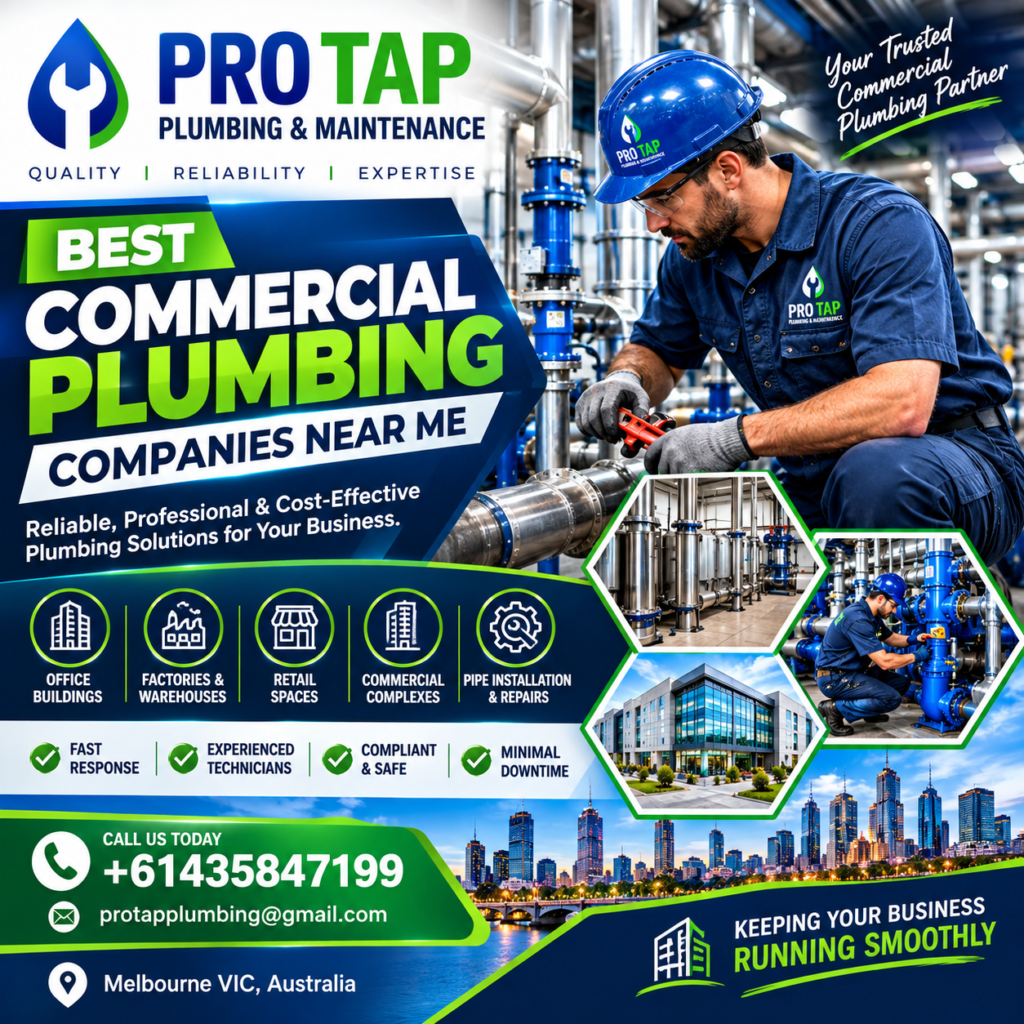
Commercial plumbing problems can affect far more than a building’s water supply. A blocked drain in a retail store, leaking pipe in an office, damaged hot-water system in a hospitality venue, or drainage issue in a warehouse can interrupt daily operations and create additional costs. For businesses, finding a qualified plumbing contractor who understands commercial environments is therefore an important part of property maintenance.
When searching for commercial plumbing companies in Melbourne, businesses should look beyond simple availability. Commercial plumbing requires appropriate experience, reliable communication, knowledge of local requirements, and the ability to work around operational schedules.
Whether managing a retail premises, office, restaurant, industrial property, or multi-site portfolio, understanding what to look for can make the selection process much easier.
What Does a Commercial Plumbing Company Do?
Commercial plumbing covers a broad range of plumbing systems and maintenance requirements used in business and public buildings.
Unlike a typical residential plumbing job, commercial work can involve larger pipe networks, multiple bathrooms, high-use fixtures, commercial hot-water systems, grease traps, drainage infrastructure, backflow prevention, and complex building services.
Depending on the property, a commercial plumber may assist with:
- General plumbing repairs and maintenance
- Blocked drains and sewer problems
- Leaking or burst pipe repairs
- Commercial hot-water systems
- Toilet and bathroom plumbing
- Tap and fixture replacement
- Gas-related plumbing services where appropriately licensed
- Drainage and stormwater issues
- Backflow prevention
- Preventive plumbing maintenance
- Plumbing for refurbishments and fit-outs
- Emergency plumbing situations
- Plumbing inspections and fault diagnosis
For example, a restaurant may have completely different plumbing requirements from a retail shop or office building. Restaurants can experience heavy drainage usage, grease-related blockages, and demanding hot-water requirements, while office buildings may require regular maintenance of bathrooms, kitchens, and water services.
Understanding these differences is one reason businesses should select a contractor with relevant commercial experience.
Key Factors to Consider When Comparing Commercial Plumbing Companies in Melbourne
Searching online for a commercial plumbing company Melbourne businesses can produce many options. However, search results alone do not necessarily reveal whether a contractor is suitable for a particular property.
Several practical factors can help narrow the choices.
1. Relevant Commercial Experience
Commercial plumbing involves different operating conditions from residential plumbing. A contractor working on a busy retail property, for instance, may need to complete repairs while minimising disruption to customers and staff.
Ask whether the plumber has experience with properties similar to yours.
Useful questions include:
- Have they worked with retail or office properties?
- Do they handle ongoing commercial maintenance?
- Can they work outside normal trading hours?
- Are they familiar with commercial drainage systems?
- Can they coordinate with property managers or other contractors?
Relevant experience can help a plumber identify problems more efficiently and understand the operational priorities of a business.
2. Licensing, Insurance and Compliance
Plumbing is a regulated trade, and commercial work can involve additional compliance considerations depending on the project and location.
Before engaging a contractor, businesses should verify the relevant licensing and insurance credentials. It is also useful to understand who will be responsible for permits, inspections, documentation, and coordination with other trades when these requirements apply.
A professional contractor should be able to explain the work clearly rather than leaving a business owner uncertain about compliance responsibilities.
3. Emergency Response Capability
Some plumbing problems cannot wait until the next business day.
A burst pipe can release significant amounts of water into a commercial property. A blocked sewer can affect bathrooms and create operational problems. A failed hot-water system can be particularly disruptive for hospitality and other high-use businesses.
For this reason, businesses searching for a local commercial plumbing service near me may want to determine whether the contractor provides emergency assistance and what types of plumbing emergencies they handle.
It is also worth establishing an internal emergency procedure. Staff should know where the main water isolation points are and who should be contacted when a serious leak occurs.
4. Preventive Maintenance
Reactive plumbing repairs can sometimes be reduced through planned maintenance.
Preventive maintenance can include inspections of:
- Water supply pipes
- Drainage systems
- Toilets and fixtures
- Hot-water equipment
- Valves and isolation points
- Pumps
- Backflow prevention equipment
- Stormwater drainage
- Commercial kitchen plumbing
Regular inspections can help identify early warning signs such as recurring blockages, corrosion, low water pressure, slow drainage, unusual smells, or persistent leaks.
For property managers responsible for several buildings, a documented maintenance schedule can also make recurring issues easier to identify.
Common Commercial Plumbing Problems and Practical Solutions
Commercial properties experience many of the same plumbing problems as homes, but higher usage can make failures more disruptive.
Blocked Drains
Frequent drainage blockages can result from excessive waste, grease, foreign objects, damaged pipes, or insufficient maintenance.
In food-service environments, grease and food waste can be particularly problematic. Businesses can reduce risk by following appropriate waste-disposal procedures and arranging professional drain maintenance when recurring problems appear.
Leaking or Burst Pipes
Leaks may develop because of damaged fittings, corrosion, pressure problems, temperature changes, or ageing infrastructure.
Early detection matters. Signs may include unexplained increases in water consumption, damp areas, water stains, mould growth, or unusual sounds from pipework.
When a significant leak occurs, isolating the water supply where safe to do so and contacting a qualified plumber quickly can help limit property damage.
Hot-Water System Failures
Commercial hot-water systems often serve many users throughout the day. A failure can therefore affect staff, customers, tenants, or business operations.
Regular servicing and inspection can help identify problems before a complete system failure occurs. Businesses should also consider whether their existing hot-water capacity matches current building usage.
How to Evaluate a Commercial Plumbing Contractor
Online searches for best commercial plumbing companies near me can provide a starting point, but businesses should evaluate contractors using practical evidence rather than relying solely on rankings or advertising.
Consider creating a short checklist:
- Verify qualifications and licensing requirements.
- Check commercial plumbing experience.
- Confirm appropriate insurance.
- Ask about emergency response arrangements.
- Request a clear explanation of proposed work.
- Review relevant customer feedback and references.
- Check whether maintenance programs are available.
- Confirm communication and reporting procedures.
- Ask how disruption to business operations will be managed.
- Make sure invoices and scope of work are clearly documented.
For larger facilities, it can also be useful to establish a relationship with a contractor before an emergency occurs. Having a documented contact process can save valuable time when an unexpected plumbing problem affects the property.
Commercial Plumbing Trends Businesses Should Watch
Commercial plumbing is increasingly connected with broader property-management and sustainability objectives.
Water Efficiency
Businesses are paying greater attention to water consumption because reducing unnecessary usage can support operational efficiency. Water-efficient fixtures, leak detection, appropriate maintenance, and monitoring can all contribute to better water management.
Smart Monitoring
Some commercial properties are adopting technology that monitors water usage and identifies unusual consumption patterns. These systems can potentially help property managers detect leaks earlier than conventional inspections alone.
Planned Asset Maintenance
Rather than waiting for plumbing components to fail, property managers can use maintenance records to track recurring issues and identify ageing infrastructure.
This approach can be particularly useful for large buildings and multi-property portfolios where plumbing assets are difficult to monitor manually.
Sustainable Renovations
Commercial renovations increasingly consider water efficiency alongside appearance and functionality. Plumbing design can therefore form an important part of broader building-improvement projects.
Why Local Knowledge Matters
Choosing a commercial plumbing company Melbourne businesses can communicate with easily may provide practical advantages, particularly when ongoing maintenance is required.
Local contractors may be familiar with the types of commercial properties common throughout Melbourne and the practical challenges involved in servicing busy metropolitan locations. However, businesses should still assess licensing, experience, insurance, response arrangements, and technical capability rather than selecting a contractor based on location alone.
For businesses researching providers, Pro Tap Plumbing and Maintenance is one example of a Melbourne plumbing provider that offers commercial plumbing services alongside other plumbing solutions.
Final Thoughts
Finding suitable commercial plumbing support involves more than searching for a plumber when something goes wrong. Businesses should consider the contractor’s commercial experience, licensing, insurance, emergency response, maintenance capabilities, communication processes, and understanding of the property’s specific requirements.
Whether the need involves drainage maintenance, a leaking pipe, a hot-water system, a renovation, or an urgent plumbing failure, a structured selection process can make it easier to identify an appropriate service provider.
For Melbourne businesses, comparing commercial plumbing companies in Melbourne based on documented experience and practical service capabilities can help create a more reliable approach to building maintenance. Most importantly, regular inspections and preventive maintenance can reduce avoidable disruptions and help commercial plumbing systems continue operating efficiently.
Read More:
https://www.protapplumbing.com.au/plumbing-services-industry-australia/