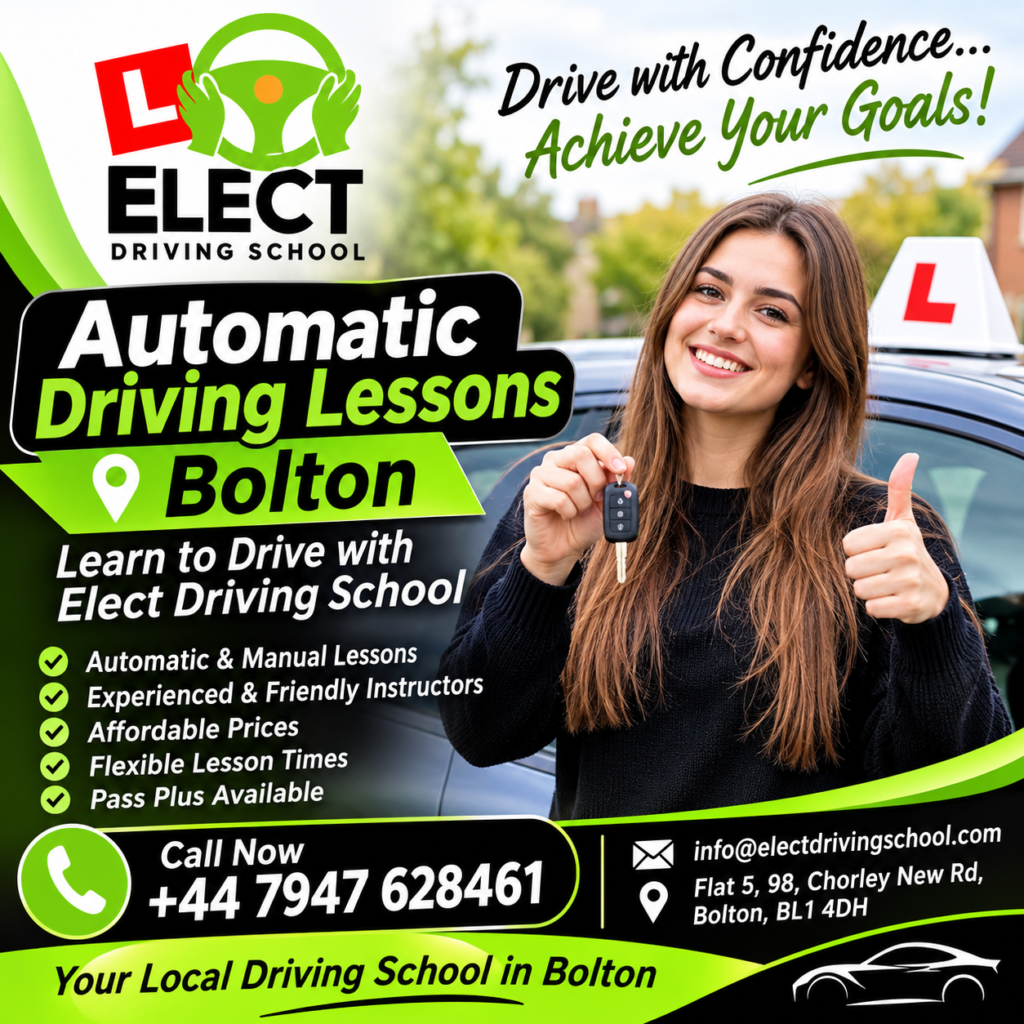
Learning to drive is an important milestone that brings greater independence, flexibility and confidence. Whether someone needs a car for commuting, family responsibilities or everyday travel, gaining a full driving licence can make life considerably easier. However, the cost of learning to drive is often a major concern, particularly for students, young learners and people managing a tight budget.
Finding cheap driving lessons Bolton learners can rely on involves more than simply choosing the lowest hourly rate. The quality of instruction, lesson structure, instructor experience and overall learning experience can all influence how quickly someone develops the skills needed to become a safe driver. Understanding what makes driving lessons affordable and effective can help learners make informed decisions.
1. Understanding the Cost of Learning to Drive in Bolton
Driving lesson prices can vary depending on several factors, including instructor experience, vehicle type, lesson duration and local demand. Some learners prefer individual hourly sessions, while others choose block bookings or structured packages to manage their learning expenses.
Although a lower hourly price may appear attractive, learners should consider the overall value of each lesson.
For example, an effective lesson should include:
- Clear explanations of driving techniques and road rules.
- Practical experience on different types of roads.
- Feedback about mistakes and areas for improvement.
- Opportunities to practise manoeuvres and junctions.
- Guidance on preparing for the practical driving test.
Choosing affordable driving lessons does not mean sacrificing professional instruction. Instead, learners should look for a balance between reasonable pricing and consistent teaching quality.
It is also helpful to establish a realistic learning budget before starting. This allows learners to plan their sessions, account for theory and practical test fees, and avoid unexpected expenses.
2. Choosing the Right Driving School in Bolton
Selecting a suitable driving school Bolton learners can trust is an important part of the learning process. A good driving school provides structured instruction that helps beginners progress from basic vehicle controls to more advanced road situations.
Before choosing a school, learners should consider several important factors.
Instructor qualifications: Check that the instructor is an approved driving instructor (ADI) or a properly registered trainee instructor where applicable. Professional qualifications help establish that the instructor meets the relevant standards.
Teaching approach: Every learner develops at a different pace. Some people quickly understand vehicle controls but need more time with parking, while others may require additional practice at roundabouts or busy junctions.
Lesson flexibility: Flexible scheduling can make it easier to fit driving lessons around work, education and family commitments.
Vehicle condition: A well-maintained, suitable training vehicle can make lessons more comfortable and help learners concentrate on developing their driving skills.
Communication: An instructor should explain mistakes clearly, provide constructive feedback and encourage questions without making learners feel uncomfortable.
Comparing these factors can help learners identify a driving school that offers genuine value rather than focusing exclusively on price.
3. How to Make Affordable Driving Lessons More Effective
Keeping driving costs under control requires preparation and consistency. Learners who arrive prepared and understand their learning objectives can often make better use of their time behind the wheel.
Here are some practical ways to improve the value of each lesson.
Set Clear Learning Goals
At the beginning of each session, discuss what you want to achieve with your instructor. One lesson might focus on roundabouts, while another could concentrate on reversing manoeuvres, parking or independent driving.
Having a clear objective makes it easier to measure progress.
Practise Between Lessons
Where possible, learners can arrange supervised private practice with a suitable accompanying driver and a correctly insured vehicle. This provides additional opportunities to develop familiarity with road situations.
Private practice must follow UK learner-driver requirements, including displaying L plates and being supervised by someone who meets the legal conditions.
Maintain a Regular Schedule
Taking lessons regularly can help learners retain previously developed skills. Long gaps between sessions may mean spending additional time revisiting techniques covered earlier.
A consistent schedule also helps instructors identify progress and adjust the teaching approach.
Ask for Honest Feedback
Learners should ask their instructors which areas need improvement. Understanding recurring mistakes can prevent unnecessary repetition and make future lessons more productive.
These simple habits can help people get more value from affordable driving lessons Bolton learners are looking for without rushing the learning process.
4. Finding a Reliable Driving Instructor Near You
Searching online for a driving instructor Bolton residents can access is a common starting point for new learners. Search engines make it easier to compare local instructors, check service information and identify schools operating within convenient areas.
However, online visibility alone does not guarantee teaching quality.
When comparing instructors, consider the following:
- Check their professional registration and qualifications.
- Read genuine customer reviews where available.
- Ask whether they offer manual or automatic lessons.
- Confirm lesson duration and cancellation arrangements.
- Discuss your experience level and learning objectives.
- Check whether their teaching areas include your neighbourhood.
For people using searches such as “driving school near me” or “driving instructor near me”, location is particularly important. Choosing an instructor who regularly teaches in nearby areas can make scheduling more convenient.
Local road experience can also be beneficial. Bolton has a mixture of residential streets, busy junctions, roundabouts and routes with different traffic conditions. Learning to handle these environments gradually helps learners develop practical skills that extend beyond the driving test.

5. Common Challenges Faced by Learner Drivers and How to Overcome Them
Learning to drive is not always straightforward. Many beginners experience similar difficulties, but understanding these challenges can make the learning process less stressful.
Nervousness behind the wheel
Driving on public roads for the first time can feel intimidating. Heavy traffic, unfamiliar junctions and other road users may increase anxiety.
The best approach is gradual exposure. Beginners should start with quieter roads and simple manoeuvres before progressing to more demanding situations.
Difficulty understanding road positioning
Correct road positioning is essential for safe driving. Learners sometimes struggle with lane discipline, meeting traffic and approaching junctions.
Instructors can demonstrate these techniques and provide opportunities to practise them in different road conditions.
Problems with manoeuvres
Parallel parking, bay parking and reversing can take time to master. Breaking each manoeuvre into smaller steps makes it easier to understand and remember.
Fear of making mistakes
Mistakes are a normal part of learning. Rather than becoming discouraged, learners should use feedback to identify what went wrong and how to improve.
A supportive learning environment encourages questions and helps build confidence over time.
6. Preparing for the UK Driving Test
The practical driving test assesses whether a learner can drive safely and independently. It is important to understand that passing requires more than memorising manoeuvres or learning a particular test route.
Learners should develop the ability to:
- Make effective observations before moving off.
- Use mirrors correctly and respond to changing traffic.
- Maintain appropriate speed and safe following distances.
- Navigate roundabouts and junctions confidently.
- Complete the required reversing manoeuvre.
- Respond safely to road signs, markings and hazards.
- Demonstrate independent driving.
The theory test is another essential part of the process. It includes multiple-choice questions and a hazard perception section, so regular revision using official DVSA learning resources is recommended.
Before booking the practical test, learners should discuss their readiness with their instructor. Consistent performance across different driving situations is a better indicator of preparedness than simply completing a particular number of lessons.
Local providers such as Elect Driving School, based at Flat 5, 98 Chorley New Road, Bolton, BL1 4DH, are one example of the local driving-school options learners may research when comparing instruction in the area.
Conclusion
Finding cheap driving lessons Bolton learners can benefit from requires a thoughtful approach. The most suitable option is not necessarily the one with the lowest hourly charge, but the one that combines reasonable costs, qualified instruction, flexible scheduling and effective teaching.
By comparing local driving schools, preparing for lessons, practising consistently and addressing weaknesses early, learners can make steady progress while managing their budgets.
Most importantly, learning to drive should be viewed as an investment in long-term road safety and independence. Developing good driving habits, understanding traffic rules and gaining confidence in different road conditions will provide benefits long after passing the practical driving test.