Windows are an important part of any property. They provide natural light, ventilation, and a connection to the outdoors. However, without suitable safety measures, open windows can create potential risks, particularly in homes with young children, elderly residents, or pets. Choosing the right window safety equipment is therefore an important consideration for homeowners, landlords, and property managers.
Window safety products are available in different designs, materials, and operating mechanisms. Selecting the most suitable option depends on the type of windows, the property’s layout, security requirements, and everyday ventilation needs. Understanding these factors can help property owners make informed decisions and improve household safety without compromising convenience.
- Understand Your Property’s Safety Requirements
Before purchasing window safety equipment, consider the specific requirements of your property. A family home with young children may need different safety features compared with a commercial building or rental apartment.
For residential properties, preventing accidental falls should be a major priority. Upper-floor bedrooms, stairways, and windows overlooking gardens or balconies may require additional protection.
Commercial buildings also have unique requirements. Offices, schools, and healthcare facilities often need solutions that balance ventilation, accessibility, and occupant safety.
Make a list of windows that present the greatest risks. This will help you identify where safety improvements are most important and avoid purchasing unsuitable products.
- Identify Your Window Type
Not every safety device is compatible with every window design. Before choosing a product, identify the type of windows installed throughout your property.
Common window styles include:
- Casement windows: These open outward or inward using hinges and often require restrictors designed for hinged frames.
- Tilt-and-turn windows: These offer different opening positions and need compatible mechanisms that support their operating system.
- Sliding windows: These move horizontally and generally require specialised locking or limiting devices.
- Sash windows: These move vertically and may need dedicated restriction mechanisms to control their opening distance.
Checking your window design helps ensure that the selected equipment fits correctly. You should also measure the frame and inspect the available installation space before making a purchase.
- Consider the Required Opening Distance
One of the most important factors when selecting a suitable product is the maximum opening distance.
A restrictor should allow enough space for controlled ventilation while preventing the window from opening excessively. This is particularly important in rooms located above ground level.
Different products provide different opening limitations. Some allow a small opening for everyday airflow, while others offer adjustable settings for greater flexibility.
Consider who uses each room and how frequently the windows need to be opened. Bedrooms, kitchens, and living areas may have different ventilation requirements.
For windows where children could be exposed to fall risks, choose an appropriate safety system that complies with relevant building and safety requirements.
- Choose Between Different Restrictor Designs
There are several types of window restriction systems available, each offering different benefits.
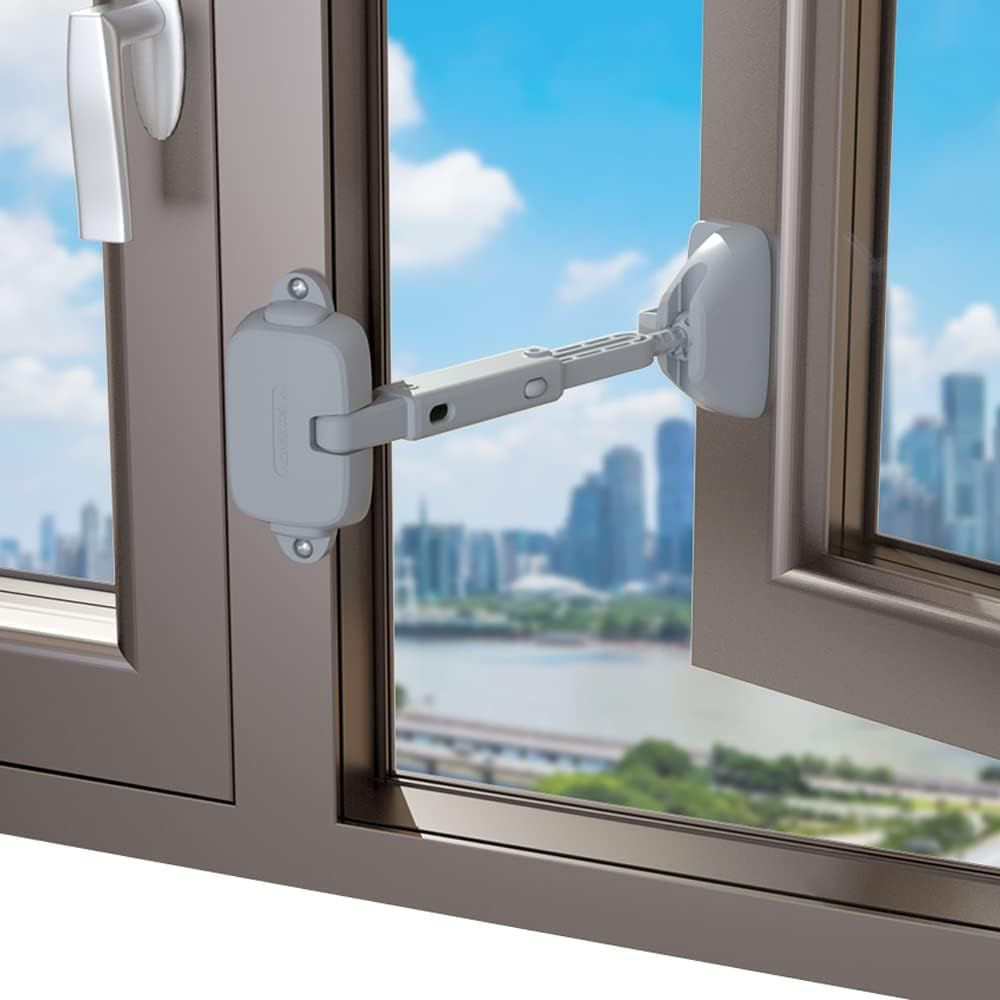
Cable restrictors: These use a strong cable to limit how far a window can open. They are commonly selected for their flexibility and relatively straightforward installation.
Friction stays: These mechanisms control window movement and can help hold a window in a particular position. They are suitable for certain window designs.
Lockable restrictors: These allow authorised adults to release the restriction when necessary. They are useful in properties where additional access control is required.
Integrated restriction systems: Some modern windows include restriction mechanisms within their existing hardware. These can provide a neat appearance and reduce the need for additional visible components.
Compare the available designs according to compatibility, reliability, ease of use, and maintenance requirements.
- Prioritise Material Quality and Durability
The quality of materials plays an important role in the long-term performance of window safety equipment.
Restrictors manufactured from stainless steel or other corrosion-resistant materials are often suitable for environments where moisture and changing temperatures are common.
Low-quality components may deteriorate over time, particularly when exposed to frequent use or harsh weather conditions.
When comparing products, look for strong cables, durable fittings, reliable locking mechanisms, and quality finishes. Product specifications and manufacturer information can help you understand whether a particular option is appropriate for your property.
Choosing durable materials may involve a higher initial investment, but reliable equipment can reduce replacement and maintenance costs over time.
- Check Security Features
Window safety and property security are closely connected. A suitable restriction system can help limit how far a window opens, making certain types of unauthorised access more difficult.
However, it is important to understand that a restrictor is not necessarily a replacement for a dedicated window lock.
For better protection, consider combining appropriate window locks with suitable restriction mechanisms. This approach can help address different security requirements.
Also consider the security of other window components, including handles, hinges, and frame fittings.
For example, an attractive upvc door knob may improve the appearance and usability of a door, but window security requires hardware specifically designed for the relevant window system.
Always check that the selected equipment provides the level of protection required for its intended location.
- Consider Ease of Installation
Installation is another important consideration when choosing window safety products.
Some devices are designed for straightforward fitting, while others require specialist knowledge and tools. Incorrect installation can affect their performance and potentially create additional safety risks.
Before purchasing, check the manufacturer’s installation instructions and confirm whether the product is suitable for your existing window frame.
If you are unfamiliar with window hardware, consider hiring a qualified installer. Professional installation can help ensure that the mechanism is correctly positioned, securely attached, and properly tested.
This is particularly important for windows located on upper floors or in areas frequently accessed by children.
- Evaluate Maintenance Requirements
Like other household fittings, window safety equipment needs occasional inspection and maintenance.
Over time, screws may loosen, cables may become worn, and moving components may collect dirt or debris.
A simple maintenance routine should include:
- Checking screws and mounting points for looseness.
- Inspecting cables and other components for visible damage.
- Testing locking mechanisms according to manufacturer instructions.
- Cleaning moving parts when necessary.
- Replacing damaged or unreliable components promptly.
Regular checks help maintain reliable performance and identify potential problems before they become serious.
- Think About Appearance and Property Design
Although safety should always come first, the appearance of window hardware can also influence your purchasing decision.
Modern restriction systems are available in different finishes and designs. Some products are discreet and blend with window frames, while others are more visible because of their construction.
Consider the colour, material, and overall appearance of your existing windows. Choosing compatible fittings can help maintain a consistent interior design.
The same principle applies when selecting complementary door hardware. For instance, a matching upvc door knob can contribute to a coordinated appearance throughout a property.
However, never compromise essential safety features simply to achieve a particular decorative finish.
- Compare Prices and Product Warranties
Price is an important factor, but the cheapest product is not always the most economical choice.
Compare different products based on their construction, compatibility, safety features, manufacturer reputation, and expected lifespan.
A reliable warranty can also provide additional confidence when purchasing window hardware. Check what the warranty covers, including manufacturing defects and component failures.
It is worth comparing several suppliers and reviewing product specifications before making a final decision.
Remember that installation expenses may also affect the overall budget, especially when upgrading multiple windows throughout a property.
- Choose Hardware That Complements Your Existing Fittings
A property often contains several types of window and door hardware that need to work together. Handles, hinges, locks, and restrictors should be compatible with their respective frames and operating mechanisms.
When upgrading your windows, inspect the condition of existing components. Worn handles or damaged locking systems may also need attention.
For example, replacing an outdated upvc door knob can improve door operation and appearance, while installing suitable window restriction equipment addresses a separate safety requirement.
Taking a complete approach to hardware improvements can help maintain the functionality and appearance of your property.
Why Choose UPVC Maintenance?
UPVC Maintenance provides a useful point of reference for property owners looking to improve the condition, functionality, and reliability of their UPVC windows and doors. From understanding suitable hardware options to maintaining existing fittings, having access to relevant maintenance information can make property improvement decisions easier.
Whether you are considering replacement components, improved window security, or general hardware upgrades, choosing appropriate products and maintaining them properly can help support the long-term performance of your property.
Conclusion
Choosing the right window safety equipment requires careful consideration of window types, opening distances, material quality, security features, and installation requirements. Property owners should prioritise reliable products that meet their specific safety needs while remaining practical for everyday use.
Regular maintenance, professional installation, and compatible hardware can further improve long-term performance. By evaluating these factors before purchasing, you can create a safer and more comfortable environment while protecting the functionality and appearance of your property.