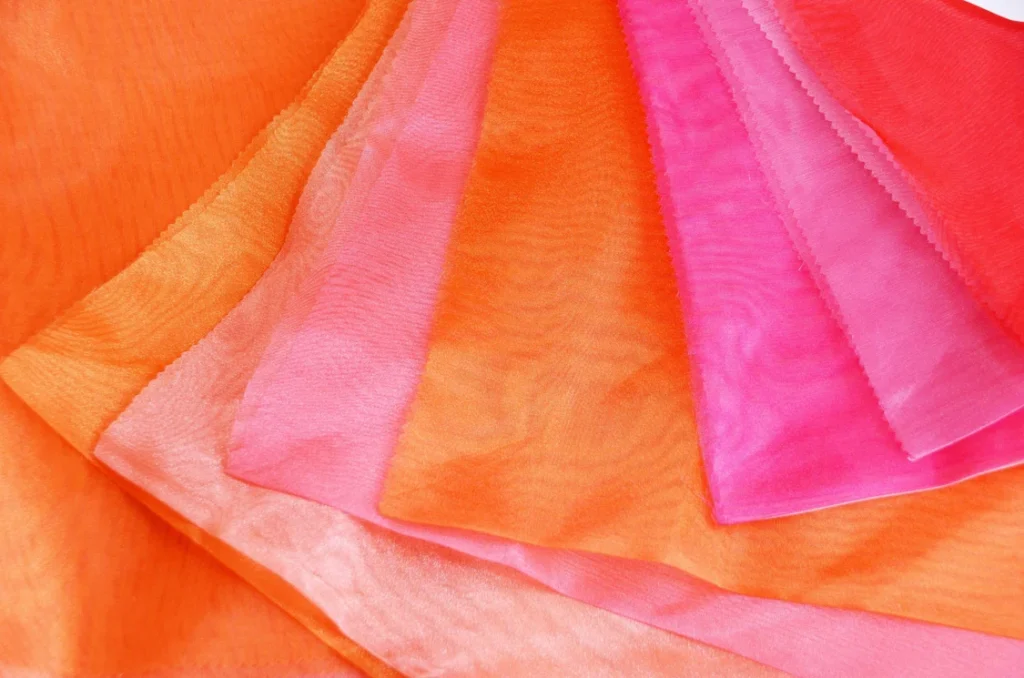
Fabric can change the whole feel of a space. Some materials create a light and airy look, while others add warmth and depth. Organza fabric and suede fabric are good examples of two very different options. Organza can bring softness and a sense of openness, while suede can create a richer and more grounded appearance. For event planners, decorators, and interior designers, knowing how these materials differ can make it easier to choose the right one for each project.
Why Does Fabric Choice Matter in Décor?
The right fabric can affect color, texture, lighting, and even how large a space feels. A lightweight material may make a room feel open. A heavier-looking material can make the same room feel more intimate.
This matters in both event and interior design. A wedding venue may need soft draping and romantic details. A hotel lounge may need warm seating and a more comfortable feel. Therefore, fabric should be chosen based on the mood and purpose of the space, not just its color.
How Can Organza Create a Light and Elegant Look?
Organza is known for its sheer and lightweight appearance. It can allow light to pass through while still adding a decorative layer to a space. This makes it useful for weddings, receptions, galas, and other events where a soft look is wanted. Event planners can use it for ceiling draping, backdrops, table accents, chair details, and decorative panels.
For example, layers of organza can be gathered across a ceiling to create a flowing effect. When paired with event lighting, the fabric can catch light and add more visual interest. It can also be layered over another fabric. This creates depth without making the décor feel too heavy.
Can Organza Work for Different Event Themes?
Yes. One of its biggest strengths is flexibility. White or ivory organza can work well for weddings and formal celebrations. Soft pastel shades can suit garden parties and romantic themes. Bold colors can also be used for modern events or cultural celebrations.
Because the material is lightweight, decorators can shape and layer it in different ways. It can be gathered, tied, draped, or used as a simple hanging panel. This gives event teams plenty of room to experiment without making the venue look crowded.
Where Does Suede Fit Into Interior Décor?
While organza creates a light appearance, suede fabric brings a very different feel. Its soft surface and rich texture can make furniture and interiors feel warmer and more comfortable.
It can be used for cushions, furniture covers, wall panels, headboards, seating, and other interior details. In a hotel lounge, for example, suede can help create a cozy setting. In a private dining space, it can add a more refined touch. It can also work well in offices, reception areas, and entertainment spaces. The material is especially useful when the goal is to add texture rather than shine.
Can Suede Be Used in Event Spaces?
Absolutely. Event décor is not limited to curtains and table settings. Seating and lounge areas can also play a major role in the overall design. Suede can be used on lounge furniture, cushions, ottomans, seating panels, and decorative surfaces. It can help create a comfortable area where guests can relax and socialize.
This can work particularly well at corporate events, luxury weddings, award nights, and evening celebrations. Instead of making the entire venue feel formal, soft textured furniture can create a more welcoming corner.
How Do Organza and Suede Create Different Moods?
The biggest difference between the two is the feeling they create.
Organza tends to feel light, delicate, and open. It can help soften strong architectural features and create a sense of movement. It is a natural fit for spaces where lightness and elegance are important.
Suede feels warmer, softer, and more grounded. It can make furniture and interior areas feel more inviting. For that reason, the two materials can even be used together. A venue might use organza for ceiling drapes while using suede on lounge seating. The result is a mix of softness, texture, and depth.
Can These Fabrics Work With Lighting?
Lighting can change how fabric looks. This is particularly noticeable at events. Organza can interact nicely with decorative lighting because its sheer surface allows light to pass through and around it. Soft uplighting can also highlight layers and folds.
Suede responds differently. Its textured surface tends to absorb more light, which can create a deeper and richer appearance. Event designers can use this difference to create contrast. Light, glowing drapes can sit behind darker textured furniture, for example. This can make the space feel more balanced.
How Can Interior Designers Use Both Materials?
Interior designers can use these materials in different areas depending on the desired result. Organza can work for decorative window treatments, lightweight room dividers, layered panels, and accent details. It can help soften a room without making it feel closed in.
Suede can be better suited to furniture, cushions, wall accents, and other areas where texture and comfort are important. A designer might use sheer fabric near windows and textured upholstery on seating. This combination can give a room both openness and warmth.
What Should Designers Consider Before Choosing?
Before selecting either material, designers should think about how the fabric will be used.
For organza, consider transparency, color, width, layering, and how the fabric will interact with lighting. The installation method also matters because lightweight fabric may need careful handling.
For suede fabric, consider the texture, weight, color, cleaning needs, and level of use. Seating and furniture require materials that can handle regular contact.
It is also wise to request samples. A fabric can look very different under venue lighting or beside other materials.
Which Fabric Is Better for Event and Interior Décor?
Neither is simply better. They serve different purposes. Organza fabric is a strong choice when the goal is to create a light, flowing, and elegant appearance. It works well for draping, backdrops, ceiling décor, and decorative details.
Suede fabric is more suited to designs that need warmth, texture, and a comfortable feel. It can add depth to furniture, lounge areas, and interior spaces.
The best approach is to match the material with the mood and function of the project. In some designs, using both can be even more effective. One brings lightness, while the other adds depth. Together, they can create a balanced setting that feels polished without looking overdone.