Healthcare facilities handle a constant flow of patients, visitors, doctors, and administrative staff. Sharing accurate information with everyone can be challenging, especially in busy hospitals and clinics. Traditional notice boards and printed posters may not always provide the flexibility required to communicate changing information. This is why digital signage solutions are becoming a useful communication tool for modern healthcare environments.
Digital signage uses electronic displays to present information such as appointment updates, department directions, health awareness messages, service details, and important announcements. With strategically placed screens, healthcare providers can make information easier to access and create a more organised experience for patients and visitors.
What Are Digital Signage Solutions for Healthcare?
Digital signage solutions for healthcare are display-based communication systems used in hospitals, clinics, medical centres, diagnostic laboratories, and other healthcare facilities.
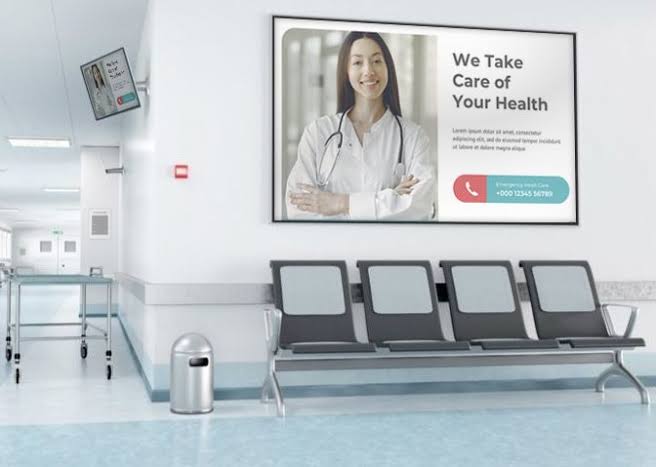
These systems use digital screens to share relevant information with patients, visitors, and staff. Depending on the facility’s requirements, displays can be installed in reception areas, waiting rooms, corridors, entrances, pharmacies, and other common spaces.
Healthcare facilities can use medical digital signage to communicate important messages in a clear and visually engaging format. Content may include hospital announcements, department information, health education, appointment guidance, visiting hours, and emergency instructions.
How Can Digital Signage Improve Healthcare Communication?
Digital displays can support healthcare communication in several practical ways.
1. Provide Clear Wayfinding Information
Large hospitals often have multiple departments, consultation rooms, laboratories, pharmacies, and diagnostic facilities. First-time visitors may find it difficult to locate the right department.
Digital signage can display directions, floor information, department locations, and navigation instructions. Placing screens at entrances, reception areas, and key junctions can help visitors understand where they need to go.
2. Share Important Health Awareness Messages
Hospitals and clinics regularly communicate information about preventive healthcare, hygiene, vaccination, seasonal illnesses, and general wellness.
Digital displays can present this information through images, short videos, and easy-to-read messages. Healthcare teams can update educational content when awareness campaigns or seasonal health priorities change.
3. Improve Patient Waiting Experiences
Waiting areas are important communication points within healthcare facilities. Instead of leaving patients without useful information, hospitals can use digital screens to display health tips, service information, general announcements, and relevant updates.
This gives visitors access to useful information while they wait and helps healthcare facilities communicate more effectively.
4. Display Appointment and Service Updates
Healthcare facilities frequently need to communicate changes to schedules, consultation availability, service timings, and department operations.
Digital signage can help share these updates in visible locations. Depending on the system and its integration capabilities, displays may also support information from scheduling or other facility-management systems.
Any patient-specific information should be handled carefully, with appropriate privacy and security safeguards.
5. Strengthen Hospital Branding and Professional Presentation
A well-designed digital display setup can create a more modern and organised appearance. Hospitals can use screens to present their logo, services, department information, patient guidance, and institutional announcements.
Consistent visual communication can help maintain a professional presentation across different areas of the facility.
Where Can Medical Digital Signage Be Installed?
The placement of screens should depend on the type of information being communicated and the people who need to see it.
Some common installation areas include:
- Hospital reception: Display welcome messages, registration instructions, and general announcements.
- Waiting rooms: Share health awareness content, service information, and general updates.
- Hospital corridors: Provide department directions and floor information.
- Clinics: Communicate consultation procedures, available services, and health education.
- Diagnostic centres: Display service details, preparation instructions, and operational updates.
- Pharmacies: Share general service information, operating hours, and announcements.
- Emergency departments: Present clear directions and important safety instructions without obstructing urgent communication.
The screen size, brightness, placement, and content should be selected according to the viewing environment and communication purpose.
What Should Healthcare Facilities Consider Before Choosing Digital Signage?
Selecting the right display system requires more than choosing a screen. Healthcare facilities should assess their communication needs and the practical requirements of the installation.
Consider these factors:
Display size and visibility: Choose screens that can be read comfortably from the expected viewing distance.
Installation environment: Consider lighting, available wall space, mounting options, and foot traffic.
Content management: Check how easily authorised staff can update, schedule, and manage display content.
Privacy and security: Avoid displaying confidential patient information publicly. Follow applicable healthcare privacy requirements and use appropriate access controls.
Scalability: Consider whether the system can support additional screens or locations as the facility grows.
Technical assistance: Ask about installation support, maintenance, troubleshooting, and after-sales service.
A clear assessment of these requirements can help healthcare providers select a practical solution for their facility.
Why Choose TheLocAds for Healthcare Digital Signage?
Healthcare facilities need communication tools that suit their environment and help deliver information clearly. TheLocAds offers digital signage solutions for businesses and organisations looking to improve visual communication through digital displays.
For hospitals, clinics, and medical centres, the right display setup can help present health awareness messages, directions, announcements, and service information in an accessible format.
If you are planning to introduce medical digital signage, start by identifying the areas where information needs to be displayed, the type of content required, and the number of screens needed.
Frequently Asked Questions
1. What are digital signage solutions used for in hospitals?
Digital signage solutions are used in hospitals to display department directions, health awareness messages, appointment information, service details, visiting hours, and general announcements. They help communicate information through visible electronic screens.
2. How does medical digital signage improve patient experience?
Medical digital signage can make important information easier to find. It can help patients understand directions, learn about available services, view general updates, and access health education while visiting a healthcare facility.
3. Where should digital signage screens be installed in a hospital?
Common locations include reception areas, waiting rooms, corridors, entrances, diagnostic centres, pharmacies, and other shared spaces. Placement should depend on visibility, visitor movement, and the type of information being communicated.
4. Can healthcare facilities update digital signage content?
Yes. Many digital signage systems support content management software that allows authorised users to update messages, schedule content, and manage connected displays. Available features depend on the selected system.
5. Are digital signage solutions suitable for small clinics?
Yes. Small clinics can use digital displays to share service information, consultation guidance, health awareness messages, and announcements. The display configuration can be selected according to the clinic’s space and requirements.
6. How can I choose a digital signage provider for my hospital?
Compare providers based on display options, installation requirements, content management features, scalability, technical support, and pricing. Share your facility’s requirements before requesting a quotation.
Conclusion
Effective communication is an important part of a well-organised healthcare environment. Digital signage solutions can help hospitals, clinics, and medical centres share directions, health awareness messages, service information, and general announcements through modern display technology.
By selecting suitable screens, planning their placement, and maintaining relevant content, healthcare facilities can make information more accessible to patients and visitors.
If you are planning to upgrade communication within your hospital or clinic, explore medical digital signage options from TheLocAds and take the next step towards a more effective digital communication setup.