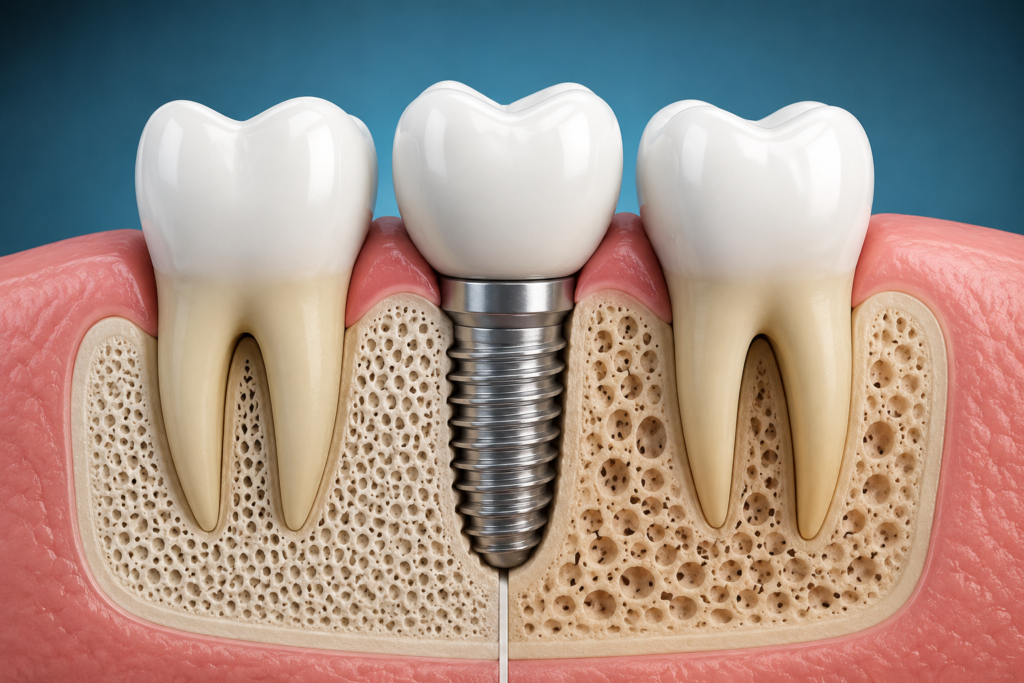
When people think about dental implants, they often focus on the visible result, a replacement tooth that looks and functions like a natural one.
However, one of the most important factors in long-term implant success is something patients cannot see: bone density.
Dental implants rely on the jawbone for stability and support. Just as a building needs a strong foundation, an implant requires sufficient healthy bone to remain secure over time.
If bone density is inadequate, the implant may not achieve the stability needed for long-term function.
For patients considering dental implants Fuquay Varina, understanding the role of bone density can help explain why dentists perform detailed evaluations before recommending implant treatment.
What Is Bone Density?
Bone density refers to the amount and quality of bone tissue present in the jaw.
Healthy jawbone provides the strength necessary to support natural teeth and dental implants. When bone is dense and strong, it can better integrate with the implant and provide long-term stability.
Bone density varies from person to person and can be influenced by factors such as age, oral health history, tooth loss, and overall health.
Why Bone Density Matters for Dental Implants?
Dental implants are designed to fuse directly with the jawbone through a natural process called osseointegration.
During healing, the surrounding bone grows around the implant surface, creating a secure connection that allows the implant to function like a natural tooth root.
Adequate bone density helps:
- Improve implant stability
- Support proper healing
- Increase long-term success rates
- Reduce the risk of implant complications
- Help withstand normal chewing forces
Without sufficient bone support, achieving predictable implant outcomes can become more challenging.
What Causes Bone Loss in the Jaw?
One of the most common causes of reduced bone density is tooth loss.
When a tooth is missing, the jawbone in that area no longer receives stimulation from chewing forces. Over time, the bone may begin to shrink or deteriorate.
Other factors that may contribute to bone loss include:
- Gum disease
- Dental infections
- Trauma or injury
- Long-term missing teeth
- Certain medical conditions
- Smoking
This is one reason dentists often encourage patients to address missing teeth sooner rather than later.
How Dentists Evaluate Bone Density
Before recommending implant treatment, dentists perform a thorough evaluation of the jawbone.
Modern imaging technology allows dental professionals to assess:
- Bone volume
- Bone quality
- Bone thickness
- Implant placement options
- Overall oral health conditions
These assessments help determine whether sufficient bone exists to support an implant and whether additional procedures may be beneficial before treatment.
For patients exploring dental implants Fuquay Varina, this planning stage is an important part of creating predictable treatment outcomes.
Can Dental Implants Still Be Possible With Low Bone Density?
In many cases, yes.
Advances in modern dentistry have made implant treatment possible for many patients who previously may not have been considered candidates.
Depending on the situation, dentists may recommend procedures designed to improve the amount of available bone before implant placement.
Every patient’s needs are different, which is why a personalized evaluation is essential.
The goal is always to create the strongest possible foundation for long-term implant success.
The Relationship Between Bone Density and Healing
Bone density doesn’t just affect implant placement, it also plays an important role during healing.
Denser bone often provides greater initial stability, which can support successful integration between the implant and jawbone.
Patients with lower bone density may require additional healing time or modified treatment approaches to ensure optimal results.
This is why dentists carefully evaluate bone quality as part of the overall treatment planning process.
Long-Term Implant Stability Depends on Healthy Bone
Successful implant treatment doesn’t end once the implant is placed.
Maintaining healthy bone remains important throughout the life of the implant.
Good oral hygiene, routine dental visits, and proper maintenance help support the health of the surrounding gums and bone structure.
Patients who prioritize ongoing dental care are often better positioned to protect their investment and enjoy long-term implant success.
Other Factors That Influence Implant Success
While bone density is a major factor, it is not the only one.
Dentists also consider:
- Overall oral health
- Gum condition
- Medical history
- Lifestyle habits
- Smoking status
- Oral hygiene practices
A comprehensive evaluation helps ensure all factors are considered before developing a treatment plan.
The most successful outcomes occur when bone health, oral health, and patient commitment work together.
Why Early Evaluation Is Important?
Many patients assume they need to wait before exploring options for missing teeth.
In reality, early evaluation often provides more treatment flexibility.
The longer a tooth remains missing, the greater the potential for bone loss to occur. Addressing missing teeth sooner may help preserve existing bone and simplify future treatment options.
Even if you’ve been missing teeth for some time, a consultation can help determine what solutions may be available.
Conclusion
Bone density plays a critical role in the success of dental implants because it provides the foundation needed for stability, healing, and long-term function.
While bone loss can occur for various reasons, modern dental techniques and careful treatment planning allow many patients to successfully restore their smiles. Understanding the importance of bone health helps patients make informed decisions about tooth replacement and long-term oral wellness.
Novel Dental is committed to helping patients achieve healthy, confident smiles through personalized dental care and comprehensive treatment planning.
Our dental team takes the time to evaluate each patient’s unique needs and explain available options in a comfortable, patient-focused environment.
If you’re exploring solutions related to dental implants Fuquay Varina, schedule a consultation with Novel Dental to learn more about your oral health and the best path toward restoring your smile.