Choosing the perfect fabric is one of the most important steps in creating a beautiful wedding dress. From delicate lace and luxurious silk to embroidered tulle and elegant satin, every material contributes to the appearance, comfort and overall design of a bridal gown. Whether you are a professional bridal designer, an independent dressmaker or a bride planning a custom wedding dress, selecting the right materials can make a remarkable difference. If you are searching for high end designer bridal fabrics Australia, finding a specialist supplier with premium textiles and distinctive designs can help bring your creative vision to life.
Bridal fashion is closely connected with craftsmanship, attention to detail and personal expression. Every wedding dress tells a story, and the fabric plays an important role in shaping that story. Some brides prefer a timeless gown featuring delicate lace, while others choose modern silhouettes with smooth silk, structured satin or intricate embellishments.
Australia has a diverse bridal and fashion industry, with designers and dressmakers creating everything from traditional wedding gowns to contemporary couture-inspired designs. Access to quality bridal fabrics allows these professionals to explore different textures, colours and construction techniques.
Whether you are creating a romantic lace wedding dress, a sophisticated silk gown or a dramatic statement design, the right fabric provides the foundation for an exceptional result.
In this guide, we explore premium bridal fabrics, their characteristics, how to choose suitable materials and what to consider when purchasing designer wedding dress fabrics in Australia.
What Are High-End Designer Bridal Fabrics?
High-end designer bridal fabrics are premium textiles selected for their appearance, construction, texture and suitability for creating sophisticated wedding garments.
Unlike basic dressmaking materials, luxury bridal fabrics often feature distinctive finishes, intricate embroidery, delicate patterns or carefully developed textures.
These materials are used by bridal designers and professional dressmakers to create wedding gowns with individual character and refined details.
Popular characteristics include:
- Fine and luxurious fibre compositions.
- Detailed embroidery and decorative patterns.
- Elegant draping and fabric movement.
- Premium lace and tulle constructions.
- Intricate beading and embellishments.
- Distinctive textures and surface finishes.
- Materials suitable for structured and flowing silhouettes.
When exploring high end designer bridal fabrics Australia, it is important to consider more than the fabric’s visual appeal. Weight, drape, transparency, durability and sewing requirements all influence how a finished wedding dress will look and feel.
Why Choose High-End Designer Bridal Fabrics Australia?
The fabric used in a wedding dress influences almost every aspect of its final appearance.
Choosing premium materials can provide designers with greater creative flexibility and help them achieve the desired finish.
Create Distinctive Wedding Dress Designs
Every bride has individual preferences when it comes to wedding dress styles.
Some prefer classic silhouettes with delicate decorative details, while others want contemporary gowns featuring unusual textures and dramatic shapes.
Premium bridal fabrics provide opportunities to create different looks without relying on standard materials.
For example, embroidered lace can introduce romantic detailing, while structured mikado can support a modern architectural silhouette.
Having access to different fabric styles allows designers to develop garments that reflect individual preferences.
Enjoy Elegant Textures and Finishes
Texture plays an important role in bridal fashion.
A smooth silk surface creates a different appearance from floral lace, embroidered mesh or textured jacquard.
Combining different materials can also add depth to a wedding dress.
A gown might feature a structured satin base, delicate lace overlays and soft tulle layers to create a balanced design.
These combinations allow designers to experiment with visual contrast and garment construction.
Support Professional Dressmaking
Quality fabrics can make a difference during the garment-making process.
Different materials behave differently when cut, pinned, stitched and shaped.
Selecting textiles appropriate for the design helps dressmakers achieve the intended structure and finish.
However, premium fabrics may require specialised handling, so choosing materials that suit the dressmaker’s techniques is equally important.
Explore Unique Bridal Collections
Bridal designers developing their own collections often look for fabrics that help distinguish their work.
Exclusive patterns, decorative embroidery and distinctive textures can become defining elements of a designer’s style.
A specialist bridal fabric supplier can offer access to materials that support original design concepts.
Popular High-End Designer Bridal Fabrics for Wedding Dresses
Different fabrics create different effects, making it important to understand their characteristics before selecting materials for a bridal gown.
Luxury Silk Fabrics
Silk is one of the most recognised materials in luxury bridal fashion.
It is valued for its smooth texture, natural lustre and elegant drape.
Different silk varieties can be used for different wedding dress styles.
Silk Satin
Silk satin features a smooth surface with an attractive sheen.
It is often used for sophisticated wedding gowns, fitted silhouettes and elegant bridal skirts.
Its appearance works particularly well in designs where the quality of the fabric is intended to stand out.
Silk Chiffon
Silk chiffon is lightweight and flowing.
It can be used for soft overlays, sleeves, draped details and layered skirts.
Its delicate movement makes it suitable for romantic and understated bridal designs.
Silk Organza
Silk organza offers more structure than chiffon while maintaining a lightweight appearance.
It is useful for creating volume, decorative layers and statement sleeves.
When choosing silk, consider the fabric weight, transparency, drape and care requirements.
Luxury Bridal Lace
Lace is one of the most popular materials used in wedding dress design.
It can introduce intricate patterns, texture and decorative details without requiring an entirely embellished garment.
Different lace varieties create different visual effects.
Chantilly Lace
Chantilly lace is recognised for its delicate patterns and fine construction.
It is commonly used for romantic wedding dresses, sleeves, overlays and decorative bodice details.
Guipure Lace
Guipure lace generally features more prominent motifs connected by decorative threads rather than a fine net background.
Its stronger visual presence makes it suitable for statement bridal designs.
Corded Lace
Corded lace features raised outlines that give the pattern additional definition.
It can add texture and dimension to wedding dresses, particularly when used for bodices and decorative overlays.
Embroidered Lace
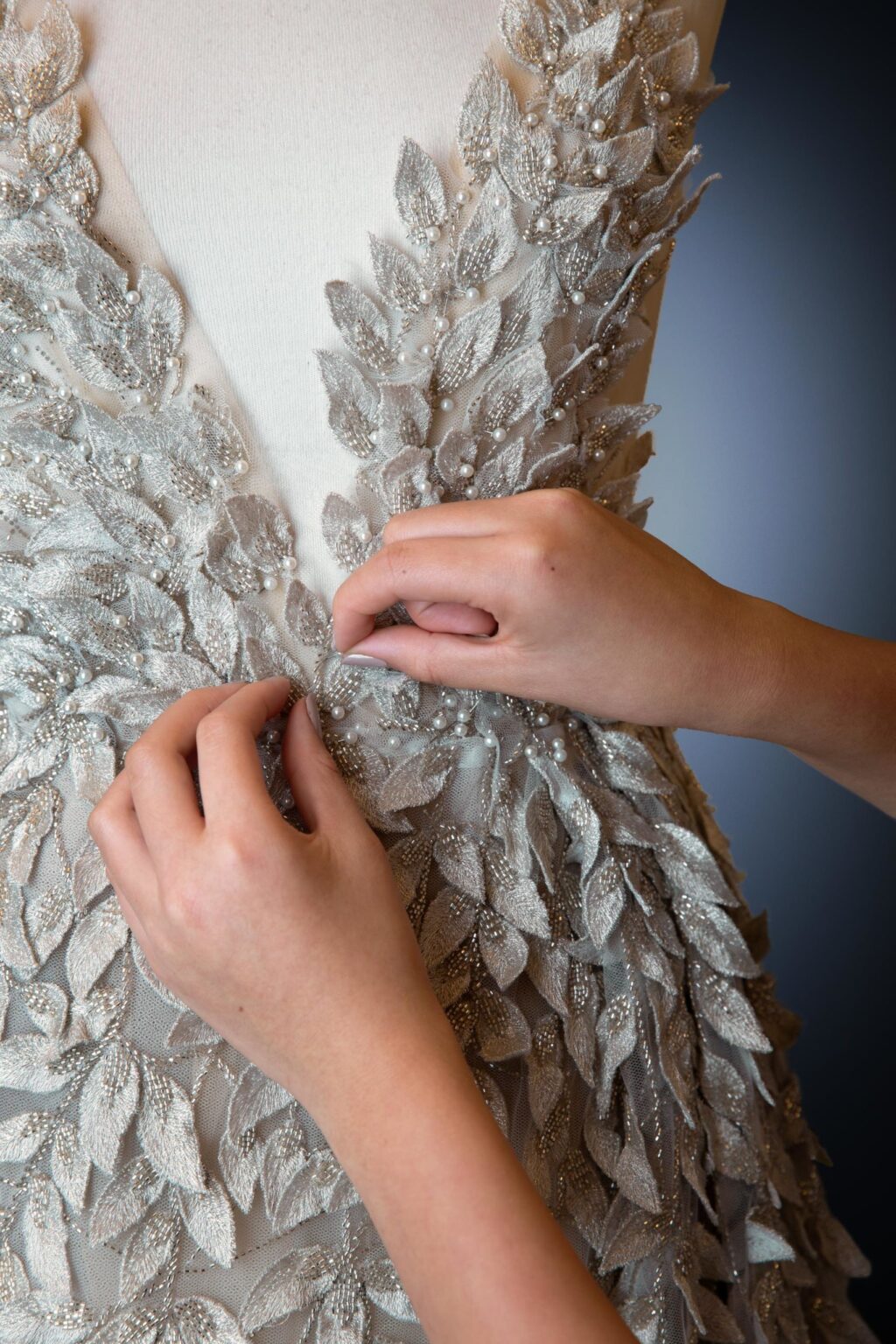
Embroidered lace may feature floral patterns, intricate stitching, beads or sequins.
It is a popular choice for brides who want detailed decoration and a distinctive finish.
Premium Bridal Tulle
Tulle is a lightweight net fabric widely used in wedding dress construction.
It is particularly useful for creating volume, soft layers and transparent decorative details.
Different types of tulle offer different levels of softness and structure.
Soft tulle can create flowing skirts and delicate overlays, while firmer varieties can provide additional volume.
Illusion tulle is useful for creating subtle transparent areas around necklines, sleeves and bodices.
Some designer tulle fabrics also feature embroidery, crystals or decorative patterns.
High-Quality Bridal Satin
Satin remains a popular option for classic and contemporary wedding dresses.
Its smooth surface and attractive sheen create an elegant appearance suitable for formal bridal designs.
Different satin varieties are available in different weights and levels of stiffness.
Heavier satin can provide more structure, while lighter options may offer softer movement.
Bridal satin is commonly used for fitted gowns, flowing skirts, bodices and structured designs.
Designer Mikado Fabric
Mikado is a structured fabric often associated with sophisticated bridal gowns.
It offers a firm hand and a refined surface, making it suitable for wedding dresses that require shape and definition.
Designers frequently use mikado for ball gowns, fitted bodices, dramatic skirts and modern minimalist silhouettes.
Its structure can help maintain clean lines and carefully defined shapes.
Beaded and Embellished Bridal Fabrics
Embellished fabrics can add decorative detail to wedding dresses.
These materials may feature:
- Hand-applied beads.
- Sequins.
- Crystal details.
- Decorative embroidery.
- Pearl embellishments.
- Intricate floral patterns.
They are often used for statement bodices, sleeves, overlays and full-length gowns.
However, heavily embellished materials can be heavier than standard textiles and may require additional garment support.
Choosing Bridal Fabrics for Different Wedding Dress Styles
The best fabric depends on the silhouette, overall design and desired appearance of the wedding dress.
Understanding how different textiles behave can help designers and brides make better decisions.
A-Line Wedding Dresses
A-line wedding dresses are popular because their silhouette suits many different body shapes and design preferences.
Silk satin, mikado, organza and lace can all work well for this style.
A structured fabric may help maintain the skirt’s shape, while lace overlays can introduce additional texture.
Ball Gown Wedding Dresses
Ball gowns typically feature fitted bodices and fuller skirts.
Mikado, structured satin, organza and layered tulle are useful options for creating volume and maintaining the intended silhouette.
Some designs combine a structured base with softer overlays for additional dimension.
Mermaid Wedding Dresses
Mermaid gowns follow the body’s shape before flaring out towards the lower skirt.
These designs often require fabrics that provide suitable structure and fit.
Bridal satin, crepe and carefully selected lace can work well, depending on the construction.
The material should support the silhouette while allowing comfortable movement.
Bohemian Wedding Dresses
Bohemian bridal styles often feature softer shapes, delicate textures and relaxed details.
Chantilly lace, embroidered tulle, silk chiffon and lightweight organza can complement these designs.
These fabrics create movement and texture without making the dress appear overly structured.
Minimalist Wedding Dresses
Minimalist bridal fashion focuses on clean silhouettes, refined construction and understated details.
Silk satin, mikado and high-quality crepe are popular choices.
Because minimalist gowns often feature fewer decorative elements, fabric quality and garment construction become particularly important.
How to Choose the Best Bridal Fabric Supplier in Australia
Finding a reliable supplier is an important part of the bridal design process.
The right supplier should offer suitable materials, clear product information and helpful customer service.
Explore the Fabric Collection
Start by reviewing the supplier’s available bridal fabrics.
Look for a selection that includes silk, lace, satin, tulle, organza, mikado and embellished textiles.
A varied collection makes it easier to find materials for different wedding dress styles.
Check whether the supplier offers different colours, patterns, weights and fabric widths.
Check Fabric Composition
Fabric composition influences appearance, comfort, durability and handling.
For example, natural silk and synthetic satin may have different textures, draping characteristics and care requirements.
Always review product descriptions to understand what the material contains.
If composition details are unclear, contact the supplier before purchasing.
Request Fabric Samples
Ordering samples is particularly useful when selecting premium bridal materials.
Product photographs may not accurately represent the fabric’s actual colour, texture or weight.
Samples allow designers and dressmakers to examine the textile in person.
This is especially important when matching fabrics for a custom wedding dress or combining multiple materials.
Compare Quality and Pricing
Premium bridal fabrics can vary significantly in price.
Factors influencing cost include fibre composition, manufacturing techniques, embroidery, embellishments and fabric origin.
Rather than choosing materials based only on price, consider whether they are suitable for the intended garment.
A detailed quotation can also help when budgeting for custom bridal projects.
Consider Customer Service
Good supplier communication is valuable when purchasing specialised materials.
Ask whether the supplier can provide information about fabric width, composition, care instructions and suitable applications.
Clear product information helps reduce purchasing mistakes and makes the selection process easier.
Buying High-End Designer Bridal Fabrics Online in Australia
Online shopping provides convenience for bridal designers, dressmakers and sewing enthusiasts across Australia.
Instead of visiting several physical stores, customers can browse different textile collections and compare options from home.
However, purchasing luxury bridal fabrics online requires careful consideration.
Read Product Descriptions Carefully
Before ordering, review the product specifications.
Important details include fabric composition, width, weight, colour, embellishments and care requirements.
These details help determine whether a material is suitable for your wedding dress design.
Examine Product Photography
Product images can provide useful information about colour, pattern and texture.
Look for close-up photographs and images showing how the fabric falls or appears in different lighting.
Keep in mind that screen settings can influence colour appearance.
If exact colour matching is important, request a physical sample before purchasing larger quantities.
Review Shipping and Return Policies
Before placing an order, understand the supplier’s shipping arrangements and return conditions.
Check estimated delivery times, shipping costs and any restrictions on cut fabric or customised orders.
This is particularly important when working towards a wedding date or bridal collection launch.
Calculate Fabric Requirements
The amount of fabric required depends on the dress pattern, silhouette, fabric width and construction details.
A fitted gown may require less material than a full ball gown with several layers.
Additional fabric may also be needed for pattern matching, decorative details and cutting adjustments.
Consult your dressmaker or pattern specialist before placing a large order.
Tips for Working With Luxury Bridal Fabrics
Premium bridal fabrics often require more careful handling than everyday sewing textiles.
Using appropriate techniques can help protect their appearance and improve the finished garment.
Test Sewing Techniques First
Test your needle, thread and stitch settings on a small fabric sample before beginning the main garment.
This helps identify potential issues with stitching tension and fabric movement.
Use Suitable Sewing Equipment
Delicate silk, fine lace and embellished materials may require specialised needles and sewing techniques.
Choose equipment according to the fabric’s composition and construction.
Handle Embellishments Carefully
Beaded and sequinned fabrics can be difficult to cut and sew.
Check the placement of decorative details and avoid damaging important patterns during construction.
Store Materials Properly
Keep bridal fabrics away from direct sunlight, excessive moisture and unnecessary friction.
Delicate textiles should be stored in suitable protective conditions.
Follow Fabric Care Instructions
Different fabrics require different cleaning methods.
Silk, lace and embellished textiles may need specialised care.
Always check the supplier’s instructions before washing or storing the finished garment.
Why Fabric Quality Matters in Designer Bridal Fashion
The quality of a bridal fabric influences how a wedding dress looks, feels and performs throughout the occasion.
A beautifully designed gown may not achieve its intended appearance if the chosen material lacks the appropriate structure, weight or drape.
For example, a flowing wedding dress needs fabric that moves naturally, while a structured bodice requires materials capable of maintaining its shape.
Decorative details also contribute to the final appearance.
Embroidery, lace patterns, beading and carefully selected textures can give a wedding dress individual character.
Choosing suitable materials allows designers to translate their creative ideas into finished garments with greater precision.
This is why sourcing high end designer bridal fabrics Australia is an important consideration for professional bridal designers and dressmakers.
Frequently Asked Questions About High End Designer Bridal Fabrics Australia
1. What Are High End Designer Bridal Fabrics?
High-end designer bridal fabrics are premium textiles used to create luxury wedding dresses and bridal garments.
They may include silk, embroidered lace, tulle, satin, organza, mikado and embellished fabrics.
These materials are selected for their appearance, texture, construction and suitability for different bridal designs.
2. Which Fabric Is Best for a Luxury Wedding Dress?
The best fabric depends on the desired silhouette and overall design.
Silk satin offers an elegant finish, lace provides decorative detail, tulle creates soft layers and mikado helps maintain structured shapes.
Many designer wedding dresses combine several materials to achieve the desired result.
3. Where Can I Buy Designer Bridal Fabrics in Australia?
Designer bridal fabrics can be purchased through specialist fabric retailers, bridal textile suppliers and online fabric stores operating in Australia.
Compare their collections, product specifications, sample availability and delivery arrangements before choosing a supplier.
4. Is Silk a Good Choice for Bridal Dresses?
Yes. Silk is a popular luxury material for bridal fashion because of its smooth texture, natural lustre and elegant drape.
Different silk varieties are suitable for different designs, including flowing gowns, structured dresses and decorative overlays.
5. What Is the Difference Between Chantilly Lace and Guipure Lace?
Chantilly lace is generally fine and delicate, featuring intricate patterns on a net background.
Guipure lace usually has more prominent motifs connected by decorative threads.
Both are used in bridal fashion, but they create different visual effects.
6. Can I Order Bridal Fabric Samples in Australia?
Many specialist fabric suppliers offer samples, although availability depends on the individual retailer.
Samples allow you to examine the actual colour, texture, weight and quality before purchasing larger quantities.
This is particularly useful for custom wedding dresses.
7. How Much Do High-End Bridal Fabrics Cost in Australia?
Prices depend on fabric composition, quality, embroidery, embellishments and supplier.
Luxury silk, detailed lace and heavily decorated textiles may cost more than basic dressmaking materials.
Request current pricing and check minimum order requirements before purchasing.
8. Which Bridal Fabric Is Best for a Ball Gown?
Mikado, structured satin, organza and layered tulle are popular options for ball gowns.
These materials can help create volume and maintain the intended skirt shape.
The best choice depends on the desired silhouette and construction.
9. Are Designer Bridal Fabrics Suitable for Professional Dressmakers?
Yes. Professional dressmakers frequently use premium bridal fabrics to create custom wedding dresses and formal garments.
However, some materials require specialised handling, appropriate sewing equipment and experience with delicate textiles.
10. How Do I Choose the Right Bridal Fabric Supplier?
Look for a supplier with a suitable fabric collection, clear product specifications, sample availability and reliable customer service.
Consider fabric composition, quality, pricing, delivery arrangements and return conditions before placing an order.
Final Thoughts
Choosing the right fabric is one of the most important decisions when creating a beautiful wedding dress. From luxurious silk and delicate lace to structured mikado, embroidered tulle and embellished textiles, every material offers different opportunities for bridal design.
Finding a reliable supplier of high end designer bridal fabrics Australia can help brides, designers and professional dressmakers access materials that support their creative requirements.
Before purchasing, consider the wedding dress silhouette, fabric composition, weight, drape and construction requirements. Reviewing product information and requesting samples can also help ensure that the selected materials suit the finished design.
Whether you are creating a romantic lace gown, a minimalist silk dress or an elaborate couture-inspired wedding dress, quality fabric provides the foundation for exceptional results.
With thoughtful material selection and careful craftsmanship, designers can create bridal garments that reflect individual style, elegance and attention to detail.