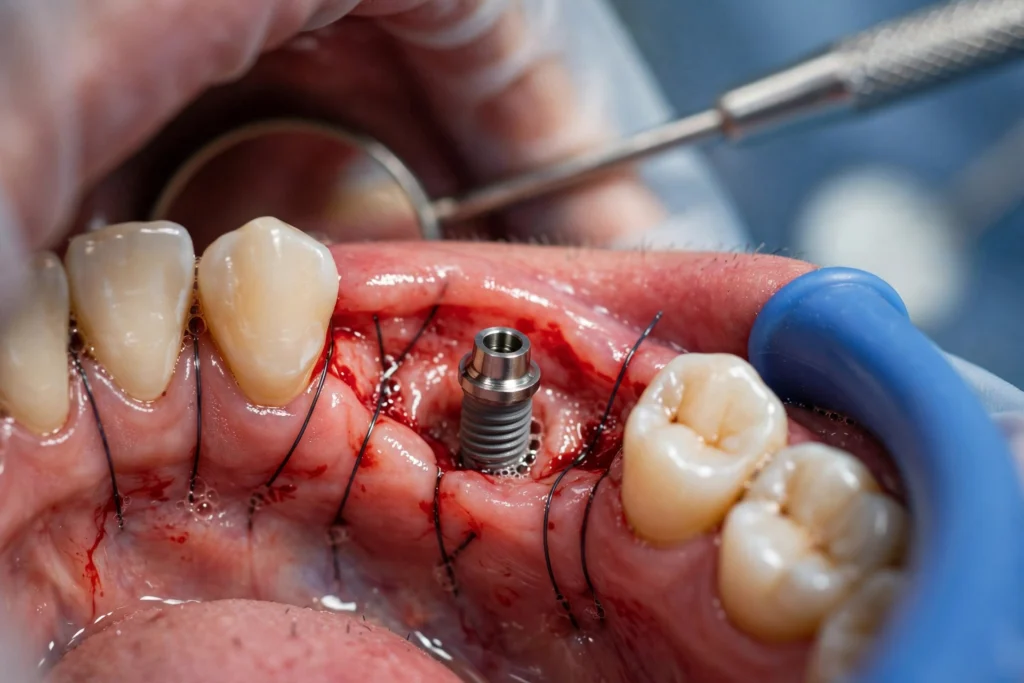
The global Dental Implant Market is experiencing robust expansion, projected to grow from US$ 4.75 billion in 2025 to US$ 8.99 billion by 2034. According to industry statistics from Renub Research, this represents a steady Compound Annual Growth Rate (CAGR) of 7.35% over the forecast period from 2026 to 2034.
This growth is largely propelled by the increasing prevalence of dental disorders, a surging global elderly population, rising demand for cosmetic dentistry, and advancements in digital implantology.
Request Sample Report: https://www.renub.com/request-sample-page.php?gturl=china-snack-food-market-p.php
Market Overview & Clinical Value
A dental implant is a biocompatible medical device surgically positioned into the jawbone to serve as an artificial tooth root. Over time, the implant integrates with the surrounding bone tissue through a natural process called osseointegration. Once anchored, a crown, bridge, or denture is attached, fully restoring both oral function and facial aesthetics.
+-----------------------------------------------------------------+
|                    GLOBAL DENTAL IMPLANT MARKET                 |
+-----------------------------------------------------------------+
| 2025 Market Size  : US$ 4.75 Billion                            |
| 2034 Forecast     : US$ 8.99 Billion                            |
| Compound Growth   : 7.35% CAGR (2026–2034)                      |
+-----------------------------------------------------------------+
Key Functional Benefits
-
Permanent Tooth Replacement: Unlike traditional dentures, implants prevent long-term jawbone resorption.
-
Natural Aesthetics: Implants match the look, feel, and function of natural teeth.
-
High Success Rates: Technological innovations like guided surgery and CAD/CAM prosthetics ensure high procedural predictability.
Primary Growth Drivers
1. Increasing Prevalence of Dental Disorders and Geriatric Population
Tooth loss and severe periodontal diseases are rising globally due to aging, poor oral hygiene, smoking, and dietary shifts. According to the World Health Organization (WHO), the global population aged 60 and above is projected to reach 1.4 billion by 2030 and double to 2.1 billion by 2050. Because older adults are significantly more prone to edentulism (complete or partial tooth loss), this demographic shift creates a sustained demand for permanent restorative solutions.
2. Rising Demand for Cosmetic Dentistry and Aesthetic Appeal
Increasing self-awareness and the influence of social media have significantly expanded the market for aesthetic dental treatments. Younger demographics are progressively seeking cosmetic treatments to enhance their smile and boost confidence.
-
Industry Milestone: In January 2026, Bespoke Dental expanded its specialized cosmetic dentistry operations in Lutz, Florida, providing personalized aesthetic restorations and digital smile design.
3. Technological Advancements & Digital Workflows
Innovations in 3D cone-beam computed tomography (CBCT) imaging, computer-aided design and manufacturing (CAD/CAM), and 3D-printed surgical guides have significantly reduced procedure times and recovery periods.
-
Industry Milestone: In April 2025, Align Technology introduced its Invisalign System with mandibular advancement and occlusal blocks to address Class II skeletal and dental corrections in North America.
Key Market Challenges
-
High Procedural Costs & Limited Insurance Coverage: Full dental implant procedures—encompassing diagnostic imaging, surgical placement, and custom prosthetics—remain expensive. In many regions, medical insurance offers limited or zero reimbursement for implant surgery, posing an affordability barrier for patients in low- and middle-income nations.
-
Surgical Risks & Need for Trained Specialists: Dental implantation requires specialized surgical training to prevent complications like peri-implantitis, nerve damage, or osseointegration failure. A shortage of trained implantologists in rural and emerging areas limits market penetration.
Segment Analysis
By Material Type
-
Titanium Implants: The dominant market segment owing to titanium’s exceptional biocompatibility, high mechanical strength, and proven osseointegration record.
-
Zirconium Implants: Gaining traction among patients seeking metal-free, tooth-colored ceramic alternatives with high aesthetic appeal and low plaque accumulation.
By Design
-
Tapered Implants: Widely used due to their ability to provide high primary stability, particularly in immediate loading procedures or soft bone conditions.
-
Parallel-Walled Implants: Preferred for precise placement in dense bone structures, offering reliable, long-term load distribution.
By Type
-
Endosteal Implants: The most common implant type, surgically placed directly into the jawbone to hold one or more prosthetic teeth.
-
Subperiosteal Implants: Placed on top of the jawbone under the gum tissue, used primarily for patients with insufficient bone height who cannot undergo bone grafting.
-
Transosteal Implants: Specialized, highly complex implants inserted completely through the lower jawbone for severe bone atrophy cases.
By End-User
-
Dental Clinics: Represents the largest end-user segment, serving as the primary point of care for diagnosis, surgical placement, and restorative follow-ups.
-
Hospitals & Academic Research Centers: Handle complex maxillofacial reconstructions, trauma cases, and advanced clinical trials.
Regional Country Insights
United States
The U.S. represents a mature market characterized by high consumer awareness of oral health, advanced healthcare infrastructure, and widespread adoption of digital dentistry workflows.
-
Recent Development: In March 2026, Swiss-based Nuventus officially launched its commercial NV.C Implant System in the United States, targeting high-precision restorative clinics.
United Kingdom
Driven by expanding private dental practices and an increasing demand for restorative aesthetics beyond traditional NHS coverage.
-
Recent Development: In February 2022, Dentsply Sirona introduced the DS Primetaper implant system in the UK and Ireland, featuring a progressive thread design engineered for immediate loading.
India
One of the fastest-growing dental markets globally, supported by a rising middle class, expanding private dental clinic networks, and high-volume dental tourism due to cost-effective, high-quality care.
-
Recent Development: In March 2026, the American Dental Implants & Smile Clinic was launched in Hyderabad’s Financial District (Nanakramguda) by U.S.-trained dentist Dr. Srikanth Cherukadu to provide advanced implantology services.
Saudi Arabia
Growth is anchored by rising government healthcare investments, rapid expansion of private dental infrastructure, and an increasing focus on cosmetic procedures.
-
Recent Development: In September 2025, Magrabi Health acquired UniDents in Jeddah, adding 18 high-tech dental chairs as part of its strategic plan to establish 400 specialized dental chairs within two years.
Global Market Segmentation
| Category | Segments Covered |
| By Material |
• Titanium Implants • Zirconium Implants |
| By Design |
• Parallel-Walled Implants • Tapered Implants |
| By Type |
• Endosteal Implants • Subperiosteal Implants • Transosteal Implants |
| By End-User |
• Dental Clinics • Hospitals • Others |
| By Geography |
• North America: US, Canada • Europe: UK, Germany, France, Italy, Spain, Belgium, Netherlands, Turkey • Asia Pacific: China, Japan, India, Australia, South Korea, Thailand, Malaysia, Indonesia, New Zealand • Latin America: Brazil, Mexico, Argentina • Middle East & Africa: Saudi Arabia, UAE, South Africa |
Key Market Players
-
Danaher Corporation
-
Dentsply Sirona
-
Institut Straumann AG
-
Zimmer Biomet
-
Kyocera Corporation
-
Henry Schein, Inc.
-
Bicon LLC
-
Osstem Implant Co., Ltd.
Frequently Asked Questions (FAQs)
1. What is the current and projected size of the global dental implant market?
The global dental implant market is projected to expand from US$ 4.75 billion in 2025 to US$ 8.99 billion by 2034, expanding at a CAGR of 7.35%.
2. Which material is most commonly used in dental implants?
Titanium remains the most widely used material due to its high strength, resistance to corrosion, and superior osseointegration properties with human bone tissue.
3. What are the key factors driving market growth?
Growth is driven by an expanding global geriatric population experiencing tooth loss, rising demand for cosmetic dentistry, and digital innovations like 3D guided surgery.
4. What is the difference between endosteal and subperiosteal implants?
Endosteal implants are placed directly into the jawbone and are the most common type. Subperiosteal implants sit on top of the jawbone under the gum tissue and are used when a patient lacks sufficient natural bone height.
5. What are the primary challenges facing the market?
Major challenges include the high upfront cost of surgical procedures, limited insurance reimbursement in many countries, and a shortage of specialized implantologists in regional areas.