Introduction
Access to clean and dependable drinking water is one of the most important everyday needs. Traditional water supplies generally depend on municipal infrastructure, wells, bottled water, or other established sources. When these systems become unavailable or unreliable, having an alternative can become especially valuable.
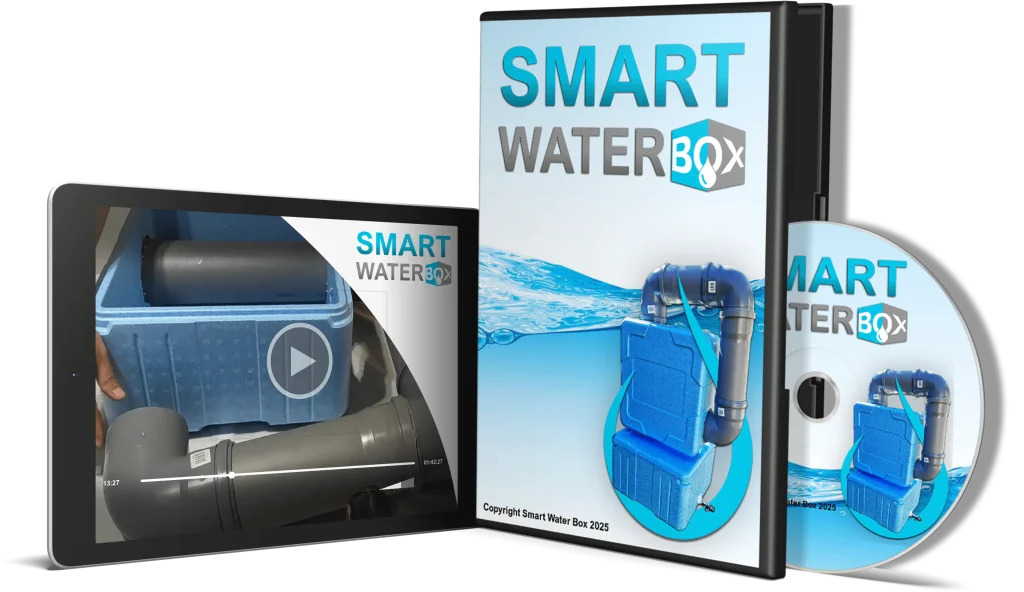
Smart Water Box takes a different approach by using Atmospheric Water Generation (AWG) technology. Instead of beginning with an existing water supply, the system is designed to capture moisture present in surrounding air, condense that moisture into liquid water, and then process the collected water through purification stages.
This makes Smart Water Box particularly interesting for people exploring off-grid living, emergency preparedness, sustainable technology, or alternative approaches to household water access.
However, atmospheric water generation depends on environmental conditions and electricity. Water production can vary according to humidity, temperature, airflow, and other factors. Therefore, consumers should evaluate the system according to their actual climate, intended use, water requirements, and the specifications of the particular Smart Water Box model.
This detailed guide explains what Smart Water Box is, how atmospheric water generation works, its main features, potential advantages, limitations, maintenance considerations, and frequently asked questions.
What Is Smart Water Box?
Smart Water Box is marketed as an atmospheric water generation system that captures moisture from the air and converts it into liquid water.
According to the product’s current website information, the system draws humid air into the unit, cools the air until moisture condenses, and then subjects the collected water to multiple purification stages. The described process includes filtration, activated carbon treatment, UV sterilization, and optional mineralization depending on the model.
This makes it different from a conventional water filter.
A traditional filter generally starts with water that already exists and removes selected contaminants. An atmospheric water generator instead begins with water vapor in the atmosphere and converts that vapor into liquid water before purification.
The concept can be particularly appealing for users who want greater independence from traditional water infrastructure.
What Makes Smart Water Box Different?
The most distinctive feature is its approach to water generation.
Instead of depending exclusively on:
- Municipal water lines.
- Wells.
- Rainwater collection.
- Bottled water.
- Existing water tanks.
The system is designed to obtain moisture directly from surrounding air.
This does not mean that the system can produce unlimited water under every condition. Atmospheric water generation depends heavily on environmental humidity and temperature.
In very dry environments, water production may decrease significantly. The product’s own information acknowledges that performance can be lower in cold or dry conditions.
How Does Smart Water Box Work?
The basic process can be explained in several stages.
1. Air Intake
The system draws surrounding air into the unit.
Air naturally contains water vapor, although the amount varies depending on temperature and relative humidity.
Warm, humid air generally contains more moisture than cold, dry air.
2. Moisture Collection
The incoming air is cooled to encourage condensation.
This is similar to what happens when moisture forms on a cold surface. When humid air reaches an appropriate temperature, water vapor can change from gas into liquid droplets.
The Smart Water Box uses controlled cooling to accelerate this process.
3. Water Collection
The condensed moisture is collected inside the system.
At this point, the water has been generated from atmospheric moisture but still requires appropriate treatment before being considered suitable for drinking.
4. Filtration
Product information describes multiple filtration stages intended to improve water quality and taste.
These may include pre-filtration and activated carbon filtration.
5. UV Treatment
The system information also describes UV sterilization as part of its purification process.
UV treatment is commonly used in water-treatment systems as a method for controlling microorganisms.
6. Storage
After processing, the water is collected in a reservoir for use.
Some versions are described as having monitoring systems that track factors such as humidity, water production, filter status, and reservoir conditions.
The Science Behind Atmospheric Water Generation
Atmospheric Water Generation is based on a simple natural phenomenon: air contains water vapor.
You can observe condensation naturally when a cold glass becomes covered with water droplets. The moisture comes from the surrounding air.
An AWG system essentially creates a controlled environment where atmospheric moisture can be condensed and collected.
The amount of water available in the air depends heavily on environmental conditions.
For example, humid air can contain substantially more water vapor than extremely dry air. This means an atmospheric water generator generally performs differently in a humid tropical environment than in a dry desert climate.
Therefore, advertised maximum production should not automatically be interpreted as the amount of water a household will receive every day.
Actual performance depends on the specific machine and operating environment.
Smart Water Box Features
Atmospheric Water Generation
The central feature is its ability to collect moisture from ambient air and convert it into liquid water.
This makes the technology fundamentally different from ordinary water filtration equipment.
Multi-Stage Water Treatment
Product descriptions mention several purification stages, including pre-filtration, activated carbon, UV treatment, and optional mineralization.
Off-Grid Potential
Smart Water Box is marketed for applications where users may want to reduce dependence on traditional water infrastructure.
Potential use cases include remote locations, off-grid homes, emergency preparedness, cabins, farms, and other settings where conventional water access may be limited.
Monitoring Technology
Certain product descriptions mention sensors and monitoring features designed to track environmental conditions, water production, filter status, and system performance.
Solar Compatibility
Some versions are promoted as compatible with solar or alternative power arrangements.
This can be useful for people considering off-grid systems, although the actual power requirements and solar configuration should be verified for the specific model.
Potential Benefits of Smart Water Box
1. Alternative Water Source
One potential advantage is the ability to obtain water without relying exclusively on an existing water line or well.
2. Off-Grid Applications
The concept may be attractive for cabins, remote properties, rural locations, and emergency preparedness.
3. Reduced Dependence on Bottled Water
Generating water on-site could potentially reduce reliance on bottled water for some users.
The environmental benefit depends on the system’s electricity source, water output, maintenance requirements, and how much bottled water it actually replaces.
4. Convenient Water Generation
Instead of transporting large quantities of bottled water, users can potentially generate water at the location where the system is installed.
5. Smart Monitoring
Monitoring features can potentially make maintenance easier by providing information about system performance and filter condition.
6. Emergency Preparedness
An atmospheric water generator may be considered as one component of a broader emergency water strategy.
However, emergency preparedness should not depend on a single device. Backup water storage remains important, particularly during power outages or extremely dry weather.
Smart Water Box and Sustainable Living
Sustainability is one of the most interesting aspects of atmospheric water technology.
Traditional bottled water can involve plastic production, packaging, transportation, refrigeration, and disposal.
A system that generates water at the point of use may reduce some of those activities depending on how it is operated.
However, sustainability is not automatic.
The system consumes electricity to operate its components. Therefore, its environmental impact depends partly on the energy source.
A unit powered by renewable electricity may have a different environmental footprint from one powered entirely by fossil-fuel-generated electricity.
This is why users interested in sustainability should consider the complete system rather than focusing only on the absence of plastic bottles.
Smart Water Box for Emergency Preparedness
Water shortages and infrastructure disruptions can occur because of natural disasters, severe weather, power failures, infrastructure problems, or other emergencies.
An independent water-generation system may therefore be appealing as part of an emergency preparedness strategy.
Smart Water Box could potentially provide an additional water source when conventional supplies are disrupted, provided that:
- The system has power.
- Environmental humidity is sufficient.
- The unit is properly maintained.
- Required filters are available.
- The water-production capacity matches actual needs.
For emergency preparedness, it is still sensible to maintain stored drinking water because an atmospheric water generator may not operate normally during every emergency scenario.
Smart Water Box for Off-Grid Living
People living in remote areas often have to think carefully about water access.
Traditional options can include wells, rainwater harvesting, water tanks, springs, or deliveries.
An atmospheric water generator offers another possibility.
Smart Water Box may be particularly interesting to people exploring self-sufficient homes, cabins, farms, remote work locations, or other off-grid environments.
However, off-grid users should calculate total electricity requirements and expected water production before depending on the device as a primary water source.
Smart Water Box and Humidity
Humidity is one of the most important factors affecting atmospheric water generation.
A humid environment generally provides more atmospheric moisture for the system to collect.
In contrast, extremely dry air contains less available moisture.
The product information acknowledges reduced performance in very dry conditions.
Therefore, potential buyers should consider their local climate before purchasing.
A system that performs well in a humid environment may produce substantially less water in a dry location.
Water Production Capacity
Some Smart Water Box marketing materials state that the system can produce up to 40 gallons of water per day under appropriate conditions.
The phrase “up to” is important.
Maximum output should not be interpreted as a guaranteed daily production level.
Actual output can depend on:
- Relative humidity.
- Temperature.
- Airflow.
- Operating time.
- Electricity availability.
- Machine configuration.
- Maintenance.
- Filter condition.
Anyone considering the system for a household should compare expected real-world output with the household’s actual daily water requirements.
Maintenance and Filter Care
Like other water-treatment systems, Smart Water Box requires appropriate maintenance.
Users should follow the manufacturer’s maintenance instructions and replace filters according to the recommended schedule.
Maintenance may involve:
- Checking filter condition.
- Cleaning relevant components.
- Monitoring water storage.
- Following sanitation instructions.
- Inspecting the system.
- Addressing maintenance alerts.
- Using the correct replacement components.
Poor maintenance can affect system performance and water quality.
Pros and Cons of Smart Water Box
Pros
- Uses atmospheric water generation technology.
- Can potentially operate independently of municipal water infrastructure.
- Interesting option for off-grid environments.
- May reduce dependence on bottled water.
- Uses a multi-stage purification approach.
- Some versions include monitoring features.
- Can potentially support emergency preparedness.
- Solar-compatible configurations are promoted for some models.
Cons
- Requires electricity.
- Water production depends on humidity and temperature.
- Output can decrease in dry conditions.
- Initial equipment cost may be significant.
- Filters and maintenance are required.
- Maximum advertised output may not reflect everyday production.
- Users should not rely exclusively on it during emergencies.
Smart Water Box vs. Traditional Water Filters
A traditional water filter and an atmospheric water generator perform fundamentally different jobs.
A filter starts with an existing water source and attempts to remove certain contaminants.
Smart Water Box is designed to generate water from atmospheric moisture and then purify the collected water.
This means the two technologies should not necessarily be viewed as direct substitutes.
For someone who already has reliable tap water but wants additional filtration, a conventional filter may be more appropriate.
For someone interested in producing water independently of traditional sources, atmospheric water generation may be more relevant.
The right choice depends on the user’s environment and requirements.
Smart Water Box Reviews and Customer Experiences
Customer experiences can provide useful information, but they should be evaluated carefully.
Some users may appreciate the concept of generating water independently, while others may focus on production rate, noise, electricity consumption, maintenance, or installation.
Because performance depends on environmental conditions, one customer’s experience may not accurately predict another customer’s results.
When researching Smart Water Box, consider:
- Actual water production.
- Climate compatibility.
- Electricity requirements.
- Maintenance costs.
- Filter replacement.
- Warranty terms.
- Customer support.
- Return policy.
Look beyond promotional testimonials and consider the specifications that matter for your particular use case.
Who May Consider Smart Water Box?
Smart Water Box may be interesting for people who:
- Want an alternative water source.
- Live in areas with unreliable water infrastructure.
- Are interested in off-grid living.
- Want additional emergency preparedness.
- Are exploring sustainable technologies.
- Want to reduce some dependence on bottled water.
- Have an environment with sufficient humidity.
- Have access to the electricity required by the system.
Who Should Think Carefully Before Buying?
The system may be less suitable for people who live in extremely dry climates or need very large quantities of water every day.
Before purchasing, consider:
- Local humidity.
- Daily water consumption.
- Available electricity.
- Backup power.
- Maintenance requirements.
- Installation space.
- Expected water-production capacity.
- Replacement filter costs.
These factors can have a major effect on the overall value of the system.
Safety Considerations
Water-generation and purification equipment should always be operated according to the manufacturer’s instructions.
Do not assume that every atmospheric water generator automatically produces water that is safe under every circumstance.
Users should follow all recommended cleaning, filtration, sanitation, and maintenance procedures.
If drinking-water safety is critical, users should consider appropriate water-quality testing and follow applicable local drinking-water guidance.
Frequently Asked Questions
What Is Smart Water Box?
Smart Water Box is marketed as an atmospheric water generation system designed to collect moisture from surrounding air, condense it into water, and purify the collected water.
Does Smart Water Box Make Water From Air?
Yes. Its operating concept is based on collecting atmospheric moisture and converting it into liquid water through condensation.
Does It Need Plumbing?
The product is marketed as an off-grid system that does not require conventional municipal plumbing or groundwater connections.
Does It Need Electricity?
Yes. Atmospheric water generation requires energy for processes such as air movement and cooling. Solar-compatible configurations are promoted for some Smart Water Box setups.
How Much Water Can It Produce?
Some current product materials advertise production of up to 40 gallons per day under suitable conditions. Actual production can vary with humidity, temperature, and other operating factors.
Does Humidity Affect Performance?
Yes. Atmospheric moisture availability is a major factor in water generation, and product information notes reduced performance in very dry conditions.
Does Smart Water Box Need Maintenance?
Yes. Water-generation and filtration systems require appropriate maintenance and filter care. Follow the manufacturer’s current maintenance instructions.
Ready to explore Smart Water Box?
Final Thoughts
Smart Water Box presents an interesting alternative approach to water access by combining atmospheric water generation with purification technology. Instead of depending entirely on an existing water source, the system is designed to collect moisture from the surrounding air and transform it into usable water.
Its potential applications range from off-grid living and remote properties to emergency preparedness and sustainable household water strategies.
At the same time, buyers should maintain realistic expectations. Atmospheric water generation depends heavily on environmental conditions, requires electricity, and needs appropriate maintenance. Maximum advertised production should not be assumed to represent guaranteed everyday output.
Before purchasing Smart Water Box, evaluate your local humidity, electricity availability, daily water requirements, maintenance needs, and the exact specifications of the model you’re considering.
When used appropriately, atmospheric water generation can be an intriguing technology for people looking for greater flexibility and independence in how they access water.