Few chores feel less glamorous than cleaning up after a dog, yet few matter more for a healthy yard, a safe play space, and good relations with the neighbors. When waste piles up it can scorch the lawn, attract flies, and spread bacteria to people and other pets. Whether you handle the job yourself or lean on dog poop removal in Chicago IL, a clear routine keeps things from getting out of hand. Local specialists like Chicago Dog Poop Removal see every mistake that makes the task harder than it needs to be. This guide walks you from mess to fresh, one step at a time.
Know What You Are Dealing With
Health Risks Around Pets and Kids
Dog waste can carry bacteria and parasites that spread through soil, shoes, and paws. Children who play on the grass and pets who sniff and lick are the most exposed. Treating cleanup as a health task, not just a tidiness task, makes it easier to stay consistent.
Effects on Grass and Soil
Concentrated waste burns patches into the lawn and leaves yellow or brown spots that are hard to repair. In a city like Chicago, snow can hide waste all winter, and the spring thaw reveals a much bigger problem than expected. Cleaning regularly, even in cold months, keeps that surprise from happening.
Gather Your Gear Before You Start
Having the right tools within reach makes the job faster and far less unpleasant. Collect these basics and keep them together so you never have to hunt for supplies:
- Sturdy waste bags or a dedicated scoop
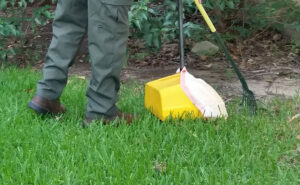
- A long-handled scooper or rake-style tool
- Disposable gloves
- A small bucket or lidded bin for collection
- A hose or spray bottle with pet-safe disinfectant
- Closed-toe shoes that are easy to rinse
A garage shelf or porch bin works well as a permanent home for the kit. In my experience, people who keep supplies visible and organized are far more likely to stick with a routine.
Follow a Simple Cleanup Routine
Walk the Yard in a Grid
Divide the yard into sections and walk each one in straight lines so nothing gets missed. Good lighting matters, so choose daytime for the full sweep. Checking along fences and under shrubs is important because dogs often pick quiet corners.
Scoop and Bag Properly
Collect waste with your tool and place it directly into a bag, then tie the bag tightly to contain odor. Double bagging helps if the trash sits for several days. Try not to drag the waste across grass, since that spreads residue over a wider area.
Clean Tools and Wash Hands
Rinse the scooper and spray it with disinfectant after each use. Remove your gloves carefully and wash your hands with soap and water. These small steps prevent bacteria from moving into your home on tools, shoes, or hands.
Dispose of Waste the Right Way
Bagging and Trash Options
The simplest safe method is to seal waste in a bag and place it in your regular household trash. Many cities, including Chicago, expect owners to clean up after their pets, so check local rules about where bags may go. Avoid leaving bags in street bins that are not meant for pet waste.
Composting and Flushing Myths
Garden compost is not a safe place for dog waste because it can carry organisms that survive ordinary composting. Flushing may be allowed in some areas, but never flush the bag, and check your local guidelines first. When in doubt, sealed trash is the safest choice.
Decide Whether to Hire a Professional
Signs It Is Time to Call for Help
Many busy households turn to dog poop removal in Chicago IL once the yard becomes overwhelming, the schedule gets too tight, or physical limits make bending difficult. Multiple dogs, large yards, and long winters also make cleanup harder to keep up with. A professional can bring a neglected yard back under control quickly.
What a Service Typically Includes
Most services scoop the entire yard, bag the waste, and haul it away on a regular schedule. Some also offer deodorizing, one-time cleanups, and gate-lock reminders for safety. Ask what is included, how often visits happen, and how they handle gates and pets before you sign up.
Keep the Yard Fresh Between Cleanups
Build a Weekly Schedule
Choose a regular day and time, and treat the task like any other household routine. A short, predictable session is easier than a big weekend marathon. Setting a phone reminder helps when life gets busy.
Train and Manage Pet Habits
Many dogs can learn to use a particular area of the yard, which makes cleanup much faster. Reward them when they use the spot and walk them there after meals. A consistent routine for the dog makes your routine easier too.
Final Thoughts
A clean yard is easier to enjoy, safer for your family, and kinder to your neighbors. When you are ready for help with dog poop removal in Chicago IL, compare services, ask about schedules and pricing, and choose a team that is reliable. A little consistency turns a dreaded chore into a manageable habit.
Frequently Asked Questions
How often should I clean up after my dog?
Pick up waste immediately on walks and do a full yard sweep at least once or twice a week. Homes with several dogs or small children may need to clean more often. Regular cleanup keeps odors, flies, and lawn damage from building up.
Is dog waste good for the lawn or compost?
No, dog waste is not a fertilizer and can burn grass because of its concentrated nutrients. It can also carry bacteria and parasites, so it does not belong in garden compost. Bag it and dispose of it with household trash instead.
What is the best tool for picking up waste?
A sturdy scooper with a long handle works well for lawns, while a rake-style tool suits looser waste. Many owners also keep a roll of bags and gloves nearby. Choose whatever lets you collect waste without bending or making a mess.
How much does dog poop removal in Chicago IL cost?
Pricing varies with yard size, the number of dogs, and how often the service visits. Weekly plans are common, and some companies offer one-time cleanups for heavy buildup. Request a written quote so you know exactly what is included.
Can dog waste make people sick?
Yes, it can carry bacteria and parasites that may spread to people and other pets. Children playing in the yard are especially at risk. Prompt cleanup and good hand washing greatly reduce the chance of problems.