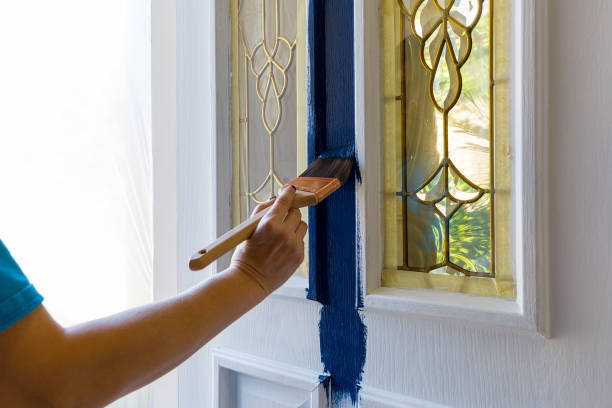
Female hand holding Brush painting house front door with blue paint at home do it yourself project
Doors are the hardest working surfaces in a house, opened and closed hundreds of times while sun, snow, and dust do their damage. A worn finish does not just look tired, it also lets moisture creep into the material underneath. Many owners wait until peeling paint becomes impossible to ignore, then realize a small project has grown into a big one. Professionals such as Cortez Coatings LLC often point out that refreshing a door early is one of the most affordable ways to improve a home. This article explains how Door painting in Aurora CO works, what affects the result, and how to protect your investment.
Why Doors Wear Out Faster Than You Expect
Front doors face intense ultraviolet light, sudden temperature swings, and dry air that can crack and fade paint within a few seasons. Interior doors deal with fingerprints, scuffs, and humidity from kitchens and bathrooms. Over time the coating loses its seal, and bare spots allow water to soak into wood or rust to form on steel. Repainting on schedule keeps the surface sealed and preserves the door itself, which is far cheaper than replacing it.
Exterior Doors Take the Most Punishment
Sun and Weather Exposure
South and west facing entries bake in direct sunlight most of the day. Dark colors absorb more heat and can blister or warp some materials, so color choice matters as much as paint quality. Covered porches help, but even sheltered doors need regular attention.
Security and Curb Appeal
A well-kept entry tells visitors and buyers that the home is cared for. Real estate agents often recommend a fresh front door before listing because the return on a modest paint job can be surprisingly strong.
Hardware and Trim Details
Quality work includes removing or carefully masking handles, locks, and hinges, and sealing the edges around the frame. These small steps prevent drips, protect moving parts, and give the finished door a clean factory look.
Interior Doors Deserve Care Too
Durable Finishes for Busy Households
Interior doors benefit from satin or semi-gloss coatings that resist stains and wipe clean easily. Families with children and pets often choose these finishes because they handle daily wear without looking glossy or harsh.
Matching Colors Throughout the Home
Consistency ties rooms together. Painting doors and trim in a coordinated palette can make a space feel brighter and more intentional, even when the walls stay the same.
Hiding Dents and Old Damage
Proper preparation fills small dings, sands rough patches, and smooths old brush marks before any color goes on. Skipping this stage is the most common reason a painted door looks uneven.
How Door Material Changes the Plan
Not every door is painted the same way. The table below summarizes what to expect from common materials.
| Door Material | Preparation Needed | Key Consideration |
|---|---|---|
| Solid wood | Sand, repair cracks, and prime | Seal all edges to block moisture |
| Steel | Remove rust and use a metal primer | Watch for heat buildup with dark colors |
| Fiberglass | Light scuff sanding and clean surface | Use paint made for flexible materials |
| Painted interior panel | Clean, fill dings, and lightly sand | Choose an easy-to-wipe finish |
What a Professional Process Looks Like
A careful job starts with a close inspection and cleaning to remove dirt and grease. The crew repairs damage, sands the surface, applies a suitable primer, and then lays down multiple thin coats with proper drying time in between. Rushing the process or painting over a dirty or glossy surface is a common cause of early peeling. When you compare options for Door painting in Aurora CO, ask what products are used, how many coats are included, and what warranty covers the finish. Clear answers show real experience, and they help you compare quotes on equal terms instead of price alone.
Can You Paint a Door Yourself?
Many homeowners can handle a simple interior door, but the details add up. You need the right primer, quality brushes or sprayers, a dust-free place to work, and patience for drying times. Exterior doors are harder because weather limits the right painting window and mistakes show immediately. If the door is damaged, warped, or has old lead-based paint, hiring a trained professional is the safer choice. A skilled painter also saves you the frustration of redoing a finish that looks streaky or sticky after a rushed afternoon.
Final Thoughts
A fresh coat can make a house feel newer, safer, and more welcoming without a major renovation. If your doors are fading, peeling, or just feel dull, consider reaching out to a trusted Door painting team in Aurora CO and ask for a clear, written estimate that matches your goals.
Frequently Asked Questions
How often should a front door be repainted?
Most exterior doors need attention every few years, depending on sun exposure and paint quality. Look for fading, chalky texture, or small cracks as warning signs. Catching these early protects the material underneath.
Is it better to paint or replace an old door?
If the door is structurally sound, painting is usually the more affordable option. Replacement makes sense when there is rot, warping, or major damage. A professional can inspect the door and give honest advice.
How long does door painting take?
The work itself may take a day or two, but drying time between coats adds to the schedule. Weather can also affect exterior projects. Ask your painter for a realistic timeline before you start.
What finish works best for a busy household?
Satin and semi-gloss are popular because they resist stains and clean easily. Higher sheen levels show more imperfections, so preparation matters. Your painter can show samples to help you choose.