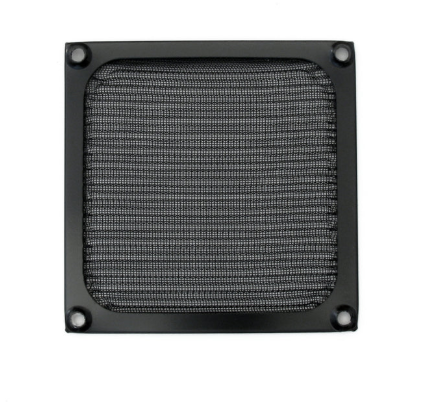
Fan Filter Unit
Electronic equipment depends on effective thermal management to operate reliably. Industrial control panels, power supplies, communication systems, and electrical enclosures often use ventilation fans to remove excess heat. However, the air entering these systems can carry dust, fibres, and other particles that may accumulate on internal components. A suitable fan filter unit can help reduce contamination while supporting the airflow needed for cooling.
Fan filter units are especially useful when equipment requires both ventilation and a degree of particulate control. Their performance depends on the filter material, mesh construction, fan capacity, installation arrangement, and maintenance schedule.
Understanding these factors helps engineers, equipment manufacturers, and maintenance teams choose the right filtration solution for their applications.
What Is a Fan Filter Unit?
A fan filter unit is an assembly designed to move air while filtering particles from the airflow. In industrial enclosures, a fan filter arrangement commonly uses a ventilation fan and a filter installed at an intake or exhaust opening.
Some products integrate a filter frame or mesh assembly with the fan mounting arrangement. Other systems use separate fans and filter housings.
The exact configuration depends on the application and product design. Before selecting a unit, confirm whether it includes a fan, a filter, mounting hardware, or only a filter frame.
Fan filter units are commonly used to help keep dust away from electrical and electronic components while supporting the movement of air through an enclosure.
Why Are Fan Filter Units Important?
Reducing Dust Accumulation
Airborne dust can accumulate on circuit boards, heat sinks, power supplies, and other internal components.
Depending on the environment and equipment design, this accumulation may interfere with heat transfer, restrict ventilation openings, or contribute to maintenance problems.
A suitable filter can capture some of the particles carried by incoming air. Its effectiveness depends on the filter’s characteristics, the particle sizes involved, and the way air passes through the assembly.
Supporting Thermal Management
Fans remove heat by moving air through an enclosure. However, the addition of a filter creates resistance that the fan must overcome.
The selected fan filter unit should provide the necessary filtration while allowing sufficient airflow for cooling.
If the filter becomes clogged, airflow may decrease and internal temperatures may rise. Correct sizing and regular maintenance are therefore important.
Protecting Industrial Electronics
Control cabinets and industrial enclosures often contain equipment that must operate in environments with varying levels of dust and contamination.
A suitable fan filter unit can help reduce the amount of particulate matter entering the enclosure. It should be selected according to the sensitivity of the equipment and the expected environmental conditions.
A filter does not automatically make an enclosure suitable for every environment. Moisture, corrosive gases, conductive dust, and other hazards may require additional protective measures.
Simplifying Ventilation Design
A compatible fan filter assembly can make it easier to establish a filtered airflow path through an enclosure.
When the components are designed to work together, installation and maintenance may be more straightforward. Nevertheless, buyers should verify the unit’s dimensions, mounting requirements, airflow characteristics, and filter replacement procedure.
Understanding Aluminum Mesh Fan Filter Units
Aluminum mesh is used in various industrial filtration and ventilation applications because it can provide a lightweight, structured material with useful durability.
An aluminum mesh fan filter unit may use mesh as part of its filtration or protective structure. The actual particle-capture performance depends on the mesh opening, number of layers, design, and any additional filter media included in the product.
It is important not to assume that all aluminum mesh filters provide the same filtration efficiency.
For applications involving fine particles, check the manufacturer’s specifications and determine whether the product meets the required filtration level. A coarse mesh may be useful for capturing larger debris but may not be sufficient for sensitive electronics in dusty environments.
Common Applications of Fan Filter Units
Electrical Control Cabinets
Control cabinets house components such as programmable logic controllers, contactors, power supplies, and variable-frequency drives.
These components can generate heat during operation. A fan filter unit can help introduce filtered air while supporting the ventilation required to manage internal temperatures.
Industrial Automation Equipment
Automated machinery often contains sensors, controllers, and electronic modules that require stable operating conditions.
Filtered ventilation can help reduce dust accumulation in suitable applications. The filter must be matched to the equipment’s airflow and contamination requirements.
Communication and Networking Enclosures
Communication equipment may operate continuously and generate heat that must be removed from the enclosure.
A fan filter unit can help balance cooling and contamination control, provided that its airflow performance meets the equipment’s thermal requirements.
Power Electronics
Power converters, industrial power supplies, and related systems may require regular airflow to remove heat from electrical components.
The appropriate filter arrangement depends on the equipment’s heat load, ambient conditions, and sensitivity to contaminants.
How to Choose the Right Fan Filter Unit
1. Identify the Required Filter Size
Measure the ventilation opening and confirm the mounting dimensions of the existing assembly.
Check the frame size, cutout, mounting holes, and available depth. A unit that does not fit correctly may create gaps or obstruct the intended airflow path.
2. Determine the Filtration Requirement
Identify the contaminants that need to be controlled. Large fibres and debris require different filtration characteristics from fine dust or other small particles.
Review the manufacturer’s information on mesh opening, filter media, and filtration performance. Avoid selecting a filter based only on its material or appearance.
3. Calculate the Required Airflow
Estimate the heat generated inside the enclosure and determine the airflow needed to maintain an acceptable temperature.
The fan’s rated airflow under unrestricted conditions may be higher than the airflow delivered after installing the filter.
Consider the fan performance curve and the pressure drop created by the complete ventilation arrangement. For critical equipment, monitor internal temperature under realistic operating conditions.
4. Check the Environmental Conditions
Consider temperature, humidity, dust levels, chemical exposure, and the possibility of corrosion.
The filter frame and filter media must be compatible with the operating environment. If the enclosure is exposed to moisture or aggressive contaminants, additional protection may be necessary.
5. Plan for Filter Maintenance
Every filter requires an appropriate inspection and maintenance approach.
The rate at which a filter becomes loaded depends on the environment, airflow, particle concentration, and filter design.
Check whether the filter can be removed easily and whether replacement elements are available. Establish a maintenance schedule based on the manufacturer’s recommendations and actual operating conditions.
Intake Filtration and Exhaust Ventilation
The placement of a fan filter unit influences how air moves through an enclosure.
Filtered intake: Incoming air passes through a filter before entering the enclosure. This approach helps reduce the amount of airborne dust introduced through the intake opening.
Exhaust ventilation: An exhaust fan removes warm air from the enclosure. Depending on the design, replacement air enters through a filtered intake or another planned ventilation opening.
Balanced airflow: Intake and exhaust components should be coordinated to provide the intended air movement. Poor placement can allow incoming air to bypass heat-generating components or create unwanted recirculation.
The best configuration depends on the enclosure’s thermal design, contamination requirements, and environmental conditions.
Fan Filter Units Versus Standard Fan Guards
A standard fan guard primarily protects against physical contact with rotating blades and helps prevent larger objects from entering the fan opening.
A fan filter unit is designed to provide filtration in addition to ventilation. Depending on its construction, it may include a mesh filter, filter media, a mounting frame, and a fan.
Although the two products may look similar, they serve different purposes. A guard should not be treated as a filter unless its performance is specified for that use.
In some installations, a fan guard and a filter may both be required. The combined arrangement should be checked for airflow restriction and mounting compatibility.
Installation and Maintenance Best Practices
Before installation, isolate the equipment safely and follow the manufacturer’s instructions. Check the fan, mounting opening, filter frame, and fasteners for damage.
Install the assembly in the intended airflow direction. Ensure that the frame is secure and that there are no unintended gaps around the mounting area.
After installation, confirm that the fan operates normally and that air moves through the intended path. Where appropriate, monitor internal temperature and compare it with the equipment manufacturer’s recommended operating range.
Inspect the filter regularly for dust accumulation, deformation, and damage. Clean reusable elements only according to the manufacturer’s instructions, and replace disposable elements when required.
If airflow decreases or internal temperatures increase, check for filter blockage, fan deterioration, obstructed vents, and other causes before changing the cooling configuration.
Find an Aluminum Mesh Fan Filter Unit at GardTec Online
A suitable fan filter unit can help reduce particulate contamination while supporting the ventilation needed for industrial and electronic equipment.
Explore the aluminum mesh fan filter unit collection at GardTec Online to review options for your cooling and filtration requirements.
Before ordering, confirm the dimensions, filter construction, airflow performance, environmental suitability, and maintenance needs. Choosing a compatible unit helps create a more effective ventilation arrangement and supports the long-term operation of your equipment.