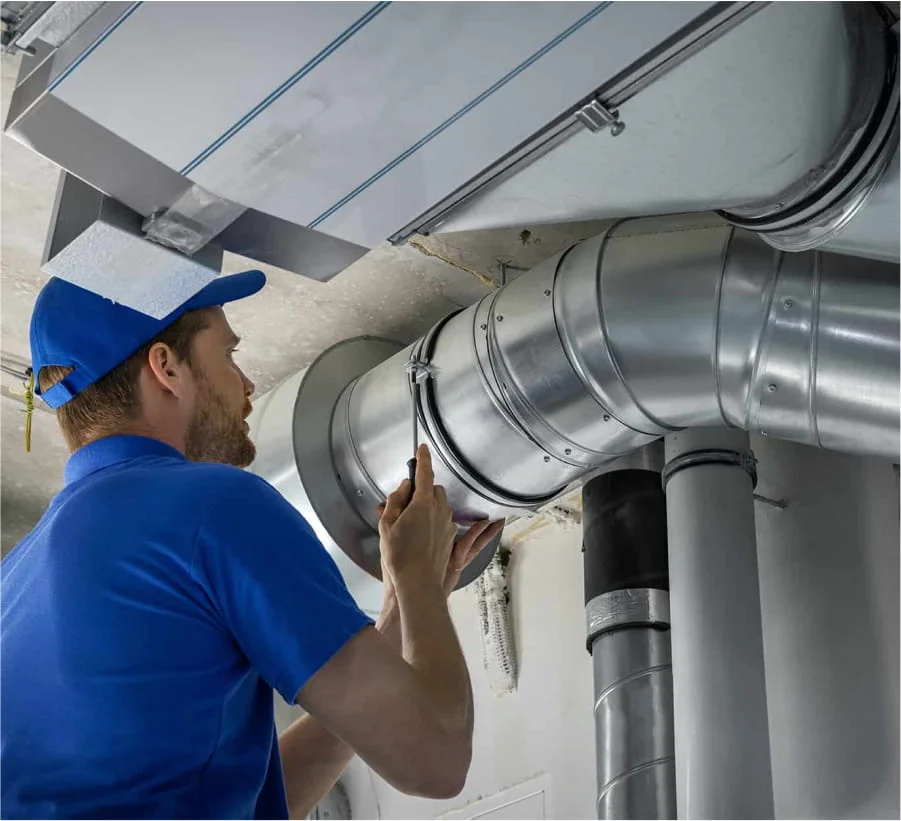
Ductwork repairs are essential for maintaining the performance, efficiency, and reliability of heating, ventilation, and air conditioning (HVAC) systems. Ductwork distributes heated or cooled air throughout a building, helping maintain comfortable indoor temperatures and consistent airflow. When ducts become damaged, develop leaks, or lose their insulation, the system may struggle to deliver conditioned air where it is needed.
Whether you own a home, manage a rental property, or operate a commercial building, damaged ductwork can contribute to uneven temperatures, unnecessary energy consumption, poor airflow, and reduced indoor comfort. Some problems are easy to identify, while others remain hidden above ceilings, inside walls, or within roof spaces.
Ductwork can deteriorate because of ageing materials, poor installation, physical damage, moisture exposure, pest activity, or loose connections. Identifying these problems early can help prevent further damage and reduce the need for more extensive repairs.
Professional ductwork repairs focus on identifying the underlying issue and restoring the system to suitable operating condition. Depending on the damage, the solution may involve sealing air leaks, reconnecting separated ducts, replacing damaged sections, or restoring insulation.
This guide explains the importance of ductwork repairs, common warning signs, repair methods, cost considerations, and practical maintenance tips for keeping your HVAC system operating effectively.
What Are Ductwork Repairs?
Ductwork repairs involve inspecting and correcting problems in the ducts that carry conditioned air through a building. These ducts may be manufactured from flexible insulated materials, sheet metal, rigid fibreglass duct board, or other materials designed for HVAC applications.
Over time, duct systems can develop gaps, tears, disconnected joints, crushed sections, damaged insulation, and poorly supported branches. These faults can interfere with airflow and reduce the effectiveness of heating and cooling equipment.
The appropriate repair depends on the duct material, location, severity of damage, and overall condition of the system.
Common ductwork repairs include:
- Sealing gaps around duct joints and connections.
- Repairing tears in flexible ductwork.
- Reconnecting separated duct sections.
- Replacing crushed or damaged duct sections.
- Repairing deteriorated insulation.
- Securing loose duct supports.
- Correcting airflow restrictions caused by unsuitable routing.
In some situations, repairing a small damaged section is sufficient. However, extensive deterioration, repeated failures, or an unsuitable duct design may make partial or complete replacement more practical.
A professional inspection helps determine which option offers the most reliable result.
Why Ductwork Repairs Are Important
Ductwork plays a significant role in HVAC performance. Even when the heating or cooling equipment functions correctly, damaged ducts can prevent conditioned air from reaching the intended rooms.
Improving Airflow
Leaking, disconnected, or crushed ducts can restrict the amount of air delivered to particular areas.
For example, a bedroom may remain warm during summer while the living room receives adequate cooling. A damaged duct branch or poorly sealed connection could be contributing to the problem.
Repairing the affected section may restore airflow and improve temperature consistency.
However, uneven temperatures can also result from blocked filters, closed dampers, poor insulation, or incorrectly sized HVAC equipment. A proper assessment helps identify the actual cause.
Reducing Energy Waste
When conditioned air escapes through damaged ductwork, the HVAC system may need to operate longer to maintain the desired indoor temperature.
This can increase energy consumption, especially when leaks occur in roof spaces or other areas outside the conditioned part of a building.
Sealing leaks and correcting damaged connections can reduce unnecessary air loss. The potential benefit depends on the size and location of the leaks and the condition of the overall system.
Protecting HVAC Equipment
Ductwork is designed to support the airflow requirements of the HVAC equipment.
Significant restrictions, poor connections, and unsuitable duct sizing can affect system performance. Depending on the equipment and the fault, restricted airflow may also influence operating temperatures and component performance.
Timely repairs can help correct duct-related problems and support the system’s intended operation.
Maintaining Indoor Comfort
Poor airflow can make rooms uncomfortable and create noticeable temperature differences throughout a building.
Correctly functioning ductwork helps distribute conditioned air more consistently, supporting a comfortable indoor environment.
Repairing damaged sections may improve comfort without requiring the replacement of the entire HVAC system.
Common Signs That You Need Ductwork Repairs
Recognising the warning signs of duct damage can help you determine when professional assistance may be necessary.
Weak Airflow From Vents
If airflow remains weak despite open vents and a clean filter, the duct system may have a leak, restriction, or disconnected section.
Flexible ducts can become crushed or excessively bent, while older connections may loosen over time.
An HVAC technician can inspect the affected areas and determine whether ductwork repairs are appropriate.
Uneven Room Temperatures
Persistent temperature differences between rooms may indicate that air is not being distributed effectively.
A damaged branch, leaking connection, or poorly supported duct can reduce the airflow reaching a particular area.
Other factors, such as sunlight exposure, inadequate insulation, and equipment sizing, can produce similar symptoms. A professional assessment helps distinguish between these possibilities.
Unusual Whistling or Rattling Noises
Ductwork may produce whistling, rattling, or other unusual sounds when air passes through gaps or restricted sections.
Rattling can also occur when duct panels or supports become loose.
These noises may originate from fans, dampers, or other HVAC components, so identifying the source is important before arranging repairs.
Unexpected Energy Bill Increases
An increase in heating or cooling costs may be associated with air leakage or poor duct performance.
However, energy bills can also rise because of weather changes, energy prices, equipment faults, or changes in how the building is used.
If higher costs occur alongside weak airflow or uneven temperatures, an HVAC inspection may help determine whether damaged ductwork is contributing to the problem.
Visible Duct Damage
Tears, crushed sections, loose connections, and deteriorated insulation are clear reasons to investigate the duct system.
Minor damage may be repairable, while extensive deterioration may require replacement.
Avoid disturbing damaged insulation or entering unsafe roof spaces to inspect ductwork. A qualified technician can assess inaccessible areas safely.
Excessive Dust Around Vents
Unusual dust accumulation near vents may be associated with air leakage, poor filtration, dirty surfaces, or other indoor air quality issues.
Dust alone does not prove that ductwork is damaged or that professional duct cleaning is necessary.
A technician can investigate the cause and recommend appropriate measures.
Types of Ductwork Repairs
Different duct problems require different repair methods. Understanding the available options can help you discuss the work with an HVAC professional.
Air Duct Sealing
Air duct sealing involves closing gaps around joints, seams, and connections.
Leaks can allow conditioned air to escape before reaching the intended rooms. Professional sealing helps reduce these losses and may improve airflow distribution.
Depending on the duct material and operating conditions, technicians may use approved duct sealants, suitable sealing tapes, or other products designed for HVAC applications.
Ordinary household adhesive tape is generally not a reliable long-term repair for ductwork because it may deteriorate under operating conditions.
Flexible Duct Repairs
Flexible ductwork is widely used in residential HVAC systems because it can be routed through confined spaces and around building obstacles.
However, it can be damaged by sharp objects, excessive bending, compression, and inadequate support.
Small tears or loose connections may be repairable when the surrounding material remains in good condition. Severely crushed, deteriorated, or extensively damaged sections may require replacement.
Correct support and routing are important because excessive sagging and tight bends can restrict airflow even when the duct is intact.
Metal Duct Repairs
Sheet metal ducts are durable, but their seams, connections, and panels can develop problems over time.
Repairs may involve sealing joints, securing loose connections, correcting damaged sections, or replacing panels that cannot be restored reliably.
The appropriate method depends on the duct’s construction, location, and operating requirements.
Duct Insulation Repairs
Insulation helps reduce heat transfer between the air inside a duct and the surrounding environment.
Damaged, wet, or compressed insulation may lose effectiveness and can contribute to condensation problems under certain conditions.
Repairs may involve restoring insulation coverage or replacing affected sections.
If moisture is present, the source should be identified and corrected before the insulation is repaired or replaced.
Disconnected Duct Repairs
Duct sections can become separated because of poor installation, physical disturbance, deteriorated connections, or inadequate support.
A disconnected duct may allow conditioned air to escape into a roof space or another unconditioned area.
Professional repairs typically involve reconnecting the sections securely, sealing the joint, and ensuring that the duct is properly supported.
The technician should also investigate why the connection failed to reduce the likelihood of recurring problems.
The Ductwork Repair Process
Understanding the repair process helps property owners know what to expect during a professional service visit.
Initial Inspection
The technician begins by discussing the symptoms, including weak airflow, uneven temperatures, unusual noises, or increased energy consumption.
The inspection may include accessible ductwork, vents, connections, insulation, and relevant HVAC components.
Depending on the system, specialised equipment may be useful for locating concealed leaks or assessing airflow.
Identifying the Cause
Once the ductwork has been examined, the technician determines the likely cause of the problem.
This may involve identifying gaps, crushed sections, loose connections, damaged insulation, or other defects.
The technician may also check alternative causes, such as dirty filters, blocked vents, faulty fans, or closed dampers.
Accurate diagnosis helps ensure that the recommended repair addresses the underlying issue rather than just the symptoms.
Choosing the Repair Method
The repair method depends on the duct material, severity of damage, accessibility, and system requirements.
A small leak may require sealing, while a damaged section may need to be replaced.
The technician should explain the recommended work, the expected cost, and whether additional repairs may be necessary.
Completing the Repairs
The technician carries out the agreed work using materials and methods suitable for the duct system.
This may include sealing joints, reconnecting ducts, replacing damaged materials, restoring insulation, or improving supports.
Safe access is particularly important when working in roof spaces, confined areas, or locations containing electrical services.
Testing the System
After the repairs are completed, the technician may operate the HVAC system and inspect the affected areas.
Depending on the work, this may include checking airflow, inspecting connections, and confirming that the repaired sections are functioning as intended.
If the original symptoms remain, further investigation may be necessary.
How Much Do Ductwork Repairs Cost?
The cost of ductwork repairs depends on the type of damage, duct material, accessibility, and amount of work required.
Minor sealing work may be relatively straightforward, while extensive damage involving concealed ducts or deteriorated insulation can require more labour and materials.
Factors that influence repair costs include:
- The number and size of damaged duct sections.
- Whether the ducts are flexible, metal, or another material.
- Access to ceilings, roof spaces, and wall cavities.
- The need for specialist leak testing or diagnostic equipment.
- The cost of replacement materials and insulation.
- Labour requirements and the complexity of the repair.
- Whether additional HVAC faults are identified.
For example, sealing an accessible leaking joint may require less work than replacing a long, crushed duct section in a difficult-to-access roof space.
To obtain an accurate estimate, request a written quote that explains the identified problem, proposed repair, materials, labour, and any additional charges.
It is also useful to ask whether the repair is expected to resolve the issue completely or whether further investigation may be needed.
Comparing quotes can help you assess the available options, but the lowest price may not represent the best value if the underlying problem remains unresolved.
Can You Repair Ductwork Yourself?
Some basic HVAC maintenance can be completed by property owners, but duct repairs require care and depend on the location and type of damage.
You can generally check accessible vents, replace user-serviceable air filters according to the manufacturer’s instructions, and look for obvious damage in safely accessible areas.
However, repairing concealed ducts, working with damaged insulation, accessing difficult roof spaces, or modifying HVAC components may require professional assistance.
Poorly executed repairs can restrict airflow, fail to seal leaks, or damage the duct system.
If ductwork is near electrical equipment, contains potentially hazardous materials, or requires access to a confined space, do not attempt the repair without appropriate training and safety measures.
A qualified HVAC technician can determine whether a minor repair is suitable or whether professional work is necessary.
Benefits of Hiring a Professional for Ductwork Repairs
Professional ductwork repairs offer several advantages beyond fixing visible damage.
Accurate Diagnosis
An experienced technician can investigate the symptoms and determine whether the ductwork is responsible for the problem.
This reduces the risk of spending money on repairs that do not address the actual cause.
Suitable Repair Materials
Different duct materials require appropriate repair products and installation techniques.
Professionals can select materials intended for the system’s operating conditions and install them according to relevant requirements.
Improved Air Distribution
Correctly repaired ductwork can help restore airflow to affected rooms and improve the consistency of heating or cooling.
The results depend on the condition of the overall HVAC system and whether other airflow problems remain.
Reduced Risk of Recurring Damage
A thorough repair should address the reason the problem occurred where possible.
For example, a disconnected duct may require additional support, while recurring insulation damage may indicate an unresolved moisture problem.
Addressing these contributing factors can help reduce the likelihood of future repairs.
How to Choose a Reliable Ductwork Repair Service
Selecting a suitable HVAC professional is important for achieving reliable results.
Check Qualifications and Experience
Look for technicians with appropriate training and experience in ductwork inspection and repair.
In Australia, HVAC work may be subject to licensing requirements depending on the state or territory and the type of work being performed. Electrical or refrigerant-related work may require additional authorisations.
Ask the provider which qualifications apply to the proposed service.
Request a Detailed Quote
A written quote should describe the problem, the proposed repair method, the materials to be used, and the expected scope of work.
If replacement is recommended, ask why repair is not considered suitable and whether alternative options are available.
Review Customer Feedback
Customer reviews can provide useful information about communication, punctuality, workmanship, and follow-up support.
Look for consistent feedback across several reviews rather than relying on one comment alone.
Ask About Testing and Warranty
Find out whether the provider will inspect the completed work and what testing is included.
Ask about workmanship warranties, their duration, and any conditions that apply.
Clear answers help you understand what to expect after the repair is finished.
How to Prevent Future Ductwork Problems
Regular maintenance can help reduce duct damage and support consistent HVAC performance.
Schedule Routine HVAC Maintenance
Follow the manufacturer’s maintenance recommendations for the overall HVAC system.
During appropriate service visits, a technician can check accessible ductwork, connections, insulation, and other components.
Keep Vents Clear
Avoid placing furniture, rugs, curtains, or stored items over supply and return air grilles.
Blocked vents can interfere with airflow and affect system performance.
Inspect Accessible Ductwork
Where it is safe to do so, look for visible signs of damage, loose supports, disconnected sections, or deteriorating insulation.
Do not enter unsafe roof spaces or disturb unfamiliar insulation materials.
Address Moisture Problems Promptly
Water leaks and condensation can damage insulation and surrounding materials.
Investigate persistent moisture and correct the source before repairing the affected ductwork.
Avoid Unnecessary Physical Pressure
Do not store heavy items against flexible ducts or allow tradespeople to crush ductwork while working in roof spaces.
Proper support and careful access can help preserve the duct shape and reduce the likelihood of damage.
Conclusion
Ductwork repairs are an important part of maintaining an efficient and comfortable HVAC system. Damaged, leaking, disconnected, or poorly insulated ducts can contribute to weak airflow, uneven temperatures, energy waste, and reduced indoor comfort.
Recognising early warning signs and arranging an appropriate inspection can help identify the cause before the problem becomes more extensive. Depending on the damage, the solution may involve sealing air leaks, reconnecting duct sections, repairing insulation, or replacing damaged materials.
Professional assessment is especially valuable when ductwork is concealed, difficult to access, or connected to a wider HVAC performance problem.
By choosing a qualified technician, requesting a clear quote, and maintaining the system regularly, property owners can help protect their ductwork and support reliable heating and cooling performance.
Frequently Asked Questions
1. What Are the Signs That Ductwork Needs Repairs?
Common signs include weak airflow, uneven room temperatures, unusual whistling or rattling noises, visible duct damage, and unexpected increases in energy consumption. An inspection can help determine whether damaged ductwork is responsible.
2. How Much Do Ductwork Repairs Cost?
The cost depends on the type of damage, duct material, accessibility, and repair method. Minor sealing work may cost less than replacing damaged sections or repairing concealed ductwork. Request a written quote for an accurate estimate.
3. Can Leaking Ducts Increase Energy Bills?
Yes. Leaking ducts can allow conditioned air to escape before reaching the intended rooms, potentially increasing energy consumption. The effect depends on the location and severity of the leaks and the HVAC system’s operating conditions.
4. Should I Repair or Replace Damaged Ductwork?
Minor leaks and loose connections can often be repaired, while severely crushed, deteriorated, or extensively damaged sections may require replacement. A qualified HVAC technician can assess the condition and recommend the most appropriate option.
5. How Often Should Ductwork Be Inspected?
There is no single inspection schedule suitable for every system. Ductwork should be checked when airflow problems, unusual noises, visible damage, or unexplained performance changes occur. Periodic checks during HVAC maintenance can also help identify developing issues.