Bilal was excited when the solar system at his home in Lahore started working. The panels were new, the inverter was running, and everything looked fine.
But there was one problem.
His neighbour had a similarly sized solar system, yet Bilal was getting noticeably less energy every day. He checked the inverter. No major fault. He checked the panels. They looked clean. Then the electrician inspected the solar wiring.
“Cable size aur connections check kiye hain?” he asked.
Bilal paused. Nobody had talked about the cables.
This is where many householders and industrial users in Pakistan make a costly mistake. Solar panels may generate good power, but poor cable selection, loose connections, excessive cable length and unsuitable solar cables can reduce the power reaching the inverter.
So, where does the problem start?
Could Your Solar Cables Be Reducing Energy Output?
Yes. Solar cables carry DC electricity from the solar panels to the inverter. If the cable is undersized, damaged, poorly connected or unsuitable for the installation, voltage drop can increase.
The result can be lower usable power at the inverter.
This does not mean every low energy reading is caused by cabling. Panel shading, dust, temperature, inverter performance and system design can also affect production. But solar wiring is one area that should not be ignored.
For household and industrial solar systems in Pakistan, the right cable should match the current, voltage, distance, installation environment and expected load.
What Are the Most Common Solar Cable Mistakes?
1. Choosing a Cable That Is Too Thin
One of the most common mistakes is selecting a smaller cable simply because it costs less.
For example, a 4mm solar cable may work well in some installations, but it should not be selected just because it is widely available. A longer cable run or higher current may require a larger conductor.
How to fix it:
- Calculate the expected current before selecting the cable.
- Check the cable length between panels and inverter.
- Calculate the acceptable voltage drop.
- Use a suitable conductor size based on the actual system design.
- Do not select a 4mm solar cable or 6mm solar cable by guesswork.
2. Using Ordinary Electrical Wire Instead of DC Solar Cables
Solar panels operate outdoors, where cables can face sunlight, heat, moisture and temperature changes. Ordinary electrical wires may not have the construction required for these conditions.
DC solar cables are designed for photovoltaic applications and should match the required voltage, temperature and environmental conditions.
Advisory: Always check the cable’s markings, specifications and applicable standards before installation.
3. Making Cable Runs Longer Than Necessary
A long cable route creates more electrical resistance. As the distance increases, voltage drop can become more noticeable, especially when the conductor size is not suitable.
This mistake can happen in homes when installers choose a convenient route rather than a properly planned one. Industrial sites can face the same issue when equipment and inverter locations are changed after installation.
Better approach: Plan the cable route before installation and keep unnecessary cable length to a minimum.
Are Loose Solar Connections Also Wasting Power?
They can be.
A cable may be correctly sized, but a loose connector or poorly crimped terminal can still create resistance at the connection point. Heat may build up, performance can suffer, and the connection can become a safety concern.
This is why solar cable installation should not stop at choosing the right wire.
Check:
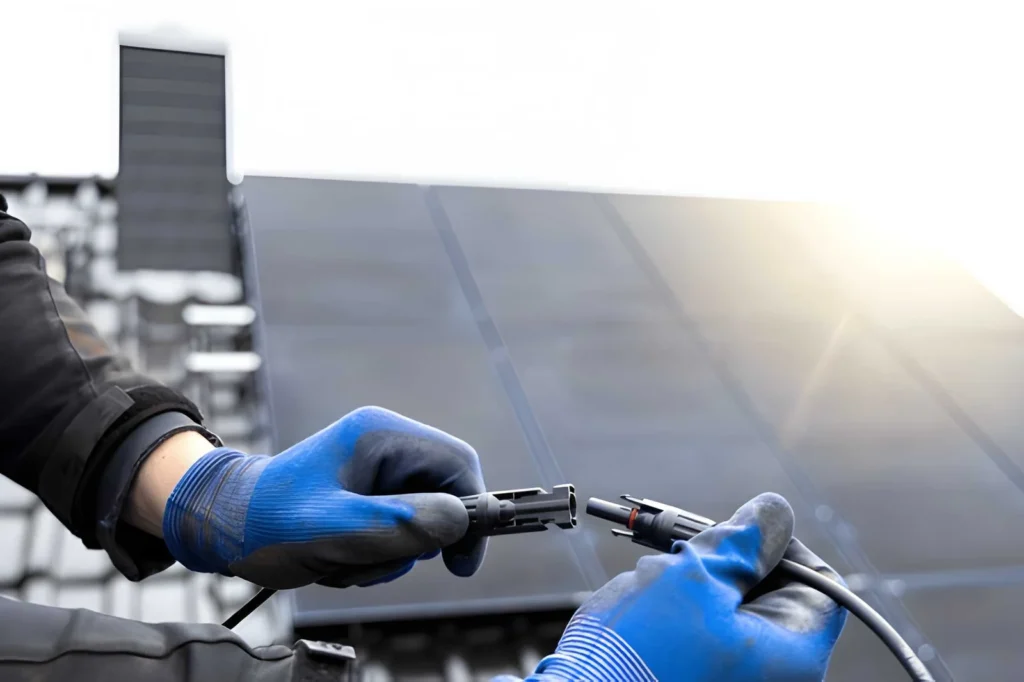
- MC4 or compatible connector installation
- Crimping quality
- Terminal tightness
- Damaged insulation
- Signs of overheating
- Cable joints exposed to water or excessive heat
A professional installer should inspect these points during commissioning and maintenance.
Why Does Cable Quality Matter in Pakistan’s Heat?
Solar panels already operate in demanding outdoor conditions. In Pakistan, intense summer heat can make the installation environment even more challenging.
Poor quality solar cables may age faster when exposed to unsuitable temperatures, sunlight or moisture. A properly selected cable should match the environmental conditions and the solar system’s electrical requirements.
For rooftop installations, cable routing also matters. Cables should be secured properly and protected against unnecessary mechanical stress.
What If Your Solar System Is Producing Less Power?
Do not replace the panels immediately.
Start with a basic inspection of the complete system:
| What to check | Possible problem | Practical action |
| Cable size | Cable may be undersized | Recalculate conductor size |
| Cable length | Excessive voltage drop | Review cable route |
| Connectors | Loose or poor connections | Inspect and reterminate |
| Cable condition | Heat or insulation damage | Replace unsuitable cable |
| Panel output | Shading or dirt | Inspect and clean panels |
| Inverter readings | Input voltage or current issue | Ask a qualified technician to test the system |
This approach helps householders and industrial users identify the actual problem instead of replacing components without evidence.
How Can You Choose the Best Wires for Solar Panels?
The best wires for solar panels depend on the system rather than a single cable size.
Before buying solar cables, check the panel current, system voltage, cable distance, installation temperature, routing method and expected load. Copper conductors are widely used in photovoltaic wiring because of their electrical conductivity and practical performance.
For a larger industrial solar installation, cable selection should also account for the number of strings, combiner arrangements, inverter capacity and installation conditions.
DID YOU KNOW?
Even when solar panels are working correctly, energy can be lost between the panels and inverter when electrical resistance and voltage drop become too high. Cable selection therefore forms part of overall solar system performance.
Looking for Better Cable Solutions in Pakistan?
Universal Cables Industries Ltd. is a recognised name for electrical cable solutions, with experience dating back to 1978. As a leading electric cables manufacturer in Pakistan, the company manufactures cable solutions for different electrical applications.
For businesses looking for Pakistan’s premium selling copper cables since 1978 and homeowners searching for the best electric cables in Pakistan, cable selection should always be based on the actual electrical requirements rather than price alone.
The right solar cables, correct sizing and proper installation can help reduce avoidable losses and support better system performance.
Final Word: Check the Cables Before Blaming the Panels
Low solar energy output does not always mean your panels are faulty. Sometimes, the problem is hiding in the wiring.
An undersized cable, excessive cable length, poor connector, damaged insulation or unsuitable wire can affect how efficiently power travels toward the inverter. Before spending money on new panels or an expensive system upgrade, have the solar wiring inspected by a qualified professional.
For householders and industrial users in Pakistan, good solar performance starts with the complete system, not just the panels.
FAQs
Can solar cables reduce solar system output?
Yes. Incorrect cable size, excessive voltage drop and poor connections can reduce electrical performance.
Is a 4mm solar cable always suitable?
No. Its suitability depends on current, distance, voltage and installation conditions.
When should I use a 6mm solar cable?
A 6mm cable may be suitable for higher current or longer cable runs, but the correct size should be calculated for the system.
Are DC solar cables necessary?
Photovoltaic systems should use cables designed and rated for their DC solar application and environmental conditions.
What are the best electric cables in Pakistan for solar systems?
The right cable depends on the system design, conductor size, voltage rating, installation environment and applicable standards.
Electrical Safety Advisory
Solar DC systems can carry dangerous voltage and current. Cable testing, connector work and electrical modifications should be handled by qualified professionals following applicable electrical and solar installation standards.