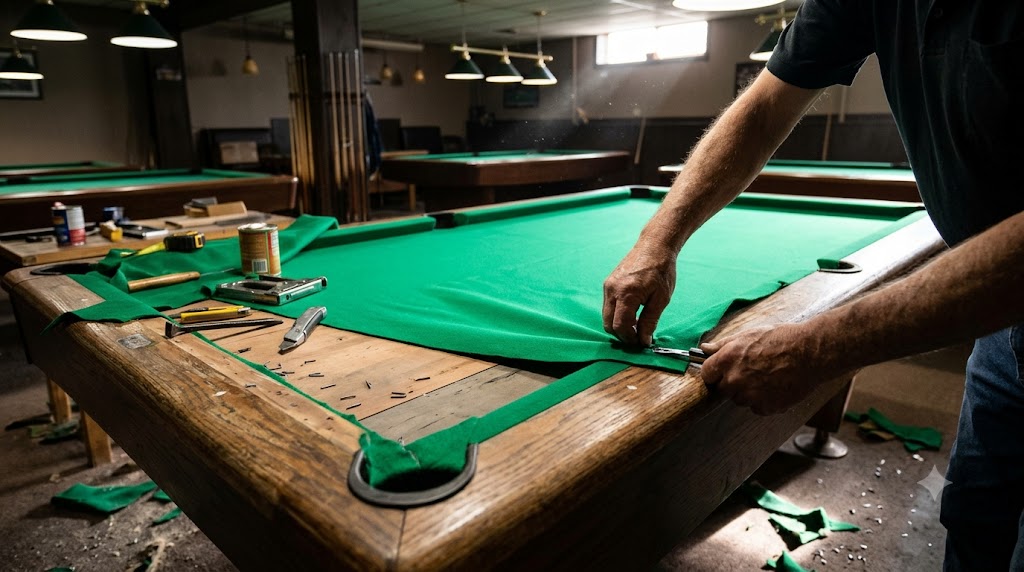
A pool table should provide a consistent playing experience, allowing balls to travel smoothly and rebound predictably. Over time, however, regular use, environmental conditions, and normal material wear can affect performance. Balls that drift unexpectedly, cushions that produce weak rebounds, or cloth that develops rough patches are signs that your table needs attention.
For homeowners and recreational facilities, timely pool table repair in Richland, WA helps address these problems before they become more expensive or interfere with enjoyable gameplay. Understanding the symptoms of common faults makes it easier to identify the right repair and maintain the equipment’s condition.
Recognizing Signs That Your Pool Table Needs Repair
Not every performance problem requires extensive restoration. Some issues involve simple maintenance, while others require specialized work on the playing surface or supporting structure.
Watch for these common warning signs:
- Balls consistently roll toward one side of the table.
- The cloth develops tears, wrinkles, burns, or noticeably worn areas.
- Cushions produce inconsistent or unusually weak rebounds.
- Pockets become loose, damaged, or difficult to use.
- Rails shift, rattle, or feel unstable during play.
- The frame or legs show signs of movement or damage.
Identifying the specific symptom helps a technician determine whether the problem involves the cloth, cushions, slate, frame, or installation.
Correcting an Uneven Playing Surface
An uneven playing surface is one of the most frustrating pool table problems. Even a slight deviation in levelness can change a ball’s path and make accurate shots difficult.
The cause might involve incorrectly positioned slate sections, changes in floor conditions, loose support components, or an earlier installation that was not completed properly. A table that has been moved recently deserves particular attention because transportation and reassembly can affect alignment.
Professional assessment begins with checking the table’s levelness and inspecting the supporting structure. Technicians commonly use precision leveling tools to check the slate playing surface, with the acceptable tolerance depending on the table manufacturer’s specifications and the leveling method. A professional check evaluates the playing surface itself rather than relying solely on a spirit level placed on the rails, which may not accurately reflect the slate’s condition.
If the slate has shifted, adjustments must address its positioning and support rather than simply changing the leg height without identifying the underlying problem. During releveling or recovering, technicians may also inspect the slate seams and use appropriate wax and shims to fill and align the joints between slate sections. Proper seam preparation helps create a smooth, continuous playing surface.
Attempting to adjust heavy slate sections without suitable equipment and experience can create additional damage. Proper assessment helps restore a stable, consistent playing surface.
Repairing Worn Cloth and Damaged Rails
Pool table cloth gradually wears through friction, repeated shots, and routine cleaning. Dust and debris can also affect ball movement. Small surface imperfections become more noticeable as the material ages.
Inspect the cloth for thinning, tears, loose areas, and damage around pockets. When arranging a recovery, consider the difference between napped woolen cloth and worsted cloth. Woolen cloth has a fuzzy surface that can influence ball speed and direction, while worsted cloth has a smoother, more tightly woven finish that generally allows faster, more consistent ball movement. Worsted cloth often costs more, so the right option depends on your playing preferences and budget.
Depending on the extent of deterioration, cleaning or replacement might be appropriate. When new cloth is installed, correct tension and careful positioning help create a smooth surface.
Rails and cushions require separate attention. Cushions lose performance as their materials age or deteriorate. Depending on material quality, usage, and environmental conditions, pool table cushions may last roughly 10–20 years, although some need replacement sooner. A ball that rebounds weakly from one section while responding normally elsewhere might indicate uneven cushion condition or an installation issue.
A repair professional can evaluate whether adjustment, repair, or cushion replacement offers the most appropriate solution. The goal is consistent performance rather than simply improving the table’s appearance.
Addressing Loose Pockets and Structural Problems
Pockets experience repeated contact from balls and can loosen over time. Worn pocket liners, damaged brackets, missing fasteners, and torn materials affect both function and appearance.
Inspect each pocket for visible damage and movement. Replacing worn components helps restore reliable ball collection and prevents minor problems from becoming more extensive.
Structural concerns deserve even greater attention. Loose legs, unstable supports, damaged frame components, or unusual movement under normal use can affect the table’s stability. Stop using the table if it appears structurally unsafe, and arrange an appropriate inspection before resuming play.
Choosing the Right Repair Service in Richland
When arranging pool table repair in Richland, WA, describe the symptoms clearly and explain when the problem started. Mention recent relocation, visible damage, unusual ball movement, or any previous repair work.
Ask for an explanation of the recommended solution, the expected cost, and whether additional problems might become apparent during the work. A clear estimate helps you distinguish essential repairs from optional cosmetic improvements.
You should also ask whether the service covers cloth installation, cushion replacement, slate adjustment, pocket repairs, and post-repair testing. Selecting a professional with relevant experience helps ensure that the work addresses the actual cause of the problem.
For additional information about available services, explore this pool table repair and maintenance resource before arranging an inspection.
Preventing Future Pool Table Damage
Routine care helps reduce unnecessary wear. Brush the cloth gently with a suitable pool table brush, keep food and drinks away from the playing surface, and use a fitted cover when the table is not in use.
Avoid sitting on the rails or placing heavy objects on the table. Maintain a stable indoor environment, and address spills promptly using appropriate cleaning methods. Humidity matters because excessive moisture can affect wooden components and cloth, while very dry conditions can contribute to changes in wood and other materials. Keeping indoor humidity relatively consistent helps reduce environmental stress on the table.
If the table begins behaving differently, investigate the problem before continued use worsens it.
Keep Your Pool Table Playing Consistently in Richland, WA
Pool table repairs protect playing quality, improve reliability, and help extend the useful life of your equipment. From worn cloth and damaged cushions to slate alignment and loose pockets, identifying problems early makes maintenance more manageable.
If your pool table in Richland, WA, no longer performs as expected, arrange an inspection and discuss the symptoms with a qualified repair professional. Timely attention helps restore consistent gameplay and keeps your recreational space ready for your next match.