Commercial garage doors play a critical role in the daily operations of warehouses, industrial buildings, auto shops, storage facilities, and retail units. Unlike residential doors, they are designed for heavier use, increased durability, and higher safety standards.
A properly installed commercial garage door improves security, enhances workflow efficiency, and reduces long-term maintenance costs. However, poor installation can lead to operational delays, safety risks, and expensive repairs.
In this guide, we’ll break down everything you need to know about commercial garage door installation, including types, benefits, installation process, and maintenance tips.
Why Proper Commercial Garage Door Installation Matters
A commercial garage door is part of a larger mechanical system that must work seamlessly with tracks, motors, springs, sensors, and control units.
Incorrect installation can result in:
- Uneven door movement
- Frequent breakdowns
- Increased wear on components
- Safety hazards for employees
- Higher repair and replacement costs
That’s why businesses rely on professional installation services to ensure long-term reliability and performance.
Types of Commercial Garage Doors
Different businesses require different types of doors depending on usage, space, and security needs.
1. Rolling Steel Doors
- Ideal for warehouses and storage units
- High durability and security
- Space-saving vertical roll-up design
2. Sectional Overhead Doors
- Common in auto shops and loading docks
- Made of panel sections that open vertically
- Good insulation and strength
3. Fire-Rated Doors
- Designed for safety compliance
- Helps contain fire and smoke
- Required in many industrial facilities
4. High-Speed Doors
- Built for fast opening and closing cycles
- Used in logistics and food industries
- Improves workflow efficiency
Benefits of Professional Installation
Hiring experts for installation ensures your door system works efficiently from day one.
Improved Safety
Proper alignment and calibration reduce the risk of accidents and system failure.
Longer Lifespan
Professionally installed systems experience less strain on parts, increasing durability.
Better Energy Efficiency
Insulated commercial doors help regulate indoor temperature and reduce energy costs.
Enhanced Security
Correct installation ensures tight sealing and strong locking mechanisms.
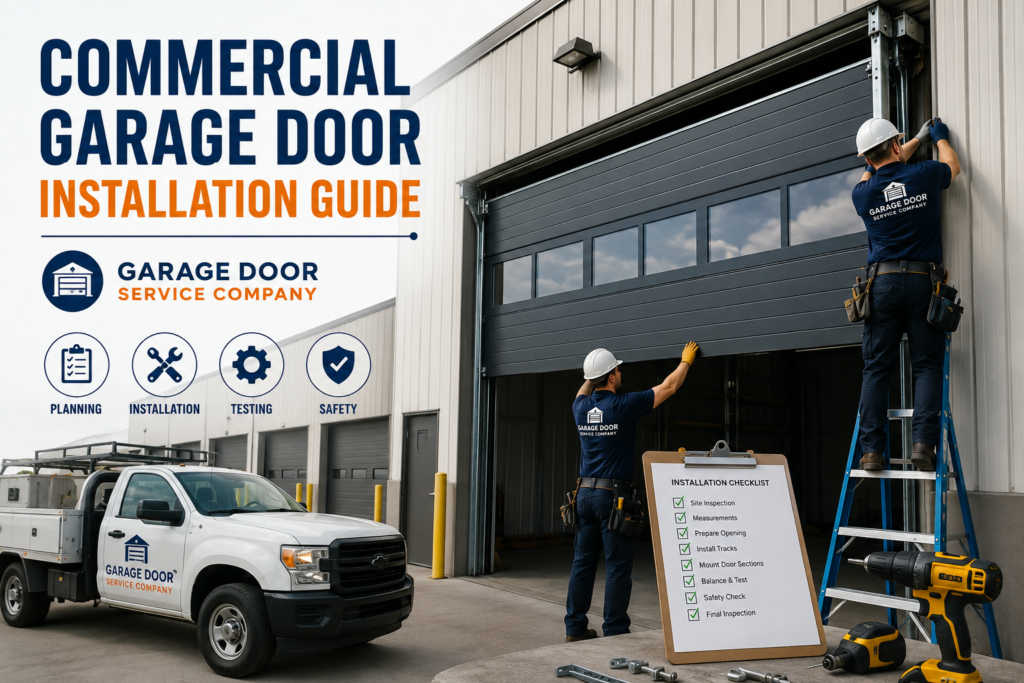
Commercial Garage Door Installation Process
Understanding the installation process helps you know what to expect when hiring professionals.
Step 1: Site Inspection
Technicians evaluate the building structure, measurements, and usage requirements.
Step 2: Door Selection
The right type of door is selected based on business needs.
Step 3: Preparation & Removal
Old doors (if any) are safely removed and the space is prepared.
Step 4: Installation of Tracks & Hardware
Tracks, springs, and support systems are securely installed.
Step 5: Door Assembly & Fitting
Door panels or rolling systems are carefully fitted and aligned.
Step 6: Testing & Safety Check
The system is tested for smooth operation, balance, and safety compliance.
Common Installation Mistakes to Avoid
Improper installation can create long-term issues. Some common mistakes include:
- Incorrect track alignment
- Poor spring tension adjustment
- Ignoring weight balance
- Weak anchoring of hardware
- Skipping safety sensor testing
Avoiding these errors ensures reliable performance and reduces maintenance costs.
Maintenance Tips After Installation
To keep your commercial garage door in top condition:
- Lubricate moving parts regularly
- Inspect cables and springs for wear
- Test safety sensors monthly
- Keep tracks clean and debris-free
- Schedule professional servicing annually
Proper maintenance extends the lifespan of your system and prevents unexpected downtime.
Cost Factors to Consider
The cost of commercial garage door installation depends on:
- Door type and material
- Size and customization
- Automation features
- Insulation requirements
- Labor and installation complexity
Investing in quality installation upfront often saves money in long-term repairs and replacements.
Final Thoughts
Commercial garage door installation is not just a technical process—it’s a long-term investment in safety, efficiency, and business operations. Choosing the right door and ensuring professional installation can significantly improve daily workflow and reduce operational risks.
For expert services and reliable installation, always work with experienced professionals who understand commercial systems in detail.