Whether you own a home or business or are simply a property owner in Texas, owning a waterfront property presents unique and exciting opportunities. When your property includes a boat, a river or lakefront lot, or other Texas coastline water features, you want to take advantage of everything nature has to offer. Owning a boat is one of those advantages, but access is key.
That’s exactly why you should work with an experienced dock builders. A professional company will take your vision and develop a working, operational dock that suits your property, your water level, your boat ownership style, and your long-term vision.
Why Get a Professional Dock Built
When designing a dock, one needs to know about the water, the ground stability, support, and the specific location. What might work on the lakeside in one location will not work in another. Some of the variables that will affect the dock’s function are the changes in water levels, weather, waves, and traffic.
Before constructing a dock, experts consider several factors. The depth of the water near the shoreline, what the dock will have to support, and the reason for the dock can influence design and construction decisions.
If you are a property owner working with experienced contract-builders you can also avoid more common construction headaches such as pilings being incorrectly located, crumbling walkways, loose anchors and short-lived building materials.
Choosing the Best Dock for Your Home
There are many different needs a waterfront property has. Some people just want a place to sit and fish while others may want a larger dock with space for several boats, a hot tub, chairs, and other features.
A fixed dock is is base on a system of pilings driven into the bottom of the lake or waterway. It has a stable platform and can be a good option where water levels are fairly consistent.
A floating dock sits on flotation units and moves with the water level. Floating options may be beneficial in areas with varying water levels, such as tides or seasonal change. Securely anchored with appropriate flotation products can be quite stable.
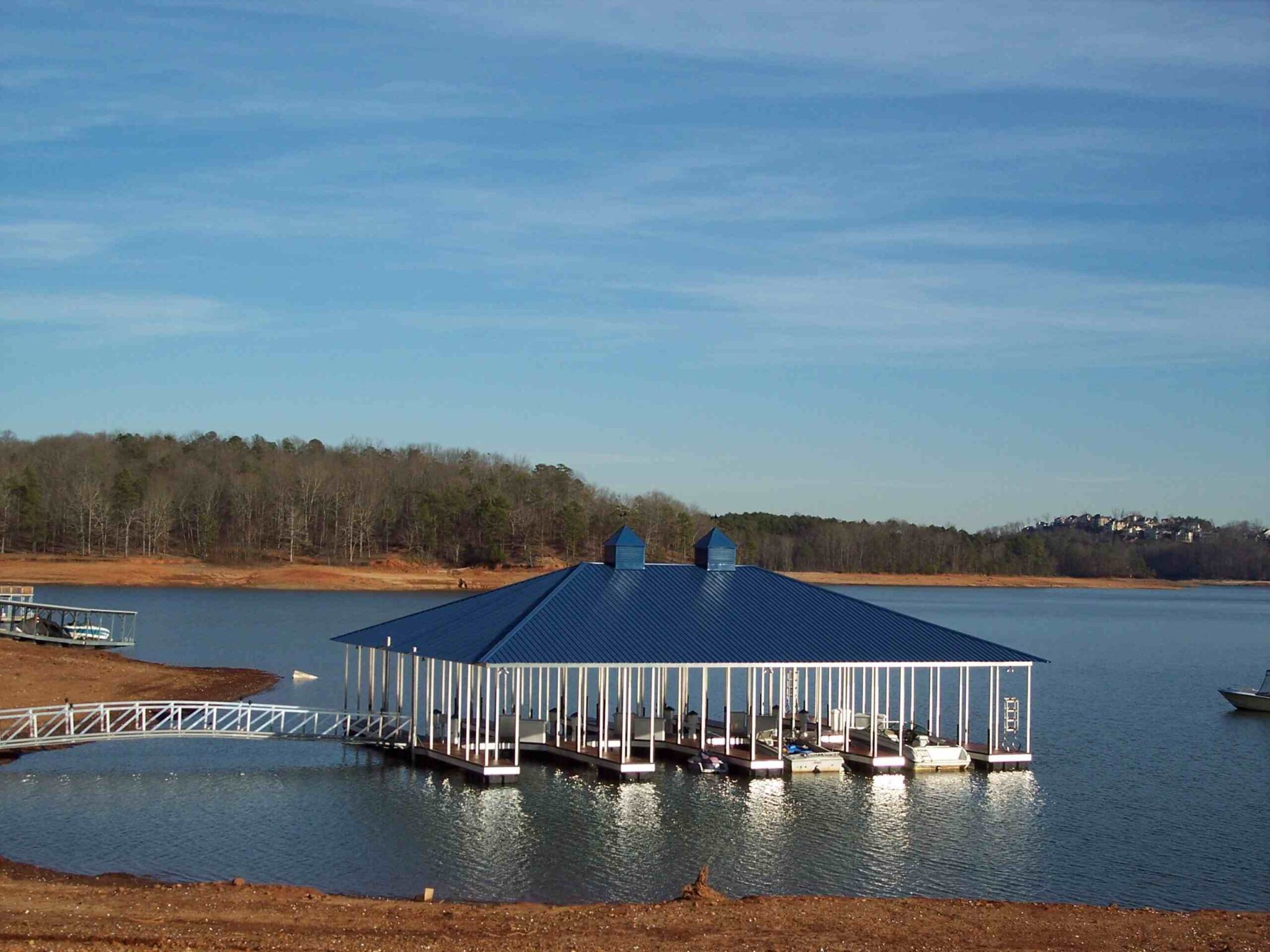
Other types of custom boat docks may feature boat slips, access walkways, seating, and boat lift access. The optimal type of boat dock will vary depending on the shoreline, water depth, purpose of the dock, and the owner’s preferences.
The Role of a Good Piling and Structural Support
The foundation of your dock is arguably the most important aspect of the entire project. Pilings help direct the loads of the structure into the ground under the water. If they aren’t correctly designed and installed, then the entire dock might shift, become uneven, or be damaged.
Support pilings are commonly driven in by pile-driving to support the structure for waterfront construction. Soil conditions, water depth, engineering specifications, and load all impact what kind of piling should be used, how deep it needs to be, and where it should be placed.
Veteran marine construction contractors recognize the importance of foundation work on your finished dock. Contractors should be able to determine if the site needs more support or a specific construction method ahead of time.
Selecting Materials That Can Withstand the Waterfront Environment
Docks are subject to constant attacks from water, sun, temperature variations and often saltwater. Selecting the right material can greatly reduce the frequency of maintenance and improve your docks’ longevity.
Popular materials for building a dock are pressure treated wood, composite decking, aluminum, and other materials that can be used in a marine environment. There are various price points, maintenance requirements, and durability of each material.
Wood can achieve the traditional waterfront look, but it will require ongoing inspections and maintenance. Composite decking can help with some of the maintenance, while aluminum materials can help you to achieve strength with less weight.
The best variation is going to be determined by your atmosphere, budget plan, visual preferences, as well as just how you’re going to make use of the product. An experienced professional can help you set up each variation and also discuss the pro’s as well as con’s of each.
Dock Builders and Local Waterfront Requirements
Often waterfront construction is regulated through permits, property boundaries, environmental considerations and local laws. Some requirements are specific to the location and the installation itself.
Some property owners around Houston and Lake Conroe need to be knowledgeable about the local and waterway regulations before beginning a build. Any dock, boat lift, pier or shoreline structure might need to be authorized by the city or other authorities.
Lake Conroe, it is important to be aware of certain requirements for shoreline structures. Try to plan ahead in order to avoid costly revisions or delays.
An experienced contractor with marine construction knowledge can guide you toward the approvals and site issues to address early before jumping in.
Integrating Boat Lifts and Other Dock Features
A dock doesn’t just have to give you a way to access the water. You can add all sorts of features that can make boating and other waterfront activities simpler.
Boat lifts are almost a necessity to prevent boats from sinking while stored for the winter. The lift you need should be based on the weight, size and intended use of your boat.
Additional features to consider may be lighting, secured access points, storage, railings, and seating areas. Some waterfront properties may require a bridge from the dock to the pier or a more comprehensive marine construction plan.
By considering these elements early in the design process, you can help ensure a more logical and usable waterfront.
How to Maintain Your Dock for Years to Come
However, even a well-built dock requires upkeep. Over time, water, weather and use will take their toll on decking, fasteners, pilings, flotation systems and other elements.
Property owners need to check periodically for loose boards, broken connections, corrosion, shifting supports, and deterioration. Floating docks should be checked for flotation issues and the anchors they are secured to.
Once significant storms or unusually high water occur, a post storm inspection is a smart safety measure. Fix small problems now, so you don’t have to fix bigger ones later.
Hire Top-Rated Dock Builders in Texas
Constructing a dock is an investment in your waterfront property. The correct design should be appropriate for your site, accommodate your boating requirements, and ensure reliable water access. Spending a few extra minutes considering the site and selecting materials and a foundation can really enhance your completed project.
We offer Marine Construction Services to waterfront property owners in the Houston and other surrounding Texas cities. Custom boat docks, boat lifts, pilings, piers and other boat dock services.
Come by Dream Boat Docks to get more information about what we have to offer and to meet with us about your waterside construction project.
Frequently Asked Questions
1. How do I choose the right dock builders?
Hired the right way: Find a contractor with experience with your specific type of project, local waterfront conditions, and a thorough understanding of what you want. Ask about materials, foundation types, permits, timeframe, and references.
2. What type of dock is best for a waterfront property?
The ideal platform is determined by the water depth and variability, shoreline conditions, boat size and application. You can choose a fixed dock, which provides a reliable foundation or a floating dock that adjusts with the rise and fall of the water.
3. If you build a dock in Texas, Do you need a permit?
The need for a permit varies on the location, ownership, waterway, and type of structure. Always contact the appropriate local and waterway agencies for required permits before starting.
4. How often should a dock be inspected?
Check your dock frequently, on a monthly basis at a minimum, and after major storms or water level fluctuations. Watch for damage to decking, pilings, fasteners, flotation elements and connections.