Tattoos are often chosen as a form of personal expression, but preferences, lifestyles, and individual circumstances can change over time. A design that once held special meaning may eventually become something a person no longer wishes to display. Laser tattoo removal treatment offers a modern approach to gradually fading unwanted body art by targeting the ink particles beneath the skin. With the growing interest in Laser Tattoo Removal in Abu Dhabi, many individuals want to understand how this procedure works and whether it can help restore a more natural-looking appearance. Although complete removal is not guaranteed in every case, laser technology can significantly reduce the visibility of many tattoos through carefully planned treatment sessions.
How Does Laser Tattoo Removal Treatment Work?
Laser tattoo removal uses concentrated pulses of light energy to target tattoo pigments within the skin. When the laser reaches the ink, its energy breaks larger pigment particles into smaller fragments. The body’s natural processes then gradually remove these fragmented particles over time.
Different laser technologies are designed to target specific pigment colours and depths. The appropriate technology depends on the characteristics of the tattoo, including its age, ink composition, colour, and density. By selecting suitable laser settings, the treatment can focus on unwanted pigment while aiming to preserve the surrounding skin.
Unlike methods that remove or cover the tattooed skin, laser treatment works by gradually breaking down the ink. This makes it a widely used option for individuals who want to reduce the appearance of existing body art without replacing it with another design.
Can Laser Treatment Effectively Fade Unwanted Tattoos?
Yes, laser tattoo removal can effectively fade many unwanted tattoos. The degree of fading depends on several factors, including the type of ink, pigment concentration, tattoo size, and depth. Some tattoos respond more readily to laser energy, while others require a longer treatment process.
Professional tattoos may contain dense and deeply deposited pigments, making them more challenging to fade. Amateur tattoos can sometimes respond differently because their ink placement and composition may be less consistent. Older tattoos may also show varying responses depending on how much pigment remains within the skin.
The objective of treatment is to break down the visible ink gradually. Some individuals may achieve substantial fading, while others may experience partial removal. Understanding these differences helps establish realistic expectations before beginning the procedure.
Which Tattoo Colours Can Laser Treatment Target?
Tattoo colour plays an important role in determining how effectively laser treatment works. Different pigments absorb different wavelengths of light, which means a laser setting suitable for one colour may not be equally effective for another.
Black and dark blue pigments generally respond well because they absorb a broad range of laser wavelengths. Red, orange, and certain warmer colours may require different settings or specialised laser technology. Green, turquoise, and lighter shades can be more difficult to address, depending on their composition.
Multicoloured tattoos often require a customised approach because each pigment may respond differently. Treatment planning considers the combination of colours and the characteristics of the ink to determine the most suitable technique. This approach helps improve the potential for gradual and consistent fading.
What Happens During a Laser Tattoo Removal Session?
A typical session begins with an assessment of the tattooed area. The treatment provider examines the tattoo’s size, colour, location, and pigment density before determining the appropriate laser settings.
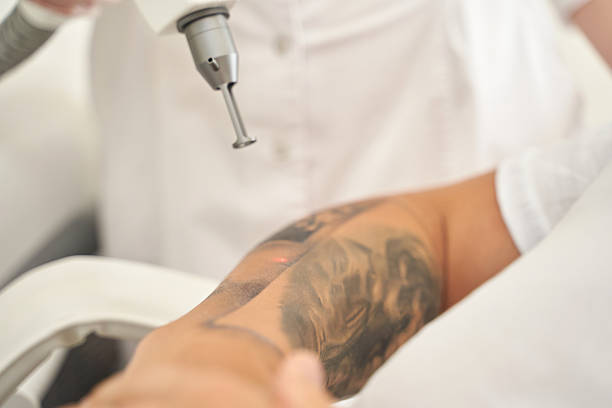
The targeted area is prepared, and protective eyewear is used to protect the eyes from laser exposure. The laser device is then directed towards the tattoo, delivering controlled pulses of light energy to the pigment beneath the skin.
During the procedure, individuals may experience brief sensations of warmth or snapping against the skin as the laser delivers energy. The duration of the appointment depends on the tattoo’s dimensions, colour distribution, and complexity. Smaller designs may require less treatment time than large or detailed tattoos.
Once the session is complete, the treated area is assessed, and specific aftercare instructions are provided. The process is generally performed over multiple appointments to allow sufficient time between sessions for the body to process fragmented ink particles.
How Many Sessions Are Needed to Fade a Tattoo?
The number of sessions required varies significantly from one tattoo to another. A small tattoo with dark, uncomplicated ink may respond differently from a large, multicoloured design with dense pigmentation.
Several characteristics influence the treatment schedule, including the age of the tattoo, the depth of the ink, the colours used, and the body’s natural ability to eliminate fragmented pigment. Tattoos located in different body areas may also respond at different rates.
Laser tattoo removal is not usually completed in a single appointment because the ink particles need time to break down and clear between sessions. Allowing appropriate intervals between treatments supports the gradual fading process. The treatment provider can recommend a personalised schedule based on the tattoo’s response and the desired level of improvement.
Can Laser Tattoo Removal Restore the Skin’s Natural Appearance?
One of the main reasons individuals consider laser tattoo removal is the desire to reduce visible ink and achieve a more natural-looking skin appearance. By gradually breaking down tattoo pigments, laser technology can make unwanted designs less noticeable.
However, the final appearance depends on the original tattoo and individual skin characteristics. Some tattoos may fade almost completely, while others can leave faint traces of pigment. The skin’s natural texture and appearance may also influence how noticeable the treated area remains.
It is important to understand that fading a tattoo and restoring the exact appearance of previously untattooed skin are not necessarily the same outcome. A realistic treatment plan focuses on the achievable reduction in visible pigmentation while considering the condition of the surrounding skin.
Why Is an Individualised Treatment Approach Important?
Every tattoo has unique characteristics, making individual assessment an essential part of laser removal. Factors such as pigment colour, ink depth, skin tone, tattoo placement, and previous removal attempts can influence the selection of laser technology.
An individualised approach helps determine which wavelengths and settings are suitable for the particular tattoo. It also allows treatment expectations and session intervals to be adjusted according to how the pigment responds.
For complex tattoos, a combination of laser settings or different technologies may be considered. Regular assessments help track the fading process and determine whether further sessions are likely to provide meaningful improvement.
How Can You Maintain Realistic Expectations?
Understanding the gradual nature of laser tattoo removal is essential when deciding whether to undergo treatment. Although modern laser technology can produce significant fading, the final outcome varies according to the tattoo’s characteristics and individual response.
It is helpful to consider whether your goal is complete removal or simply making the tattoo less visible. Some individuals want to eliminate an unwanted design, while others prefer sufficient fading to make the area suitable for a future tattoo or a less noticeable appearance.
Discussing these goals during the initial assessment helps establish a practical treatment plan. Patience is equally important because the body needs time to process the fragmented ink between appointments. Consistent follow-up and realistic expectations contribute to a better understanding of the overall treatment journey.
Final Thoughts
Laser tattoo removal treatment provides an effective option for individuals who want to fade unwanted body art and reduce the visibility of existing tattoos. By using concentrated light energy to break down pigment particles, this technology allows the body to gradually process the ink over multiple sessions. The level of improvement depends on tattoo colour, size, age, ink depth, and individual response. Although complete removal cannot be guaranteed, an appropriately planned treatment approach can produce noticeable fading in many cases. Understanding the procedure, expected timeline, and individual treatment requirements can help you make a confident and informed decision about removing unwanted tattoos.
FAQs
Can laser tattoo removal completely fade a tattoo?
Some tattoos can be removed almost completely, while others may retain faint traces of pigment depending on their characteristics.
Does laser tattoo removal work on coloured tattoos?
Yes, different laser wavelengths can target various ink colours, although some pigments are more challenging to remove.
How long does laser tattoo removal take?
The overall process may take several months because multiple sessions and recovery intervals are generally required.
Can old tattoos be removed with laser treatment?
Yes, older tattoos can respond to laser treatment, although the results depend on their ink composition and remaining pigment.
Is one laser tattoo removal session enough?
Most tattoos require multiple sessions because the ink needs to fade gradually as the body processes fragmented pigment.


