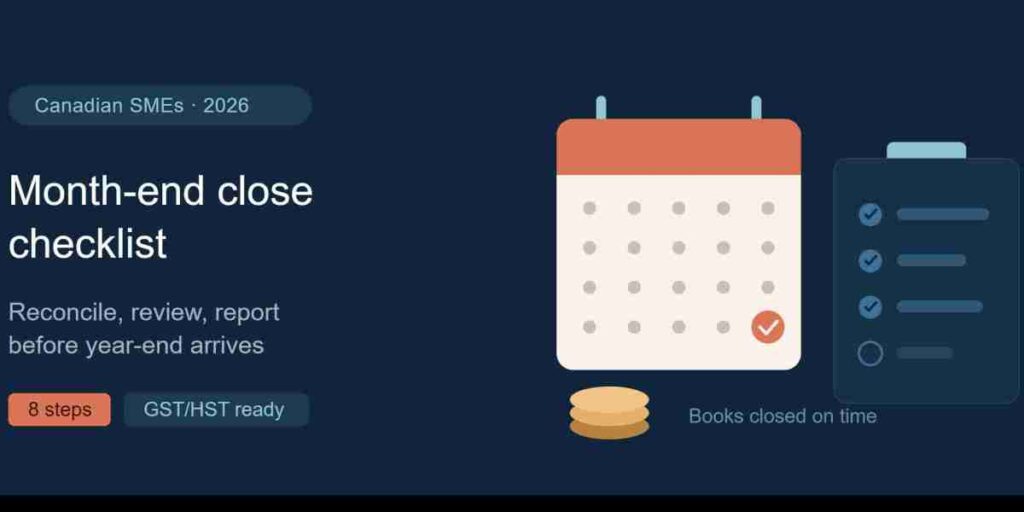
Managing business finances is easier when bookkeeping becomes a regular part of your monthly routine. For Canadian small business owners, keeping accurate records helps track expenses, understand profitability, manage cash flow, and prepare for tax obligations without unnecessary stress.
A consistent Canadian bookkeeping services process also helps business owners identify financial problems before they become serious. Instead of waiting until year-end to review transactions, businesses can monitor their financial position every month and make better decisions based on current information.
Why Regular Bookkeeping Matters for Canadian Businesses
Bookkeeping is more than recording sales and expenses. It provides a clear picture of how money moves through your business and whether your operations are generating sustainable profits.
When records are updated regularly, business owners can identify overdue customer invoices, unexpected expenses, duplicate payments, and changes in operating costs. Accurate records also make it easier to prepare financial statements and share reliable information with accountants, lenders, and business partners.
For growing companies, a structured small business accounting process creates a stronger foundation for budgeting, expansion, and long-term financial planning.
1. Keep Business Transactions Up to Date
Start by recording all business income and expenses throughout the month. Keep invoices, receipts, supplier bills, payment confirmations, and other supporting documents organized.
Review transactions regularly to make sure each entry is assigned to the correct account. For example, office supplies, advertising expenses, professional fees, and equipment purchases should not automatically be grouped into one general expense category.
A properly maintained chart of accounts makes financial reports easier to understand and helps reduce errors during tax preparation.
2. Reconcile Bank Accounts and Credit Cards
Bank reconciliation is an important part of the month-end close process. Compare your accounting records with bank statements and business credit card statements to confirm that recorded transactions match the actual amounts.
Pay attention to:
- Payments that appear twice in your books.
- Bank fees or interest charges that have not been recorded.
- Outstanding cheques and deposits in transit.
- Transactions with incorrect amounts or dates.
- Personal purchases mistakenly recorded as business expenses.
Investigating differences each month helps maintain accurate balances and reduces the time needed to correct errors later.
3. Review GST/HST Reconciliation
Canadian businesses that are registered for GST/HST need to maintain appropriate records of the tax collected on sales and eligible tax paid on purchases.
During GST/HST reconciliation, compare the amounts recorded in your accounting system with sales invoices, purchase receipts, and relevant transaction reports. Confirm that the tax amounts are assigned to the correct accounts and that supporting documents are available.
Keep in mind that registration requirements, filing frequency, deadlines, and input tax credit eligibility depend on the business’s circumstances and applicable CRA rules.
Consistent GST/HST reconciliation can help identify discrepancies before preparing a return. When a transaction is unclear, consult a qualified accounting professional rather than guessing how it should be treated.
4. Monitor Accounts Receivable and Payable
Cash flow problems can develop even when a business appears profitable on paper. Reviewing accounts receivable and accounts payable helps owners understand when money is expected to arrive and when bills must be paid.
For accounts receivable, prepare an aging report and identify overdue invoices. Follow up with customers and establish clear payment terms for future work.
For accounts payable, verify supplier invoices, payment dates, and outstanding balances. Check for duplicate bills and confirm that expenses have been recorded in the correct period.
This routine supports better cash flow planning and reduces the risk of missed payments or unnecessary late fees.
5. Use Bookkeeping Software Carefully
Modern accounting platforms and AI bookkeeping software can simplify repetitive tasks such as importing bank transactions, suggesting expense categories, sending payment reminders, and preparing preliminary reports.
However, automation does not eliminate the need for human review. Software may misclassify an unusual transaction, overlook a missing document, or flag a legitimate expense as an exception.
Choose a system that fits your transaction volume, reporting needs, integrations, and budget. Review automated entries before finalizing monthly records, especially when GST/HST, payroll, or unusual transactions are involved.
The goal is to reduce manual work while maintaining reliable financial information.
6. Review Your Monthly Financial Reports
Once transactions are recorded and accounts are reconciled, review your profit and loss statement, balance sheet, and cash flow information.
Compare current results with the previous month and, where useful, the same period last year. Investigate significant changes in revenue, payroll, marketing expenses, supplier costs, and operating margins.
For example, an increase in sales does not necessarily mean profitability has improved. Higher material costs or additional staffing expenses may reduce the amount the business keeps.
Reliable financial reporting Canada businesses can use should provide more than a list of numbers. Reports should help owners understand what changed, why it changed, and whether action is needed.
7. Prepare for Tax and Year-End Requirements
Monthly bookkeeping makes year-end preparation more manageable because financial records are reviewed throughout the year.
Maintain organized documentation for business expenses, sales, payroll, asset purchases, loans, and tax-related transactions. Review unresolved bookkeeping questions before the end of the financial year, and confirm that the records needed by your accountant are available.
Businesses should also review applicable filing and payment deadlines rather than assuming every tax obligation follows the same schedule.
Preparing early gives owners and accounting professionals more time to investigate discrepancies and address missing information.
When Should You Seek Professional Support?
Some businesses can manage routine bookkeeping internally, while others need additional support as transactions, employees, and reporting requirements increase.
Consider professional assistance if reconciliations remain incomplete, cash flow is difficult to predict, financial reports contain unexplained differences, or management decisions require a clearer understanding of profitability.
Working with experienced accounting professionals or one of the best business consulting firms in Canada may help businesses improve financial processes, strengthen reporting, and plan for growth. The right support depends on the company’s size, needs, industry, and budget.
Make Bookkeeping a Monthly Habit
Accurate bookkeeping does not require a complicated process. A consistent monthly routine can help Canadian business owners maintain organized records, monitor cash flow, review tax-related transactions, and make informed decisions.
Set aside dedicated time each month to reconcile accounts, review outstanding invoices, verify GST/HST records, and examine financial reports. Use automation where appropriate, but retain human oversight for important accounting decisions.
By making Canadian bookkeeping services part of regular business operations, owners can spend less time correcting old records and more time managing their businesses with confidence.
Frequently Asked Questions
How often should a small business update its bookkeeping?
Ideally, transactions should be recorded throughout the month, with a formal review and reconciliation at month-end. The appropriate frequency depends on transaction volume and business requirements.
What is included in a month-end close?
A month-end close commonly includes bank and credit card reconciliation, accounts receivable and payable reviews, payroll checks, tax account reviews, adjustments, and financial statement analysis.
Why is GST/HST reconciliation important?
It helps verify that tax collected and eligible tax paid are recorded correctly, supporting accurate reporting and helping identify discrepancies before filing.
Can AI bookkeeping software replace an accountant?
AI bookkeeping software can automate routine tasks, but it cannot reliably replace professional judgment for every accounting, tax, or financial planning issue. Human review remains important.
What financial reports should Canadian small businesses review monthly?
Common reports include the profit and loss statement, balance sheet, cash flow report, accounts receivable aging report, and accounts payable report.
Conclusion
A reliable bookkeeping process gives Canadian small businesses a clearer understanding of their financial position. By updating transactions regularly, reconciling accounts, reviewing GST/HST records, and monitoring monthly reports, owners can improve financial visibility and prepare more effectively for future obligations.